
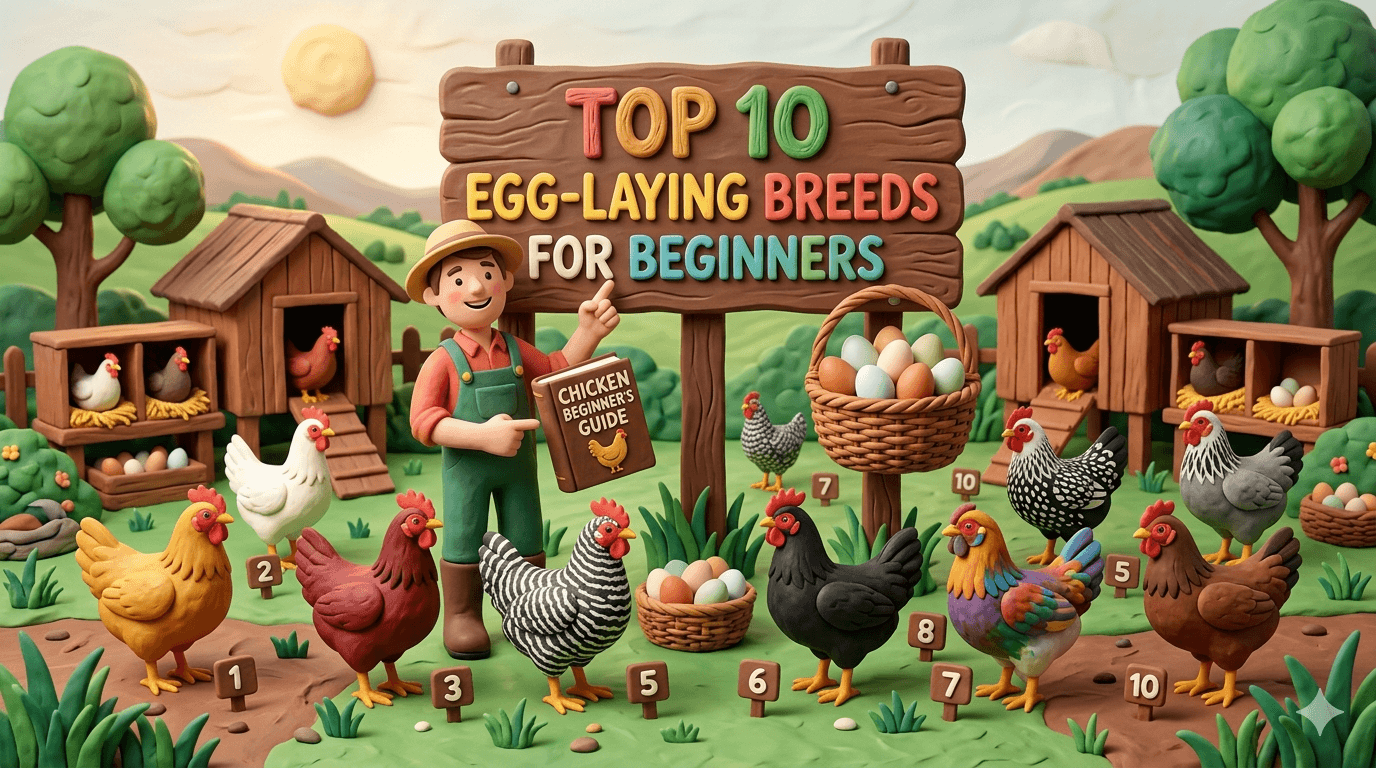
Picking your first chickens is the fun part. It is also the part where most new keepers freeze up, because a quick search throws hundreds of breeds at you and every chicken forum has a different favorite.
Here is the good news. You do not need to study every breed. You only need a short list of birds that are productive, friendly, easy to source, and forgiving while you learn. Get those four things right and your first flock will give you a basket of eggs every morning and almost no drama.
This guide ranks the 10 best egg laying chicken breeds for beginners. We picked breeds that lay reliably year after year, handle a wide range of climates, get along well in mixed flocks, and turn up at almost every hatchery in the country. A few are workhorses. A few are charmers. One lays a chocolate brown egg that will stop you in the kitchen.
By the end of this guide you will know which breeds fit your climate, which combos make a calm and colorful flock, where to source them, and how to dodge the common picking mistakes that cost beginners their first season.
If you are still putting the rest of your chicken plan together, our full beginner chicken guide covers coops, feed, and care. This one is just about the birds.
How We Picked These 10 Breeds
There are great reasons to keep almost any breed. We narrowed the list using five filters that matter most in year one.
Egg production. A beginner flock should give you real eggs, not novelty eggs. Every breed on this list lays at least 200 eggs per year at peak, and most lay closer to 280.
Temperament. Calm birds make calm flocks. We chose breeds that are gentle with kids, easy to handle, and unlikely to bully their flockmates. A few high energy breeds made the list because their other strengths are hard to ignore.
Climate range. Some breeds collapse in heat. Some freeze in winter. Most beginners do not want to micromanage a delicate bird, so we leaned heavily on breeds that handle a wide range of temperatures with normal care.
Availability. A breed is no good to you if you cannot find it. Every bird on this list is sold by major hatcheries, most feed stores in spring, and many local breeders.
Beginner forgiveness. Some breeds need precise housing or specific feed. The breeds below tolerate small mistakes that a more delicate bird would not survive. That matters in your first year, when you will make at least a few.
With those filters in place, the rest of the picking gets easy. Here are the 10.
The Top 10 Egg Laying Chicken Breeds for Beginners
1. Australorp
The Australorp is the breed I recommend most often to first time keepers, and it is hard to beat by any measure. Eggs per year: 250 to 300. Egg color: light brown. A single Australorp once laid 364 eggs in 365 days, which is still the recorded world record.
Australorps are calm, quiet, and beautiful. Their black feathers shine an iridescent green in the sun. They are friendly with kids, easy to pick up, and rarely the loudest bird in the flock. They handle cold winters and hot summers without much complaint, which makes them a fit for almost every state in the country.
They start laying around 16 to 20 weeks, earlier than most heavy breeds. They lay through winter better than most. And because they are dual purpose, an Australorp that ages out of laying still has a real role on a homestead.
If you only get one breed your first year, get a few Australorps. They are the closest thing to a foolproof beginner chicken.
2. Rhode Island Red
The Rhode Island Red is the workhorse of American backyard flocks. Eggs per year: 250 to 300. Egg color: large brown. They have been the go to layer for over a century, and there is a reason almost every grandparent who kept chickens kept a few of these.
Rhode Island Reds are hardy, productive, and unfussy. They tolerate hot summers, cold winters, and mediocre coops better than almost any other breed. They forage well, eat less feed than heavier breeds, and start laying around 18 to 20 weeks.
The one knock on the breed is temperament. Production line Rhode Island Reds can be assertive, especially the roosters. Hens are usually fine but a few can bully more docile breeds in mixed flocks. Heritage strains tend to be calmer and more even tempered.
If you want maximum eggs from minimum fuss, Rhode Island Reds are tough to beat. Pair them with Australorps or Buff Orpingtons to keep the flock balanced.
3. Plymouth Rock (Barred Rock)
The Plymouth Rock, often called the Barred Rock for its black and white stripes, is the friendly neighbor breed every flock should have. Eggs per year: 200 to 280. Egg color: light brown.
Plymouth Rocks are calm, curious, and people loving. They follow you around the yard. They tolerate handling well. They get along with everyone in the flock and rarely start trouble. New chicken keepers with kids almost always end up with at least one Barred Rock as the family favorite.
They are cold hardy thanks to a relatively small single comb and a heavy build. They lay through winter better than most light breeds. They are also dual purpose, so retired layers still produce a respectable carcass.
The only mild downside is that they are a little less productive than Rhode Island Reds or Australorps. You will lose a few dozen eggs per year per bird, but you trade those eggs for the calmest, friendliest flock most beginners will ever own.
4. Buff Orpington
The Buff Orpington is the labrador retriever of the chicken world. Eggs per year: 200 to 280. Egg color: light brown. Big, golden, fluffy, and remarkably gentle, this is the breed for keepers who want a chicken that feels more like a pet than livestock.
Orpingtons are excellent with children. They are slow moving, easy to catch, and almost never aggressive. Many will hop into a lap for a long pet. They do well in cold climates because of their dense feathering, though they can struggle in extreme heat for the same reason.
They lay reliably from about 20 to 22 weeks of age. They go broody often, which is a plus if you want a hen who will hatch chicks naturally and a minor inconvenience if you do not.
A flock of Buff Orpingtons makes a beautiful golden centerpiece in a yard. They cluck softly. They wander politely. They lay enough eggs to feed a family. For most beginners, this is the breed that turns chicken keeping into a daily joy.
5. Sussex
The Sussex is one of England's oldest and most beloved breeds, and it deserves a spot on every American beginner list too. Eggs per year: 240 to 280. Egg color: light brown to cream.
Sussex hens are curious and bold. They follow you around the garden, hop on your boots, and inspect every new object in the run. They are excellent foragers, which means they pull more of their own diet from a yard than heavier breeds. That keeps feed costs down if you free range.
Speckled Sussex are the most popular variety, with a beautiful mahogany base and tiny white spots. Light Sussex are mostly white with a black neck and tail. Both are equally friendly and productive.
Sussex tolerate cold and heat reasonably well. They start laying around 20 weeks and lay steadily through their first three years. They almost never bully and integrate easily into mixed flocks.
If you want a flock that follows you around the yard like a small flock of clucking puppies, add a few Sussex.
6. Wyandotte
The Wyandotte is built for cold climates and built to last. Eggs per year: 200 to 240. Egg color: brown. With its rose comb, dense feathering, and stocky body, a Wyandotte handles deep winter better than almost any breed on this list.
Their rose comb sits low and tight against the head, which means almost no risk of frostbite even at single digit temperatures. Their thick feathering keeps the body warm. Many Wyandotte owners in northern states never see a frostbitten bird.
Temperament is generally calm and quiet, though some hens can be a little standoffish with people compared to a Buff Orpington or Plymouth Rock. They do well in mixed flocks and rarely start fights.
Silver Laced Wyandottes are the showy classic, with stunning black laced silver feathers. Gold Laced and Blue Laced Red varieties are also widely available and equally productive.
If you live anywhere with hard winters and you want a breed that will lay through the cold without complaint, Wyandottes are an obvious pick.
7. Easter Egger
The Easter Egger is not a true breed, which is exactly what makes it perfect for beginner flocks. Eggs per year: 200 to 280. Egg color: blue, green, pink, or cream. Each Easter Egger inherits one egg color gene and lays that color for life, so a small flock can produce a basket that looks like a watercolor palette.
Easter Eggers are bred from Ameraucanas crossed with other layers. They are friendly, hardy, and surprisingly productive. Many lay better than their pure Ameraucana cousins. They handle heat and cold well thanks to small pea combs and active builds.
They start laying around 20 to 24 weeks. Some lay daily. Some lay every other day. The variation is part of the fun.
Kids love Easter Eggers because of the egg colors. Cooks love them for the same reason. A carton of mixed brown, blue, green, and cream eggs at the farmers market sells faster than plain brown ones every time.
Add at least two Easter Eggers to any beginner flock. The colored eggs will turn breakfast into a ritual.
8. Leghorn
The Leghorn is the production champion of the chicken world. Eggs per year: 280 to 320. Egg color: large white. If your goal is maximum eggs per pound of feed, no breed beats a Leghorn.
White Leghorns are the bird behind nearly every commercial white egg in the grocery store. They are slim, fast, and built for laying. They convert feed to eggs more efficiently than heavier dual purpose breeds. They start laying as early as 16 weeks and keep going strong through their second and third year.
The tradeoff is temperament. Leghorns are flighty and active. They do not love being handled. They fly higher than most breeds, which means a six foot fence may not contain them. They are not the lap chicken your kids will want.
They thrive in hot climates thanks to their lean build and large single comb. They struggle in cold winters because that same comb is prone to frostbite.
If you want eggs over cuddles, and you live somewhere warm, a few Leghorns make any flock more productive.
9. Brahma
The Brahma is the gentle giant of the chicken world. Eggs per year: 150 to 200. Egg color: light brown. They are the largest breed on this list, with hens hitting 9 to 10 pounds and roosters pushing 12. They look intimidating. They are not.
Brahmas are calm, quiet, and slow moving. They tolerate handling well and rarely start fights. Their feathered legs and feet, deep feathering, and small pea comb make them one of the most cold tolerant breeds you can buy. They walk through snow that other breeds will not touch.
The egg count is lower than most breeds on this list, but Brahmas make up for it with steady winter laying. While other hens stop in December, your Brahmas keep going.
They are also patient with children. A young child can sit next to a Brahma hen for an hour without either of them minding.
If you live in a cold climate or you want a bird that doubles as a pet, a few Brahmas in your beginner flock are a wise bet.
10. Marans
The Marans makes the list for one beautiful reason. Eggs per year: 180 to 240. Egg color: dark chocolate brown. A Marans egg is closer to milk chocolate than a normal brown egg, and a dozen of them in the carton looks like artwork.
Black Copper Marans are the most popular variety, with glossy black feathers and a copper colored neck and shoulders. Cuckoo Marans are barred black and white and slightly more productive. Both lay rich, dark eggs that hold their color through the entire laying season.
Temperament is calm and quiet. Marans tolerate cold well and do fine in moderate heat. They are friendly enough to handle without much trouble, though they are not as social as a Buff Orpington or a Plymouth Rock.
The egg count is the only knock. Marans lay fewer eggs than Australorps or Rhode Island Reds. Many keepers do not care because the eggs they do lay are stunning.
Add a single Marans to your starter flock and you will have a centerpiece bird that lays the prettiest egg in the basket.
Quick Comparison Table
| Breed | Eggs Per Year | Egg Color | Temperament | Climate Strength |
|---|---|---|---|---|
| Australorp | 250 to 300 | Light brown | Calm, friendly | Cold and hot |
| Rhode Island Red | 250 to 300 | Brown | Hardy, assertive | Cold and hot |
| Plymouth Rock | 200 to 280 | Light brown | Friendly, mellow | Cold |
| Buff Orpington | 200 to 280 | Light brown | Gentle, lap bird | Cold |
| Sussex | 240 to 280 | Light brown | Curious, social | Cold and moderate heat |
| Wyandotte | 200 to 240 | Brown | Calm, independent | Cold |
| Easter Egger | 200 to 280 | Blue, green, pink | Friendly, active | Cold and hot |
| Leghorn | 280 to 320 | White | Flighty, active | Hot |
| Brahma | 150 to 200 | Light brown | Gentle, quiet | Extreme cold |
| Marans | 180 to 240 | Chocolate brown | Calm, reserved | Cold |
Chicken Breed Picker
Answer a few questions and we'll recommend the best chicken breeds for your homestead.
Try it free →How to Build a Mixed Beginner Flock
The best beginner flock is not a single breed. It is a mix of three to five breeds chosen for the climate and the egg basket you want. A small mix gives you a longer laying season, a calmer flock, and a beautiful carton of eggs.
Here are three simple combos that work well almost anywhere.
The Cold Climate Flock (6 hens). Two Australorps, two Buff Orpingtons, one Wyandotte, one Brahma. This flock will lay through deep winter when other birds stop. Every bird in it has a small comb or dense feathering, which means almost no frostbite risk. The temperaments are calm across the board, perfect for kids and first time keepers.
The Hot Climate Flock (6 hens). Two Leghorns, two Easter Eggers, one Australorp, one Rhode Island Red. The Leghorns and Easter Eggers handle triple digit summers thanks to lean builds and large or pea combs. The Australorp and Rhode Island Red round out the basket with steady brown eggs. You will get high production and a colorful carton.
The Colorful Egg Basket Flock (5 hens). One Australorp (light brown), one Rhode Island Red (rich brown), one Marans (chocolate brown), two Easter Eggers (blue and green). Five hens, five different shades of egg, all friendly enough to share a small backyard run. This is the flock that turns the egg basket into a Sunday morning showpiece.
Pick the combo that fits your climate and your goals. Order all the chicks at once if you can. Mixing ages later is harder than starting them together.
Common Mistakes When Picking Beginner Breeds
Almost every new keeper makes at least one of these picking mistakes. Knowing them in advance saves you a season of regret.
Picking too many breeds at once. A flock of six hens does not need six different breeds. Pick three. You will not lose much variety, and you will have an easier time tracking who lays what. A flock with too many breeds can look like a clown show and behave like one too.
Ignoring climate. A Brahma in Phoenix in July is miserable. A Leghorn in Vermont in January is missing toes. Pick breeds that match your local weather, not your favorite Pinterest photo.
Buying for looks over productivity. A Polish chicken with a feathered crest is gorgeous and almost never lays well. Save the fancy ornamentals for year two when you can afford a few birds that lay sparingly.
Mixing aggressive with docile. A flock of Buff Orpingtons and one Production Red is a flock with one bully. If you want assertive layers like Rhode Island Reds, pair them with similarly tough breeds. Save the gentle breeds for their own peaceful flock.
Buying production strain over heritage. Production strains lay more eggs in their first two years and burn out fast. Heritage strains lay slightly fewer eggs but live longer, lay through more years, and have better temperaments. For a backyard flock, heritage almost always wins.
Avoid these five and you will start with a flock that hums along for years.
Where to Buy These Breeds
Every breed on this list is widely available. You have four good sources.
National hatcheries. Murray McMurray, Meyer, Cackle, and Hoover's all ship day old chicks anywhere in the country. Selection is widest. Sexing accuracy is high. Most also offer Marek's vaccination for a dollar or two extra.
Local feed stores. In spring, most rural feed stores carry chicks for a few weeks. Selection is limited to popular breeds, but you can pick out the chicks in person.
Local breeders. Search Facebook groups, Craigslist, and homestead bulletin boards for breeders within a short drive. Local birds are already adapted to your weather, and you can see the parent flock before buying.
Hatchery direct shipping. Some hatcheries deliver to your door instead of the post office. Convenient if your local post office is hit or miss.
Whichever route you pick, plan to add a few extra chicks. A small loss in the first month is normal. Our full chicken raising guide covers what to do once those chicks arrive.
Tip
Once you have picked your breeds, the next step is the coop. A simple, predator proof coop is more important than any breed choice you make. Read our guide to building a beginner chicken coop before you bring birds home.
You Have a Plan, Now Bring It Home
The breeds on this list are forgiving, productive, and easy to source. Pick three or four. Start with five or six hens. Mix in an Easter Egger or a Marans if you want a beautiful basket.
If you want help narrowing the list to your specific climate and goals, the chicken breed picker sorts breeds by egg color, temperament, and cold hardiness in under a minute. If you want the full picture on housing, feed, and daily care, the complete beginner chicken guide walks through every step. And if you are still building the coop, our chicken coop plans will save you a weekend of guessing.
You will not regret starting with these birds. Your first egg, warm in your hand on a quiet morning, will tell you everything you need to know.
Frequently Asked Questions
The Australorp is the best beginner breed for most homesteaders. It lays 250 to 300 large brown eggs per year, handles both cold and hot climates well, has a calm and friendly temperament, and is widely available at every major hatchery. A single Australorp once laid 364 eggs in 365 days, which remains the recorded world record. Pair two or three Australorps with one Buff Orpington and one Easter Egger for a flock that is productive, colorful, and easy to manage.
The White Leghorn lays the most eggs per year of any breed on this list, averaging 280 to 320 large white eggs annually. Leghorns are the bird behind most commercial white eggs in grocery stores. They are flighty and not the friendliest with people, but their feed efficiency and laying rate are unmatched. If maximum production matters most, add a few Leghorns to your flock.
The Buff Orpington is the friendliest breed for households with children. They are slow moving, gentle, and almost never aggressive. Many will hop into a lap for a long pet. Plymouth Rocks and Brahmas are close runners up. All three breeds tolerate handling well, rarely peck at people, and quickly bond with the family that raises them.
Easter Eggers lay blue, green, pink, or cream eggs depending on the individual hen. Marans lay rich chocolate brown eggs. Olive Eggers, which are crosses between blue and dark brown layers, lay olive green eggs. A flock with two Easter Eggers, one Marans, and a few brown layers will produce a carton with five or more shades of egg, which is half the joy of keeping mixed breed chickens.
Brahmas, Wyandottes, and Buff Orpingtons handle hard winters best. All three have small combs or dense feathering that resist frostbite. Brahmas have feathered legs and walk through snow comfortably. Wyandottes have rose combs that almost never freeze. Buff Orpingtons have thick golden feathering that traps warmth. A flock of any of these three will lay reliably through winter when most other breeds stop.
Leghorns are the top hot weather breed thanks to their slim build and large single comb that sheds heat. Easter Eggers handle heat well too because of their pea combs and active foraging style. Australorps and Rhode Island Reds also tolerate heat better than heavily feathered breeds like Brahmas or Buff Orpingtons. In hot climates, prioritize lean breeds and provide shade and constant cool water.
Yes, mixing breeds is one of the joys of backyard chicken keeping. The key is matching temperaments. Pair friendly breeds with friendly breeds and assertive breeds with assertive breeds. A flock of three Buff Orpingtons, two Plymouth Rocks, and an Easter Egger will get along beautifully. A flock with one Production Red and four gentle Buff Orpingtons may have a bully problem. Stick with similar size and temperament and your mixed flock will thrive.
Most breeds on this list start laying between 16 and 22 weeks of age. Australorps and Leghorns are the earliest, often laying by 16 to 18 weeks. Plymouth Rocks, Sussex, and Easter Eggers usually start by 20 weeks. Heavier breeds like Brahmas and Buff Orpingtons may take 22 to 24 weeks. The first eggs are often small or oddly shaped, which is normal. Within a few weeks the eggs will arrive at full size.
Plymouth Rocks, Sussex, Wyandottes, and Brahmas are the best dual purpose breeds on this list. Each grows large enough to produce a respectable carcass at the end of its laying years. Australorps and Rhode Island Reds are also dual purpose, though slightly smaller. None will hit a butcher weight as fast as a meat specific Cornish Cross, but they live longer, lay well, and provide a final meal when their laying years end.
Start with three to six hens. Three is the minimum because chickens are flock animals and a single bird gets stressed and lonely. Six is a comfortable maximum for most beginners. A starter flock of four hens fits a small backyard, produces enough eggs for a family of four, and is easy to manage during the learning curve of your first season. You can always add more birds in year two.

Cole
Founder & Lead Researcher
Cole is the founder of Plan Your Homestead. He works in clinical research and brings a research-first lens to every guide on the site, drawing on a long family line of farmers for grounded, practical perspective.
More in Animals
More articles coming soon. Check back for new animals content.