So you want to grow your own food. Welcome. The hard part is mostly in your head.
Most people who try a vegetable garden for the first time pick the wrong crops. They start with finicky heirloom melons, head lettuce that bolts in a week, and cauliflower that wants to be babied for four months. Then the first failure feels like proof that they do not have a green thumb.
You do. You just need an easier roster.
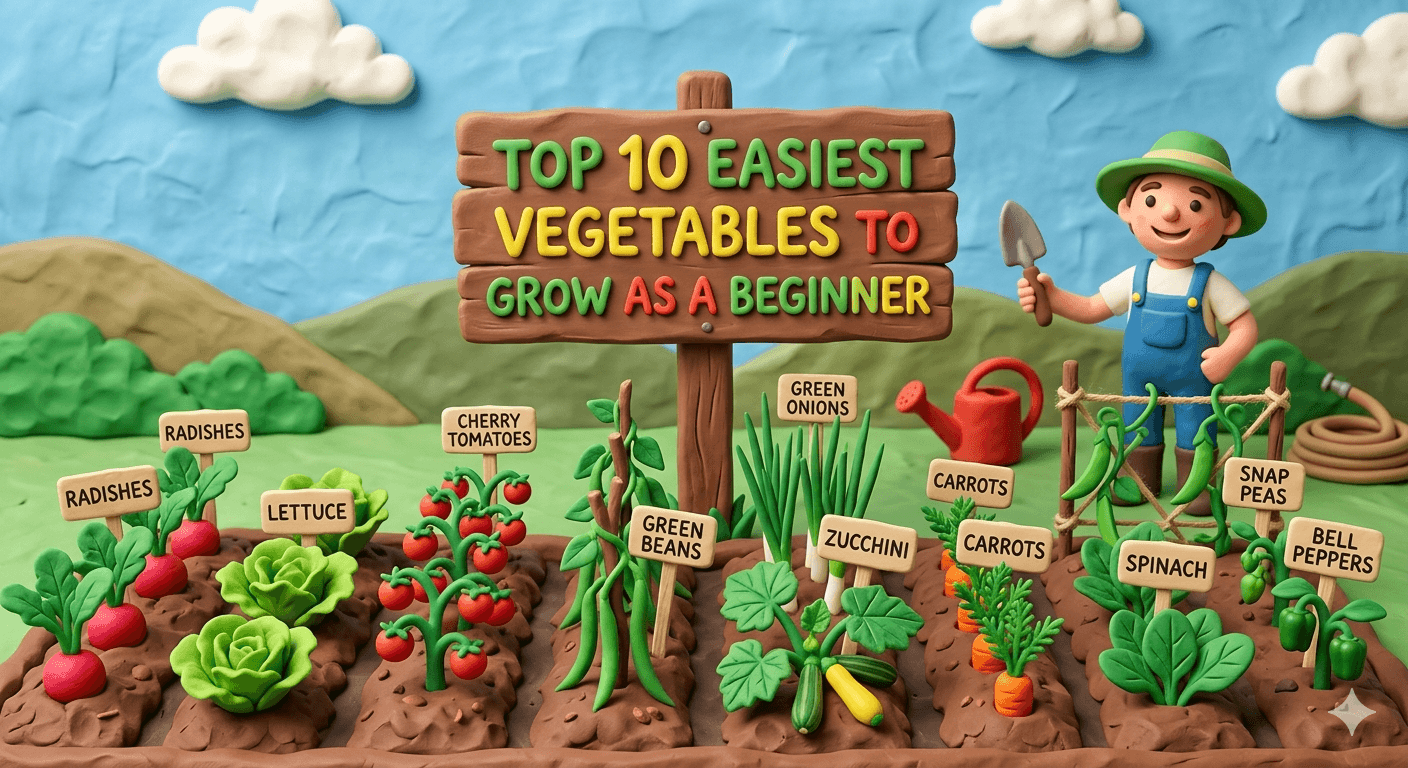
This guide is the roster. Ten vegetables that are forgiving, fast, and prolific. Crops that grow even when you forget to water for two days. Crops that bounce back from a missed feeding. Crops that hand you something to eat in your first season so you actually keep going.
If you are brand new to all of this, our vegetable gardening for beginners guide covers the soil, sunlight, and timing basics. This article focuses on what to actually plant.
What Makes a Vegetable Easy to Grow
The word "easy" gets thrown around a lot, so here is what it actually means in this guide.
An easy vegetable germinates quickly and reliably. You drop seeds in soil and you see green within a week or two, every time. No special soaking, no scarification, no greenhouse.
An easy vegetable tolerates neglect. You can skip a watering. You can forget to fertilize. You can plant it in average dirt and still get a harvest.
An easy vegetable resists pests well enough that you do not need a chemistry degree to keep it alive. Bugs find it, sure, but they do not wipe it out overnight.
An easy vegetable produces a lot for the space it takes. One zucchini plant can outfeed a row of head lettuce. A square foot of radishes can feed a salad in three weeks. The harvest has to be worth the patch of dirt.
The 10 below check every box. Pick two or three for your first garden. Add more as you find your stride.
1. Lettuce
Lettuce is where almost every successful gardener starts. Seeds sprout in five to seven days. The plant grows fast in cool weather. And you can start cutting leaves in three to four weeks.
Why it is easy. Lettuce wants what most beginners already have. Loose soil, partial sun, and a little water. It does not need fertilizer. It does not need staking. It does not even need a deep bed. A six inch container will grow a small head.
When to plant. Sow seeds two to four weeks before your last spring frost. Sow again in late summer for a fall crop. Lettuce hates heat, so skip the middle of summer.
Spacing and depth. Sprinkle seeds on top of the soil and press them in lightly. They need light to germinate, so do not bury them. Thin to four inches apart for leaf types and eight inches for heads.
Sun and water. Four to six hours of sun is plenty. More than that in summer and the plant bolts. Keep the soil moist but not soggy.
Common beginner mistake. Planting too late and watching it bolt in the first heat wave. Lettuce is a cool weather crop. Plan around that.
How to harvest. Use scissors and cut the outer leaves about an inch above the soil. The plant keeps growing from the center. One row of cut and come again lettuce can feed a household for two months.
2. Radishes
Radishes are the closest thing to instant gratification a vegetable garden has. Seed to harvest in 21 to 30 days. They are also the best confidence builder for kids and nervous first time gardeners.
Why it is easy. Radishes germinate in three to five days. They do not get attacked by many pests. They thrive in average soil. They mature so fast that most diseases never have time to show up.
When to plant. Sow seeds directly in the ground four to six weeks before your last spring frost. Sow again in late summer for a fall crop. They tolerate light frost.
Spacing and depth. Plant seeds half an inch deep and one inch apart. Thin to two inches once the seedlings have a couple of true leaves. Crowded radishes grow into all leaf and no root.
Sun and water. Six hours of sun. Steady moisture. Inconsistent watering is what makes radishes split or turn woody.
Common beginner mistake. Skipping the thinning step. Radishes need elbow room. If you do not thin them, you grow a forest of greens with no edible bulb underneath.
How to harvest. Pull them as soon as the shoulders start poking above the soil. Left in the ground too long, they turn pithy and hot. Most varieties peak between day 25 and day 30.
3. Bush Beans
Bush beans are the workhorse of a beginner garden. They do not need a trellis. They produce in waves. And they actually improve your soil while they grow.
Why it is easy. Bean seeds are big and easy to handle. They germinate in seven to ten days. The plants are almost self sufficient. They pull nitrogen out of the air, so they need very little fertilizer. Most varieties produce a full harvest in 50 to 60 days.
When to plant. Sow seeds directly in the ground after your last frost, when the soil has warmed to 60 degrees Fahrenheit. Beans hate cold soil and rot quickly in it.
Spacing and depth. Plant seeds one inch deep and four inches apart in rows about 18 inches apart.
Sun and water. Full sun, six to eight hours. Water deeply once a week unless it rains. Avoid wetting the leaves at night, which can encourage mildew.
Common beginner mistake. Planting too early. A cold rainy week after planting will rot the seeds in the ground and you will swear you got a bad packet. Wait for warm soil.
How to harvest. Pick beans when they are pencil thick and snap cleanly. Pick every two to three days. The more you pick, the more the plant produces. Stop picking and the plant decides its job is done.
4. Zucchini
If you have ever heard a gardener joke about leaving zucchini on a neighbor's porch in the middle of the night, this is why. Zucchini is almost too easy. One healthy plant can hand you 20 pounds of fruit in a season.
Why it is easy. Zucchini is fast, vigorous, and forgiving. The seeds germinate in seven to ten days. The plants grow huge. They are not picky about soil. They handle heat well. And the harvest does not stop.
When to plant. Direct sow seeds two weeks after your last frost, once the soil is reliably warm. Zucchini loves heat.
Spacing and depth. Plant seeds one inch deep, two or three seeds per spot, and spots three feet apart. Thin to the strongest seedling once they have a few leaves. The plants get bigger than you think.
Sun and water. Full sun. Deep water once or twice a week. Mulch heavily to keep the soil moist between waterings.
Common beginner mistake. Planting six zucchini plants because they look so small in the seed tray. Two plants is plenty for most families. Three is generous.
How to harvest. Pick zucchini when they are six to eight inches long. Skip a few days and you will find a baseball bat hiding under a leaf. Use a sharp knife and cut the stem cleanly. Check the plant every other day during peak season.
5. Cherry Tomatoes
A full size beefsteak tomato is a finicky animal. A cherry tomato is a different beast. Cherry tomatoes are productive, disease resistant, and almost impossible to fail with once the weather warms up.
Why it is easy. Cherry tomatoes set fruit in a wider range of conditions than larger varieties. They handle heat better. They are less prone to cracking, blossom end rot, and the long list of diseases that plague big slicers. And one healthy plant can produce hundreds of tomatoes in a season.
When to plant. Buy transplants from a local nursery for your first year. Plant them outside two weeks after your last frost, when nighttime temperatures stay above 50 degrees Fahrenheit.
Spacing and depth. Bury the transplant deep. Strip off the bottom set of leaves and plant the stem up to the next set. Roots will grow from the buried stem and the plant will be sturdier. Space plants three feet apart.
Sun and water. Full sun, eight hours if you can give it. Deep water once or twice a week. Tomatoes hate inconsistent watering. Mulch to keep the moisture even.
Common beginner mistake. Skipping the cage or stake until the plant is sprawling everywhere. Put the support in the ground the day you plant. Trying to add it later is a mess.
How to harvest. Pick fruit when it is fully colored and pulls away with a gentle twist. Snack on a few right there in the garden. Nothing tastes like a sun warm cherry tomato eaten ten seconds after it leaves the vine.
6. Cucumbers
Cucumbers are the summer crop that pays you back faster than almost anything else. From seed to first cucumber in 50 to 70 days, and then a steady supply for weeks.
Why it is easy. Cucumbers grow fast and produce a lot. They are not particular about soil. They are easy to start from seed. And new disease resistant varieties shrug off the powdery mildew that used to plague backyard cucumbers.
When to plant. Direct sow seeds two weeks after your last frost, when the soil has warmed. Cucumbers, like beans, hate cold soil.
Spacing and depth. Plant seeds one inch deep, six inches apart, in rows three feet apart. If you trellis them, you can plant much tighter and save a ton of space.
Sun and water. Full sun. Consistent water. Bitter cucumbers usually mean the plant got dry between waterings.
Common beginner mistake. Letting cucumbers grow too big before picking. Oversized cucumbers turn bitter and seedy and signal the plant to slow production.
How to harvest. Pick when the fruit is firm and the color is rich. For slicing types, six to eight inches long. For pickling types, three to four inches. Pick every other day during peak season. Use scissors or pruners. Yanking cucumbers can damage the vine.
7. Kale
Kale earned a reputation as the toughest leafy green for a reason. It tolerates frost. It tolerates heat. It tolerates poor soil. It tolerates the kind of neglect that would kill spinach in a week.
Why it is easy. Kale germinates reliably. It grows in cool and warm weather. It keeps producing for months from a single planting. Pests like cabbage worms can show up, but kale is sturdy enough that one or two leaves of damage is not the end of the plant.
When to plant. Direct sow seeds four weeks before your last spring frost, or set out transplants. For a fall crop, plant in late summer. Fall kale is sweeter than spring kale because the cold concentrates the sugars in the leaves.
Spacing and depth. Sow seeds half an inch deep and a few inches apart. Thin to 12 to 18 inches apart for full size plants. For baby kale, leave them tighter.
Sun and water. Six hours of sun is plenty. More if you have it. Even moisture, but kale forgives a missed watering better than most greens.
Common beginner mistake. Picking the whole plant at once. Kale is a cut and come again crop. Pick the lower leaves and let the top keep growing.
How to harvest. Snap off the bottom leaves when they reach the size of your hand. Leave the top eight to ten leaves intact and the plant keeps producing for months. A row of kale planted in spring can feed you straight through fall.
8. Swiss Chard
Swiss chard is the leafy green that stays beautiful all summer. While lettuce is bolting and spinach is wilting, chard keeps producing big colorful leaves.
Why it is easy. Chard handles heat better than almost any other leafy green. It germinates well. It rarely gets attacked by pests. It produces from late spring all the way through fall. And the rainbow varieties look so pretty in the garden that people grow it as ornamental.
When to plant. Direct sow seeds two to three weeks before your last spring frost. Each chard "seed" is actually a seed cluster, so a few plants come up from each spot.
Spacing and depth. Plant clusters half an inch deep and four inches apart. Thin the seedlings to 10 to 12 inches once they have a few true leaves. The thinnings are great in salads.
Sun and water. Six to eight hours of sun. Even moisture. A two inch layer of mulch keeps the roots cool.
Common beginner mistake. Confusing chard for spinach and pulling the whole plant when it bolts. Chard rarely bolts in a single season. Just keep harvesting outer leaves and the plant keeps going.
How to harvest. Cut outer leaves at the base with scissors. Leave the inner cluster to keep growing. One row of chard planted in May can feed you well into November.
9. Snap Peas
Snap peas are the spring crop you eat half of right there in the garden. Crisp, sweet, and ready to harvest while everything else is still warming up.
Why it is easy. Peas germinate in cool soil that other crops cannot handle. They fix their own nitrogen, like beans. They have few serious pests. And they produce a heavy harvest in a small footprint.
When to plant. Direct sow seeds four to six weeks before your last spring frost. Peas love cool weather and stop producing once it gets hot. Get them in early.
Spacing and depth. Plant seeds one inch deep and two inches apart. Snap pea vines need a trellis. Set the trellis in the ground when you plant the seeds.
Sun and water. Six hours of sun. Steady moisture. Peas appreciate a layer of mulch to keep the soil cool as the season warms.
Common beginner mistake. Skipping the trellis and trying to add it later. Pea vines flop and tangle. They want something to climb from day one.
How to harvest. Pick snap peas when the pods are plump and the peas inside are visible through the pod. Eat the whole pod. Pick every couple of days. The more you pick, the longer the plant produces.
10. Green Onions
Green onions are the easiest allium on the planet. Drop seeds in the ground and harvest mild, crisp green stalks in 60 to 70 days. Even better, you can regrow them from the white root ends of store bought scallions.
Why it is easy. Green onions are nearly pest free. They tolerate poor soil. They handle cold and heat. They take up almost no space. And they keep producing if you cut them and leave the roots in the ground.
When to plant. Direct sow seeds three to four weeks before your last spring frost. They tolerate light frost. For a continuous supply, sow a small patch every three weeks through summer.
Spacing and depth. Plant seeds half an inch deep, sprinkled in a wide band. Thin to half an inch apart. Green onions are happy crowded.
Sun and water. Six hours of sun. Even moisture. They are not picky.
Common beginner mistake. Pulling them too early or treating them like bulb onions. Green onions are harvested young, before they form a bulb. Once you see a bulb starting, you have already missed the prime window for tender stalks.
How to harvest. Pull the whole plant when the green tops reach about a foot tall and the white base is the thickness of a pencil. Or cut the green tops off and leave the roots, which will regrow several times.
Tip
Pick three vegetables from this list for your first garden. Not 10. Three. A small garden that succeeds beats a big garden that overwhelms you in week six. Most beginners who quit gardening quit because they planted too much, not too little.
Quick Comparison Table
Use this table to plan your season at a glance. Days to harvest is the average for most varieties, measured from seed to first pick.
| Vegetable | Days to Harvest | Spacing | Sun | Best Season |
|---|---|---|---|---|
| Lettuce | 30 to 50 | 4 to 8 inches | Partial to full | Cool spring and fall |
| Radishes | 21 to 30 | 2 inches | Full | Cool spring and fall |
| Bush beans | 50 to 60 | 4 inches | Full | Warm summer |
| Zucchini | 50 to 60 | 36 inches | Full | Warm summer |
| Cherry tomatoes | 60 to 75 | 36 inches | Full | Warm summer |
| Cucumbers | 50 to 70 | 6 to 12 inches | Full | Warm summer |
| Kale | 50 to 65 | 12 to 18 inches | Partial to full | Cool spring and fall |
| Swiss chard | 50 to 60 | 10 to 12 inches | Full | All season |
| Snap peas | 60 to 70 | 2 inches | Partial to full | Cool spring |
| Green onions | 60 to 70 | 0.5 to 1 inch | Partial to full | All season |
A Simple First Year Planting Plan
Pick one cool season crop, one warm season crop, and one always reliable producer. That gives you something to harvest from spring through fall without overwhelming your time or your space.
For early spring. Plant lettuce, radishes, and snap peas. All three go in weeks before your last frost. Within a month you are pulling radishes and cutting salad greens. Within two months you are eating snap peas off the vine.
For summer. Plant bush beans, zucchini, and cherry tomatoes. These three carry a beginner garden through the heat. The beans produce in steady waves. The zucchini hands you more than you can eat. The tomatoes turn into your favorite afternoon snack.
For fall. Plant kale, Swiss chard, and another round of lettuce and radishes. Cool weather makes leafy greens taste sweeter. A late summer planting can keep you in greens until hard frost.
If you plant in raised beds, our raised beds on a budget guide walks through how to build a 4 by 8 bed for under 50 dollars. If you want to feed your soil for free, our composting 101 guide covers everything you need to start a backyard pile.
Beginner Mistakes That Make Even Easy Vegetables Fail
Even the most forgiving crops need a few basics. Avoid these and your odds of success climb fast.
Overwatering. New gardeners drown more vegetables than they starve. Most of these crops want deep, infrequent watering. Stick a finger an inch into the soil. If it is damp, wait a day.
Planting too early. Warm season crops like beans, zucchini, cucumbers, and tomatoes do not just dislike cold soil. They rot in it. Wait until the soil is reliably above 60 degrees before sowing them.
Planting too close. Seed packets list spacing for a reason. Crowded vegetables grow weak, get diseased, and produce less. Thin your seedlings even when it feels wasteful.
No mulch. Two inches of straw, leaves, or wood chips on top of the soil cuts your watering in half, suppresses weeds, and keeps roots cool. Mulch is the single biggest upgrade for a low maintenance garden.
Harvesting too late. Most of these crops produce more when picked often. Beans, zucchini, cucumbers, and snap peas all slow down once a few fruits get oversized. Pick every other day during peak season.
Skipping the basics. Sun and soil matter even for easy crops. Six hours of direct sun and decent compost rich soil are the floor. If you do not have those, fix them first.
If you want help nailing your planting dates for your specific zip code, the planting calendar tells you when to start and transplant every crop in this guide.
What to Do This Weekend
Pick a sunny spot. Six hours of direct sun, close to a hose, close to the back door so you actually walk past it every day.
Pick three vegetables from this list. One cool season, one warm season, one always producer.
If it is early spring, sow lettuce and radishes. If it is late spring, plant bush beans and a cherry tomato transplant. If it is fall, sow kale and another round of radishes.
Mulch the soil. Water deeply. Walk past the garden every morning with your coffee.
In three weeks you will be pulling radishes. In six weeks you will be eating salads from your own backyard. In ten weeks you will understand why people who garden never quit.
Easy is not a downgrade. Easy is the smartest place to start.
Planting Calendar Tool
Enter your zip code to get a personalized planting schedule based on your USDA zone.
Try it free →Frequently Asked Questions
Radishes are the single easiest vegetable for a complete beginner. They germinate in three to five days, mature in 21 to 30 days, tolerate cool weather, and rarely have pest problems. Lettuce is a close second because it grows almost as fast and gives you cut and come again leaves for weeks. Both are forgiving of average soil and inconsistent watering, which is exactly what most first gardens deliver.
Radishes are the fastest at 21 to 30 days. Leaf lettuce follows at 30 to 45 days for cut and come again harvest. Green onions and baby kale are ready in 50 to 60 days. Bush beans, zucchini, and Swiss chard come in around 50 to 60 days. If you want food on your plate as quickly as possible, plant radishes and lettuce together in the same row and you will be eating from your garden inside a month.
Yes. Lettuce, radishes, kale, Swiss chard, bush beans, cherry tomatoes, and green onions all grow well in containers. Use pots that hold at least five gallons for tomatoes and three gallons for everything else. Cucumbers and snap peas grow in containers if you give them a small trellis. Zucchini is the only one on the list that really wants in ground space because the plants get huge. A sunny balcony with four or five containers can produce a surprising amount of food.
Most need at least six hours of direct sun a day. Tomatoes, cucumbers, zucchini, and bush beans are happiest with eight or more. Lettuce, kale, Swiss chard, snap peas, and green onions can produce well with four to six hours, which makes them good choices for partial shade gardens. If your spot gets less than four hours of sun, none of these will thrive. Find a sunnier location or stick to fast leafy greens like lettuce.
Plant cool season crops like lettuce, radishes, kale, and snap peas two to four weeks before your last spring frost. Plant warm season crops like beans, zucchini, cucumbers, and tomatoes one to two weeks after your last spring frost, once the soil has warmed to 60 degrees Fahrenheit. Your last frost date depends on your zone, so plug your zip code into a planting calendar to get exact dates. The single biggest mistake first year gardeners make is planting warm season crops too early into cold soil, which rots the seeds before they can sprout.
No. Every vegetable on this list will grow in the ground if you have decent topsoil and good drainage. Raised beds make gardening easier because they warm faster in spring, drain better in wet seasons, and keep weeds out. They also let you build the soil from scratch instead of fighting with whatever is in your yard. If you want to start with a raised bed without spending a fortune, a 4 by 8 bed can be built and filled for under 50 dollars.
Skip cauliflower, broccoli, brussels sprouts, melons, head lettuce, celery, eggplant, and full size beefsteak tomatoes for your first year. They are not impossible, but they are picky about temperature, timing, and pests in ways that can wreck a first season. Pick a few crops from this guide first. Get a win. Then add the harder ones in year two when you actually understand how your garden behaves.

Cole
Founder & Lead Researcher
Cole is the founder of Plan Your Homestead. He works in clinical research and brings a research-first lens to every guide on the site, drawing on a long family line of farmers for grounded, practical perspective.
More in Gardening
More articles coming soon. Check back for new gardening content.