The keys are in your hand. The boxes are still in the truck. The land is quiet in a way the suburbs never were. Somewhere out past the tree line is the version of this place you have been picturing for years.
You will get there. Not this month, and probably not this year. But you will get there.
Year one on a homestead is not a sprint. It is a slow walk around your new property with a notebook in your back pocket. Most of the people who burn out in the first eighteen months did not pick the wrong land. They picked too many projects, too fast, with no time to learn what their land wanted to be.
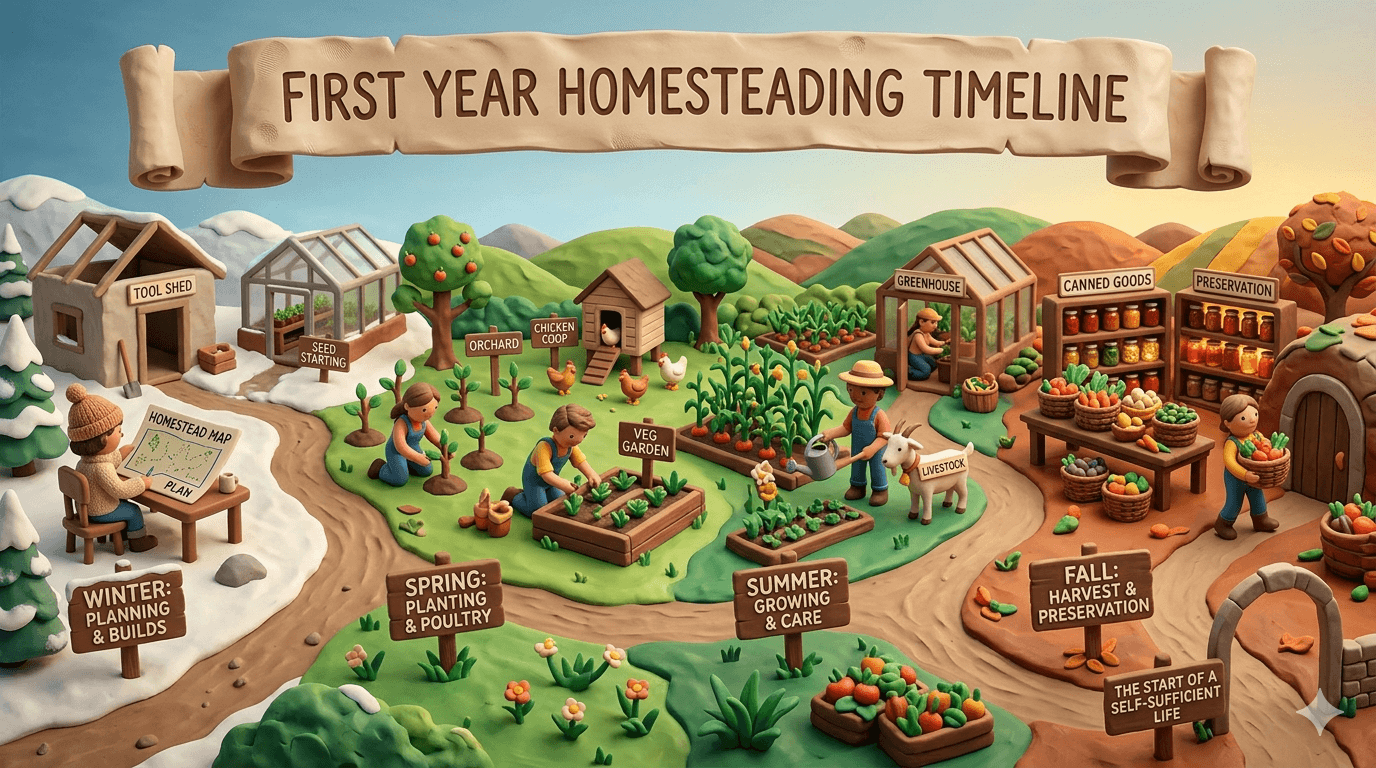
This guide is a steady, friendly timeline for your first twelve months. Each month has one or two real priorities, a short list of small wins, and a clear list of things to leave alone. You will plant a garden. You will probably keep a few animals. You will fix some things and break a few others. By the end of the year you will know your land, your weather, and yourself in a way no book can teach you.
If you have not yet bought your land, our homesteading for beginners guide covers the foundations. If you are working with limited weekend hours, our homesteading as a side project guide will help you size everything down.
Before You Read: How to Use This Timeline
Month 1 in this guide is the day you take possession of your land. It is not January. If you closed in July, your Month 1 is July. The timeline is built that way on purpose so it works for any reader, anywhere in the country.
A few of the months are tied to the seasons (planting, harvest, winterizing). When those months arrive in the timeline, slide them to match your local climate. A reader in Vermont and a reader in Florida will hit "first frost prep" in very different calendar months, and that is fine.
Read the whole timeline once before you start. Then come back at the start of each month and do only what that month asks of you. Resist the urge to read ahead and start projects that belong to Month 8.
Tip
Print the timeline or pin it inside a kitchen cupboard. The number one cause of first year overload is forgetting where you are in the plan and trying to do everything at once.
Month 1: Arrive and Observe
Your only job this month is to pay attention. Walk the property. Sit on the porch at dawn. Watch where the water goes when it rains. Notice which corner the wind hits first, where the deer cross, and which trees drop early.
Start a simple notebook. One page per topic. Water. Weather. Soil. Sun. Animals you see. Plants you can identify. Neighbors you meet. You will use this notebook all year and refer back to it for years.
Find and mark the practical things first:
- The well head, if you have one, and the breaker for the well pump.
- The septic tank lid and the leach field. Note any soft ground above either one.
- The main electrical panel and any sub panels in outbuildings.
- Property pins at all corners. Walk every fence line.
- Any easements, shared driveways, or right of way roads.
- The shutoff for any propane tank or buried fuel line.
Do not start any new projects this month. No new fence. No new garden bed. No animals. The temptation will be enormous. Sit with it. The land will still be there in thirty days, and you will know it ten times better.
Month 2: The Boring but Critical Setup
Month 2 is paperwork and phone calls. Nobody dreams about this part, but skipping it makes year one much harder.
Get the boring stuff handled:
- Property and liability insurance. Make sure your policy reflects the actual use of the land, including any animals or outbuildings. Standard homeowner policies often exclude livestock and farm activities.
- Address registration. Confirm your address with the post office, the county, and emergency services. Rural addresses sometimes do not show up correctly in GPS or 911 systems.
- Utilities and services. Set up trash pickup or a dump account, propane delivery, internet, and a backup plan for power outages.
- A local vet on file. Even if you have no animals yet, find a large animal vet now. The good ones are busy and may not take new clients in an emergency.
- Neighbors. Walk over and introduce yourself. Bring eggs or cookies if that is your style. Ask about water, fences, and the history of the land. They know things you cannot find online.
Use this month to build a simple budget for the rest of the year. A real budget, with a buffer, not a dream list. Our homesteading on a budget guide walks through realistic year one numbers, and the homestead budget calculator will let you stress test your plan against your actual income.
Month 3: Pick Your One Big Year One Project
By Month 3 the urge to build everything is at full strength. Channel it. Pick one big project for the year. Just one.
Most new homesteaders pick from this short list:
| Project | Why It Wins | Why It Might Not Be Right |
|---|---|---|
| Vegetable garden | Fast feedback, real food in months, low cost | Heavy weekly time once planted |
| Small flock of laying hens | Easy daily routine, eggs all season, kid friendly | Predator pressure, coop build up front |
| Perimeter or paddock fencing | Unlocks future animals and protects the garden | Expensive, slow, no immediate food |
| Small orchard or berry patch | Plant once, harvest for decades | No payoff in year one |
| Workshop or barn cleanup | Foundation for every other project | Easy to over scope |
Pick the one project that fits your land, your budget, and the season you are in. Write it on the inside cover of your notebook. Anything else that wants your attention this year either supports that project or waits.
If you are unsure which to pick, default to the garden. Almost every homestead activity gets easier once you understand your soil, your water, and your weather, and a garden teaches all three in a single season. Our starting a garden guide is a good companion for this month.
Month 4: Soil, Water, and the First Real Build
This is the month you stop planning and start building. The build should be small and focused on the one project you picked in Month 3.
Before you break ground, do two cheap, high value tests:
- Soil test. Send a sample to your state extension office. The cost is usually under twenty dollars, and the results tell you what your soil actually needs. Do not skip this and do not guess.
- Water test. If you are on a well, get the water tested for bacteria and basic minerals. If you are on city water, find out where the line enters the property and where the shutoff is.
Then build the smallest version of your year one project that will actually work. A starter garden of three or four raised beds. A coop sized for five hens, not fifteen. A short stretch of garden fence rather than a perimeter. You can always add next year. You cannot easily un build something that turned out wrong.
A few rules of thumb that save money in year one:
- Buy lumber once. Make a full materials list before you start, not three trips into it.
- Use what is already on the land. Old fence posts, scrap metal, stacked stone, free wood chips from a tree service.
- Borrow tools before you buy. A neighbor with a tractor for one afternoon is worth more than a tractor you bought and barely use.
Planting Calendar Tool
Enter your zip code to get a personalized planting schedule based on your USDA zone.
Try it free →Month 5: Planting Season and First Animals
Now the year gets fun. The garden goes in. The chicks come home. The first real harvest is on the calendar.
If your big project is the garden, plant in waves rather than all at once. Cool season crops first (lettuce, peas, spinach, kale). Warm season crops after your local last frost (tomatoes, peppers, beans, squash). Use our planting calendar to set dates that match your zone, not the dates printed on the seed packet.
If your big project is chickens, this is the month chicks arrive or you bring home pullets. Set up a brooder if you are starting from chicks. Read our backyard chickens guide one more time before they show up. The first two weeks are the most fragile. After that, the routine becomes ten minutes a day.
A few small wins to add this month if your time allows:
- Plant one fruit tree. Just one. Stake it, mulch it, water it weekly the first season.
- Start a simple compost pile. Kitchen scraps and yard waste. No special bin needed.
- Set up a rain gauge and a min max thermometer so you can track your weather.
Resist adding a second animal species. Pigs, goats, sheep, and bees are all wonderful, and all wrong for Month 5 of year one.
Month 6: Maintenance Mode and First Mistakes
By Month 6 the new car smell is gone. The garden has weeds. Something has eaten the kale. A hen looks off. The fence sagged. This is normal.
Year one is a year of small failures. Plant a row of beans and watch the rabbits eat them. Lose a tomato crop to blight. Find out the hard way that the south slope floods in a heavy rain. None of these mean you are bad at this. They mean you are learning your land.
Build a weekly maintenance habit:
- One walk through the garden every other day. Ten minutes. Pull a few weeds, look for pests, pick what is ripe.
- Animal chores in the morning before everything else. Fresh water, food, eggs, a quick health check.
- One longer block on the weekend. Two or three hours of bigger tasks. Mowing, mulching, repairs, harvest in volume.
Keep notes on what is working and what is not. Which beds produced. Which seeds failed to germinate. Which hen lays daily and which hen seems to be on vacation. This is the record that will save you money and time in year two.
Month 7: Mid Year Audit
Halfway through the year, sit down for an honest review. This is a one hour exercise, ideally with coffee and your notebook.
Ask three questions:
- What is working well? The wins. The crops that thrived. The animals that fit your routine. The corners of the land you love most.
- What is not working? The projects you started and abandoned. The chores that feel like a grind. The plants that died. The gear that broke.
- What can you drop? Be ruthless. Anything that is not earning its keep can wait until next year. Maybe forever.
If you started two projects in Month 3 against your better judgment, this is the month to officially pause one and put the energy into the other. There is no prize for finishing every project on the list. There is a real prize for finishing a few of them well.
This is also a good month to revisit your budget. Real numbers now exist. Compare them to the plan you built in Month 2 and adjust.
Month 8: Peak Production and Preservation
If you planted a garden in Month 5, Month 8 is when it floods you. Tomatoes by the bucket. Zucchini you cannot give away. Beans hidden under leaves. Eggs in every basket.
Pick one preservation method this year. Just one. Get good at it before adding another:
- Freezing. Wash, chop, freeze. Easiest, lowest learning curve, requires only a chest freezer.
- Fermenting. Sauerkraut, pickles, hot sauce. Ten minutes of active time per batch.
- Dehydrating. Tomatoes, peppers, herbs. Cheap unit, long shelf life.
- Water bath canning. Tomatoes, jams, pickles. Bigger setup, longer learning curve, very satisfying once it clicks.
Save pressure canning, charcuterie, and cheesemaking for year two or three. Our preservation basics guide walks through the easiest first methods if you want a deeper read.
This is also the month most homesteaders meet their first real fatigue. The to do list never empties. The harvest will not slow down. Eat from your garden every night. Take naps. The calendar will turn whether you push or rest.
Month 9: Infrastructure Before the Cold
Even in warm climates, fall brings change. In cold climates it brings a deadline. Use Month 9 for the work that has to happen before the weather turns.
A short list, in priority order:
- Firewood. If you heat with wood, the wood you burn this winter should already be cut, split, and stacked. If it is not, buy seasoned wood now from a local supplier.
- Water. Drain hoses. Insulate exposed pipes. Plan for keeping animal waterers from freezing. Heated buckets, base heaters, or a daily warm water swap all work.
- Coop and shelter. Patch any drafts. Refresh deep bedding. Confirm the coop is dry, ventilated, and predator proof for a season when the predators get hungry.
- Equipment. Service the mower one last time. Fuel up generators. Charge batteries. Pull the tiller in.
- Pantry. Stock staples. Flour, salt, sugar, oil, rice, beans, canned goods. A short power outage in winter is a different experience with two weeks of food in the house.
This is also the month to pull the last of the warm season garden and plant cover crops or mulch heavily for next spring. Future you will be very grateful.
Month 10: Wind Down and Rest
The pace finally slows. The harvest is in. The animals settle into their winter rhythm. The days get shorter and your chore list shrinks with them.
Let it. The temptation to fill the quiet with new projects is a trap. Year one wears people out, and the homesteaders who last are the ones who learn to rest in the off season.
What this month can look like:
- Shorter outdoor blocks. Half an hour a day, mostly animal chores and walking the property.
- More kitchen time. Soup. Bread. Stock from the bones. The freezer and pantry feed you now.
- Reading and learning. This is the season for books, podcasts, and online courses.
- Repairs you put off all summer. The hinge that does not catch. The gate that drags. The leaky waterer.
Do not start a major build in Month 10. The cold, the dark, and the wet make every project take twice as long.
Month 11: Reflect and Record
Sometime in Month 11, sit down with the full year of notes and write a one page summary. Not a journal entry. A short, factual summary of what actually happened.
Include things like:
- The crops you grew and how each one performed.
- The animals you kept, what they cost, and what they produced.
- Total dollars spent on the homestead this year, broken into rough buckets.
- Total dollars saved (groceries replaced by your own food, gifts given, sales if any).
- Weather notes. First and last frost dates. Heaviest rain. Worst storm. Hottest week.
- Lessons learned, in plain sentences. "Tomatoes need more sun than the back garden gets." "Hens go off lay in late fall and that is normal."
This document is gold. You will reread it every January for the rest of your homesteading life. Year three you will look back at year one and laugh at how little you knew. That is the point.
Month 12: Plan Year Two
Now you build the plan for year two, with the benefit of a full year of real data on your own land.
Start with what worked. Whatever earned its keep this year deserves room to grow. Add only one or two new things. The rule is the same as Month 3, just better informed.
A reasonable year two plan looks something like:
- Expand the garden by twenty five to fifty percent, not double.
- Add one new crop you are excited about and one new preservation method.
- Add one new animal species, only if year one chickens taught you the routine.
- Build one piece of infrastructure that unlocks the next phase. A bigger fence. A shed. A real chicken run.
Order seeds in early winter. Buy chicks before the spring rush. Lock in any contractor work, fencing, or earthwork before the busy season hits. Save the rest for the year ahead.
If you are thinking about how your state shapes the next decade of decisions (laws, taxes, water rights, building codes), our state by state homesteading hub is the right next read.
Year One Mistakes to Avoid
Most of the hard lessons in year one come from the same handful of mistakes. You can read them now and skip the worst of them.
- Too many projects. Three big projects in year one means three half finished projects in year two. Pick one.
- Too many animals. Chickens, then goats, then bees, then a pig, all in the same spring. Each species has a learning curve. Stack them across years, not months.
- Too much fence too fast. Big perimeter fencing is expensive and almost always wrong the first time. Fence small. Move it as you learn.
- Ignoring the well or septic. These are the two systems that ruin a year when they fail. Inspect them, know where they are, and budget for service.
- Skipping insurance. A barn fire or a dog bite without proper coverage can end the dream in one bad week.
- Buying every tool. A good shovel, a good wheelbarrow, a sharp pair of pruners, and a chainsaw if you have trees. Borrow the rest until you know what you actually use.
- Comparing your year one to someone else's year ten. The Instagram homestead has been growing for a decade. Yours has been growing for a few months. Run your own race.
Tip
If you only remember one thing from this guide, remember this. Year one is for learning, not for production. Pick a small set of projects. Do them well. Take notes. Rest in the off season. Year two will be three times easier and ten times more productive.
Frequently Asked Questions
How much should I expect to spend in year one?
Most new homesteaders spend somewhere between three thousand and fifteen thousand dollars in year one, on top of the land itself. The range is wide because choices vary so much. A small garden and five hens can be done for under two thousand dollars. Adding fencing, a barn cleanup, and a starter orchard pushes the number quickly. Build a budget in Month 2 and revisit it every quarter.
Do I need a tractor in year one?
Almost never. A tractor is a Year Three or later purchase for most homesteaders. In year one a good wheelbarrow, a sharp shovel, a chainsaw, and a neighbor with a tractor for an afternoon will do everything you need. Spend the tractor money on infrastructure that pays back faster, like fencing or a garden expansion.
Should I get animals right away?
A small flock of laying hens is a reasonable year one animal for most people. Larger animals like goats, sheep, pigs, and cows are better added in year two or later, after you have a routine, a fence, and a sense of how much time the homestead really takes. One species at a time is the rule that saves the most pain.
When should I start the garden?
Plan in Month 3, build in Month 4, plant in Month 5. If your Month 5 lands in midsummer or fall, plant a small fall garden of greens and root crops, then plan a full spring garden for next year. Fighting your local season is rarely worth the effort in year one.
Is one year enough to feel settled?
Settled is a strong word. By the end of year one you will know the land, the rhythms, the weather, and your own limits. You will not feel finished. No homesteader ever does. You will feel like you live there now, and that is what year one is really for.
Where to Go Next
Year one is the foundation. Years two through five are where the homestead starts to feed you, pay for itself, and feel like the place you imagined. Pick a thread that fits where you are now:
- New to all of this? Start with homesteading for beginners.
- Working a full time job alongside this? Read homesteading as a side project.
- Ready to dig into chickens? Our backyard chickens guide covers everything from coop sizing to ordinances.
- Curious how your state shapes the next decade? The state by state homesteading hub is the deep dive.
Welcome to the land. Take it slow. Take notes. Year one is shorter than it feels.

Cole
Founder & Lead Researcher
Cole is the founder of Plan Your Homestead. He works in clinical research and brings a research-first lens to every guide on the site, drawing on a long family line of farmers for grounded, practical perspective.
More in Planning
More articles coming soon. Check back for new planning content.