
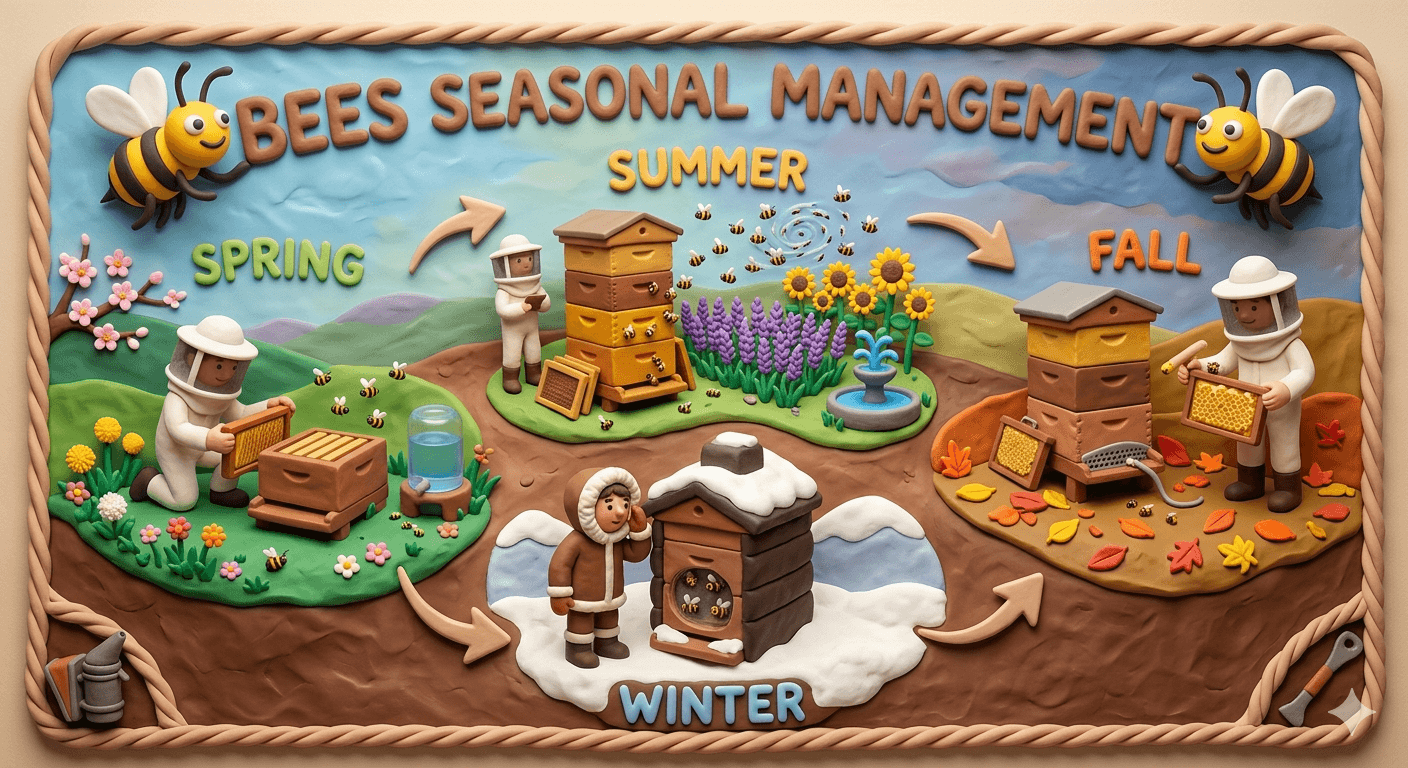
Bees follow the seasons more strictly than any other animal you can keep on a homestead. A great beekeeper is really a great calendar reader. You learn what the colony needs in March, what it needs in August, and what it needs in December, and you show up at the right moment with the right tool in your hand.
This guide is your bees seasonal management reference for the whole year. We walk through spring buildup, the summer nectar flow, fall winter prep, and the quiet months from December to February. Each section gives you the tasks, the thresholds, and the timing that actually matter. If you want the bigger picture on getting started, see our raising bees for beginners pillar guide. For a side by side look at the boxes your bees live in, head to our bee hive types comparison.
The Beekeeping Year at a Glance
Here is the whole year in one table. Use it as a quick refresh anytime you forget what month you are in.
| Season | Colony State | Your Job | Key Threshold |
|---|---|---|---|
| Spring (Mar to May) | Building up fast | Inspect, feed, prevent swarms | 80 percent box fill triggers expansion |
| Summer (Jun to Aug) | Peak population, peak nectar | Add supers, test mites, water | 3 mites per 100 bees triggers treatment |
| Fall (Sep to Nov) | Winding down, raising winter bees | Harvest, feed, treat, button up | 60 to 80 lbs of stored honey for winter |
| Winter (Dec to Feb) | Cluster mode | Stay out, heft, emergency feed if light | Hive feels lighter than a full toolbox |
The seasons above match a typical four season climate in the northern United States. If you keep bees in the south, the same tasks shift earlier or stretch longer. The triggers do not change. Read your bees, not your calendar.
Spring (March to May): Buildup and Swarm Watch
Spring is the loudest season of the beekeeping year. The colony explodes in population, the queen lays at full speed, and your hive can swarm if you miss the signs.
The First Inspection of the Year
Wait for the first day above 50 degrees Fahrenheit with no wind. Open the hive only long enough to confirm three things. The colony is alive. The cluster looks roughly the size of a basketball or larger. Stores are present at the top of the frames.
Do not pull every frame. The bees are still vulnerable to cold, and a long inspection chills the brood. Five minutes is plenty for the first peek.
Tip
A good rule for your first spring inspection is "in and out in five." Pop the lid, scan the top bars, lift one or two frames near the cluster, and close back up. You can do a full frame by frame inspection two weeks later when the weather is warmer.
The First Full Inspection
Two to three weeks after the first peek, when daytime temperatures hold above 60 degrees Fahrenheit, do your first full inspection. You are checking five things.
The queen is laying. You may not see her, but you should see eggs. An egg looks like a tiny grain of rice standing upright in the bottom of a cell. If you see eggs, the queen was there in the last three days.
The brood pattern is solid. Capped brood should fill most of a frame in a tight, contiguous block. Spotty brood with empty cells scattered through means a failing queen or a disease problem.
Stores are still adequate. Bees burn through winter honey fast in early spring while raising new brood. If they have less than two frames of capped honey, plan to feed.
The hive looks healthy. No foul smell, no slimy comb, no piles of dead bees on the bottom board.
You see no swarm cells yet. Swarm cells are peanut shaped queen cells hanging from the bottom edges of frames. None should be present in early spring.
Feeding in Spring
A new package or nuc gets 1 to 1 sugar syrup, free choice, until both brood boxes are about 80 percent drawn out with comb. White cane sugar dissolved in warm water at equal weight is the right recipe.
An established second year colony usually does not need spring syrup unless the hive is dangerously light. Trust their judgment. Bees that ignore the feeder do not need it.
Skip the feeder once natural forage starts coming in. Dandelions, willows, and maples in your area mean the bees are bringing in real nectar and pollen, and syrup just gets in the way.
Adding the Second Brood Box
When the colony fills about 80 percent of the first brood box with bees, brood, and stores, add the second deep on top. Too early and they ignore the upper box. Too late and they feel crowded and start planning to swarm.
The 80 percent rule applies again at every supering step later in the season. Bees expand into the space you give them. Give them the right amount at the right moment.
Spotting Swarm Cells
By late April or May, peanut shaped queen cells along the bottom of frames mean the colony is preparing to swarm. You have a few days to act before half the bees fly off with the old queen.
The standard response is a split. You take three to five frames with brood, bees, and at least one swarm cell, move them to a second hive box, and let them raise a new queen. Both halves then function as their own smaller colony.
A split feels intimidating the first time. It is also the single most useful skill you can learn in your first three years. Your bee club mentor will walk you through one if you ask.
Summer (June to August): Nectar Flow and Mite Testing
Summer is when the colony peaks at 50,000 to 80,000 bees, the main nectar flow hits, and your hive can fill honey supers fast. It is also when the make or break decision of the entire year happens. The August mite test.
Reading the Main Flow
The main nectar flow in most of the United States runs from late May through July. Clover, basswood, sumac, blackberry, and tulip poplar are the heavy hitters. Your bees will tell you the flow is on when foragers crowd the entrance and the hive smells sweet from ten feet away.
A strong flow means weight. A medium honey super can pack on 30 pounds in a week during a good flow. Check your hive every 10 to 14 days during summer so you do not run out of space.
Adding Honey Supers
Add a honey super above the brood boxes once both brood deeps are about 80 percent full. Most beginners use a queen excluder between the brood and honey supers to keep the queen out of the honey frames. Some experienced beekeepers skip the excluder. Try it with one, then decide.
Add the next super before the first is fully capped. Bees ripen and cap honey slowly. They need empty cells above the working super to keep storing fresh nectar.
The August Mite Test
This is the single most important test of the beekeeping year. Do it in late July or the first week of August.
Take a half cup of bees from a brood frame. Swirl them in 70 percent isopropyl alcohol for one minute. Pour through a mesh strainer and count the mites that drop into the alcohol. A half cup of bees is roughly 300 bees, so divide your mite count by 3 to get mites per 100.
Above 3 mites per 100 bees, treat immediately. Above 5, treat aggressively and plan a second treatment in fall. Below 2, you have a window of breathing room, but check again in four weeks.
Warning
A summer mite count above 3 percent is a hive that will die in winter. Mites you ignore in August become deformed wing virus in October and a collapsed cluster in January. The August test is the foundation of every winter survival.
Treatment Options by Temperature
Apiguard is a thymol gel that works between 60 and 105 degrees Fahrenheit. It needs two doses, two weeks apart, in a hive without honey supers on. Smell is strong for the first week.
Apivar is a chemical strip you hang in the brood nest for 42 to 56 days. Works in any summer temperature. No supers on during treatment.
Formic Pro is the only treatment that works with honey supers on, but it has a tight temperature window of 50 to 84 degrees Fahrenheit. Too hot and you risk killing the queen.
Rotate treatments year to year. Mites evolve resistance to any single chemical if you use it every season.
Water and Ventilation in Heat
Bees need water year round, but in July and August they need gallons. They use it to cool the hive by evaporation. Place a shallow water source within 50 feet of the apiary with rocks or marbles bees can land on. If you do not give them one, they will find your neighbor's pool.
In the hottest weeks, prop the outer cover up an eighth of an inch on the front edge for extra ventilation. Bees bearding on the front of the hive in late afternoon are usually just hot, not preparing to swarm.
Fall (September to November): Winter Prep
Fall beekeeping decides which hives survive winter and which die in January. The window is short and every task matters.
Confirm Winter Stores
A standard Langstroth hive needs 60 to 80 pounds of honey in the brood boxes to overwinter in most of the United States. Heft the back of the hive by lifting the bottom rear edge a few inches. A full hive feels like lifting a heavy suitcase. A light hive feels like an empty cardboard box.
If the hive is light, feed thick 2 to 1 sugar syrup until they top up. Bees store thick syrup like ripe honey instead of using it immediately.
Stop feeding when nights drop below 50 degrees Fahrenheit consistently. Cold bees cannot dehydrate syrup, and stored syrup left thin will ferment.
Pulling Honey Supers
Pull any honey supers you intend to harvest after the main flow ends and before the bees start consuming their stores. In most of the United States, this means late August through mid September.
A frame is harvest ready when at least 80 percent of the cells are capped with wax. Uncapped honey is too wet and will ferment in storage.
For year one colonies, leave every drop. Year one bees need their honey to survive winter. The real harvest comes in year two and beyond.
Entrance Reducer Install
Install an entrance reducer in early October. The reducer is a small wooden block that narrows the hive opening to about three inches wide. It blocks mice, slows robbers from other colonies, and helps the cluster defend the hive in cold weather.
Late Fall Oxalic Acid
Late fall is when oxalic acid does its best work. Mites have nowhere to hide because brood production has slowed to almost nothing. A single oxalic acid dribble or vapor treatment in November can knock down mite populations by 90 percent.
Wait for a brood break. In most regions, this is late October or early November after the first hard frost. If your colony is still raising brood in November, the treatment is less effective.
Hive Tilt and Ventilation
Tilt the hive forward by about two degrees so condensation drips out the front entrance instead of dripping back onto the cluster. A wood shim or a small rock under the back of the bottom board does the job.
Add upper ventilation by drilling a half inch hole in the top hive body, or by propping the inner cover slightly open with a popsicle stick on each corner. Damp hives kill more bees in winter than cold hives do.
Winter (December to February): Hands Off Survival
Winter is the season you stop doing things. The bees know how to overwinter. Your job is to leave them alone and watch from a distance.
Why You Stay Out
Bees cluster inside the hive at temperatures below 50 degrees Fahrenheit. The cluster vibrates wing muscles to generate heat, keeping the center near 92 degrees Fahrenheit even when it is 10 below outside. Every time you crack the lid, you let that heat escape and the cluster has to rebuild it from honey reserves.
Resist the urge to peek. Curiosity in February has killed more colonies than any pest.
Hefting From the Outside
Once a month on a warmer day, lift the back of the hive an inch or two and feel the weight. A heavy hive feels like a heavy suitcase. A medium hive feels like a full grocery bag. A light hive feels alarming.
Light hives in midwinter need emergency feeding. Heavy hives need nothing from you.
Emergency Fondant
If the hive feels light in January or February, place a fondant patty or sugar bricks directly on top of the frames on a warm day above 40 degrees Fahrenheit. Liquid syrup freezes solid and the bees cannot drink it. Sugar bricks and fondant stay solid and the cluster can crawl up and eat them.
A homemade sugar brick is just damp white sugar pressed into a paper plate and dried for two days. Place it directly on the top bars, close the lid quickly, and walk away.
Clearing Snow
Snow piles in front of the entrance can suffocate the cluster. Brush snow off the front of the hive after every storm, but do not knock the hive itself.
A small upper entrance that stays clear above the snow line is the best insurance. Drill it in the top hive body before winter.
Reading a Dead Out
If you open a hive in early spring and find a dead cluster, do not panic. Most beekeepers lose at least one hive over a long winter. Look at the cluster before you clean it up. You can usually tell what happened.
A small cluster at the center of empty frames with plenty of honey nearby died of cold. The cluster was too small to keep itself warm.
A normal cluster with mites visible on dead bees died of varroa. You will see deformed wings and shrunken bodies. This is by far the most common dead out cause.
A cluster surrounded by frames of honey, with the cluster itself on empty cells, died of starvation. The bees could not move sideways to reach honey on the next frame during a cold snap.
A hive with a foul smell and slimy brood may have died of disease. Call your state apiary inspector before reusing any of the equipment.
Year Round Tasks That Do Not Care About Season
A few jobs run every month, no matter what the weather is doing.
Keep a clean water source available within 50 feet of the apiary. Bees forage water year round, including warm winter days.
Keep records. A simple notebook with the date, weather, what you saw inside, and what you did is the most useful tool in beekeeping. Patterns you cannot remember will jump off the page when you flip back six months.
Stay in touch with your local bee club. A short text to your mentor when something feels off saves you from a panicked Google search at midnight.
Check the apiary site for new problems. A fallen branch can crush a hive. Skunks scratch at the entrance. Bears, if you have them, can wreck a whole apiary in one night.
Keep neighbors happy. A jar of honey in August buys a lot of goodwill against a stinging incident in October.
Common Seasonal Management Mistakes
These are the seasonal slipups that quietly take out beginner colonies.
- Skipping the August mite wash. This is the cardinal sin of beekeeping. Untreated summer mite loads collapse colonies in winter. Test in August even if you think your bees look fine.
- Inspecting too often in spring. Every time you open the hive in cool weather, you set the colony back. Once every two weeks is plenty in March and April.
- Feeding too late in fall. Thin syrup left in the hive after cold nights ferments and gives bees dysentery. Stop feeding when nights drop below 50 degrees Fahrenheit.
- Wrapping too tight in winter. Sealed insulated hives trap moisture. Condensation drips back onto the cluster and chills it. Ventilation beats insulation every time.
- Harvesting year one honey. Year one colonies need every drop to survive winter. Wait until year two for your first real harvest.
- Ignoring swarm cells in May. Peanut shaped queen cells mean a swarm is brewing. You have a few days to split before half the colony flies off.
- Adding supers too late. A crowded hive plans to swarm. Add the next box at 80 percent fill, every single time.
- Treating with the same product every year. Mites develop resistance to any single chemical. Rotate Apiguard, Apivar, formic, and oxalic across seasons and years.
Frequently Asked Questions
Frequently Asked Questions
Wait for the first day above 50 degrees Fahrenheit with no wind, usually late February to mid March in most of the United States. Open the hive briefly to confirm the colony is alive and has stores. Keep it short. The brood is still vulnerable to cold and a long inspection chills the cluster. Save the full frame by frame inspection for two to three weeks later when daytime highs are above 60.
Every 10 to 14 days during the active season from May through August. Inspections check the queen is laying, the colony has space, and swarm cells are not building. Every two weeks is enough to catch problems early. Weekly is too often and stresses the bees. Monthly is too long and you miss the early signs of swarming or queen failure.
Test in late July or early August and treat immediately if mite counts are above 3 per 100 bees. Then test and treat again in November after a brood break with oxalic acid. The August treatment protects the winter bees that hatch in September. Skipping it is the single most common cause of winter colony loss in North America.
A standard Langstroth hive needs 60 to 80 pounds of honey stored in the brood boxes to overwinter in most of the United States. Colder northern climates push that toward 90 pounds. Southern climates can get by on 40 to 50. Heft the back of the hive in early October. If it feels light, feed thick 2 to 1 sugar syrup until the colony tops up its stores.
Only if the hive is light on stores. Heft the back of the hive in early October. If it feels lighter than a heavy suitcase, feed 2 to 1 sugar syrup until they top up. Stop feeding when nights drop below 50 degrees Fahrenheit consistently. Bees cannot dehydrate cold syrup, and stored thin syrup will ferment. Well stocked hives need no fall feeding.
It depends on your climate. North of upstate New York, a tar paper wrap or insulated hive cozy helps the cluster hold heat. South of that line, wraps are usually unnecessary and can cause moisture problems. Ventilation always beats insulation. A small upper entrance, a slight forward tilt, and a windbreak behind the hive matter far more than insulation.
Pull honey supers in late summer or early fall after the main nectar flow ends and before the bees start consuming their stores. A frame is harvest ready when at least 80 percent of the cells are capped with wax. Year one colonies should keep all their honey to survive winter. The first real harvest usually happens in year two when a strong colony gives 30 to 60 pounds of surplus.
Place a fondant patty or sugar bricks directly on top of the frames on a warmer day above 40 degrees Fahrenheit. Liquid syrup freezes solid and the bees cannot drink it. Sugar bricks stay solid and the cluster can crawl up to eat them. Close the lid quickly to keep the cluster warm. A pound of sugar can buy a colony two to three weeks until natural forage starts.
A Year With Your Bees
The beekeeping year is a loop, not a checklist. Spring buildup leads to summer flow leads to fall prep leads to winter survival leads back to spring buildup. Each season builds on the work you did in the last one. A strong August mite treatment makes for a healthy December cluster. A heavy October feeding makes for a confident March inspection. A patient April split makes for two healthy colonies in July.
Get the rhythm right and bees become the easiest livestock on the homestead. You spend an hour every two weeks in spring and summer. A few hours in October buttoning up for winter. And a quiet four months from November to March when the colony hums along on its own.
For the bigger picture on getting your first hive going, see our raising bees for beginners pillar guide. For the gear that goes with these seasonal tasks, our beekeeping equipment guide breaks down every tool worth buying. To pick the right box style for your apiary, the bee hive types comparison covers Langstroth, top bar, Warre, and Flow Hive side by side. When you are ready to plan the rest of your homestead, browse the full animals hub.

Cole
Founder & Lead Researcher
Cole is the founder of Plan Your Homestead. He works in clinical research and brings a research-first lens to every guide on the site, drawing on a long family line of farmers for grounded, practical perspective.
More in Animals
More articles coming soon. Check back for new animals content.