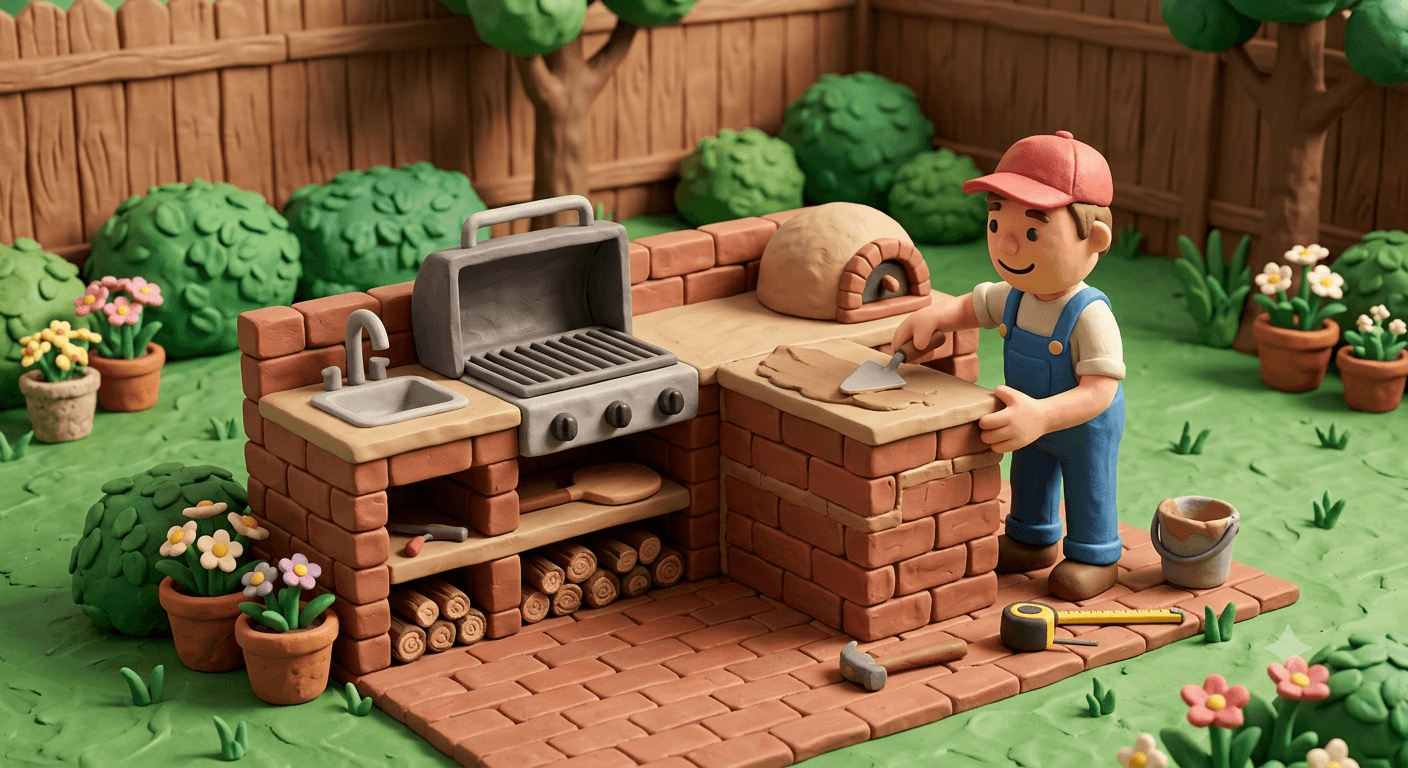
Steaks on the grill while the sun goes down. Friends gathered around a counter with a cold drink in hand. No more running back and forth to the indoor kitchen with a loaded platter. A backyard outdoor kitchen turns your patio into the best room in the house, and the best part is you can build a solid one yourself for a weekend of work and a fraction of the contractor price.
This guide walks you through the whole job in plain language. You will learn the main outdoor kitchen layouts and how they compare, how to plan and site one, which materials to pick, and how to build a sturdy concrete block kitchen with a paver counter step by step. We will cover appliances, tools, a full cost breakdown, and the mistakes that trip up first time builders. Grab a coffee and let us get into it.
What an Outdoor Kitchen Does
An outdoor kitchen is more than a grill on a deck. It is a full cooking and gathering station built to live outside in all weather.
It feeds a crowd. A real counter and a built in grill let you cook for a party without ever leaving the yard. It gathers people. Folks always end up where the food is, so a kitchen with bar seating becomes the heart of every cookout. It keeps the heat out. Cooking outside in summer keeps your house cool and your indoor kitchen clean. And it adds value. A well built outdoor kitchen is one of the most wanted backyard features and it pays you back at resale.
The right kitchen depends on how you cook and how you gather. A simple grill counter looks nothing like a full outdoor kitchen with a sink and a fridge. So the first question is always the same. How will you actually use this space? Answer that and the rest of the choices fall into place.
Outdoor Kitchen Layouts Compared
There is no single best layout. The right one depends on your space, your budget, your patio shape, and how many cooks you expect. Here are the four layouts most backyard builders choose from.
Straight or One Wall
A straight run puts the grill, counter, and storage in a single line against a wall or along the edge of a patio. It is the simplest and cheapest layout you can build.
- Pros. Least material and the least work. Fits narrow patios and tight yards. Easy for a first time builder.
- Cons. Limited counter and prep space. Only one cook fits comfortably.
- Best for. Small patios, tight budgets, and anyone building their first outdoor kitchen.
L Shape
An L shape wraps the counter around a corner, giving you a cooking leg and a prep or serving leg. It is the most popular layout for good reason.
- Pros. Lots of counter space. Separates cooking from prep. Creates a natural spot for bar stools on the outside of the L.
- Cons. Needs more room and more block than a straight run. A bit more layout work to keep the corner square.
- Best for. Medium and large patios where you want room to cook, prep, and serve guests.
U Shape
A U shape surrounds the cook on three sides with counter and appliances. It is the layout of a serious outdoor cook.
- Pros. Maximum counter and storage. Keeps everything within reach. Room for a grill, side burner, sink, and fridge.
- Cons. The most material and the most work. Needs a large patio to fit.
- Best for. Big yards and folks who entertain often and want a full outdoor kitchen.
Island
An island stands free in the middle of a patio, open on all sides, often with bar seating wrapped around one edge. It becomes the centerpiece of the space.
- Pros. Cooks face their guests. Seating on the open side. Looks great from every angle.
- Cons. No back wall for utilities, so plumbing and gas runs are longer. Takes up floor space in the middle of the patio.
- Best for. Large open patios where you want the kitchen to be the social hub.
Tip
If you are building your first outdoor kitchen and you want a project that teaches you everything, a straight or L shape counter built from concrete block with a paver top is the one to learn on. You will pour a pad, lay block, cut in a grill opening, set a counter, and finish the job. That is the build we walk through below, and the skills carry over to every larger kitchen on this list.
Planning Your Outdoor Kitchen
A little planning up front saves you a lot of grief later. Spend an afternoon on these steps before you mix a single bag of mortar.
- Pick the right spot. Build close to the house so carrying food and dishes is easy. Keep the grill clear of the home, fences, and anything that can catch fire, and never tuck it under a low wood eave.
- Mind the wind and sun. Set the kitchen so the prevailing wind carries smoke away from your seating and your house. A little afternoon shade makes the space usable all summer.
- Plan the utilities. Decide early if you want gas, water, and power. Running a gas line, a water supply, and a drain is far easier before the patio and block go in than after.
- Call 811 before you dig. This free service marks buried gas, water, power, and cable lines. It is the law in most places and it can save your life. Call a few days ahead of any digging or trenching.
- Check local code and permits. Many areas require a permit for a gas line, an electrical circuit, or a permanent structure near the house. Ask your local building office before you start.
- Build on a solid base. An outdoor kitchen is heavy. It needs a flat, well drained concrete pad or an existing slab to sit on. Soft ground or pavers over sand will settle and crack your counter.
- Respect the work triangle. Keep the grill, the prep counter, and the sink or serving area within an easy few steps of each other so cooking flows.
Choosing Your Materials
The materials you pick decide how long the kitchen lasts and how much it costs. Here are the choices that matter most.
The Frame
The frame is the boxy base that holds your counter and appliances. You have three common choices.
- Concrete block. Standard cinder block is cheap, strong, fireproof, and beginner friendly. You stack and mortar it like big bricks, then finish the face with stucco, stone veneer, or tile. This is the build we walk through and the best value for most people.
- Steel stud frame. A frame of galvanized steel studs clad in cement board goes up fast and weighs far less. It costs more than block and needs more cutting, but it is a good pick over a deck or where weight matters.
- Brick or natural stone. Beautiful and built to last, but the most expensive and the most skilled work. Best saved for a second project once you have block under your belt.
Whatever you choose, the frame must be noncombustible around the grill. Block and steel both qualify. Never frame an outdoor kitchen in wood near the heat.
The Countertop
The counter is what you see and use every day, so pick a surface that handles weather and heat.
- Pavers or concrete. Capping the block with patio pavers or a poured concrete top is the budget favorite. It is tough, heat resistant, and easy for a beginner.
- Tile. Outdoor rated porcelain tile over a cement board base looks finished and cleans easily. Use a quality outdoor thinset and grout.
- Granite or stone slab. The premium choice. Gorgeous and nearly bulletproof, but heavy and pricey, and usually best installed by a fabricator.
Finishes and Weatherproofing
Face the block with stucco, stone veneer, or tile to dress it up and shed water. Seal the countertop and any masonry against stains and freeze damage. Use stainless steel for any doors, drawers, and the grill so they survive years outdoors. Cheap mild steel rusts fast in the weather.
Appliances and Features
The fun part is deciding what goes in. Build only what you will use, and leave openings for the rest.
- The grill. A built in gas or charcoal grill is the heart of the kitchen. Buy the grill first so you can size the cutout to its exact specs.
- Side burner. A side burner lets you simmer sauces and boil corn without running inside. A handy add for serious cooks.
- Sink and prep area. A small outdoor sink makes cleanup easy. It needs a water supply and a drain, so plan the plumbing early.
- Refrigerator. An outdoor rated fridge keeps drinks and raw meat close at hand. It needs a dedicated weatherproof circuit.
- Storage. Stainless doors and drawers under the counter hold tools, plates, and a propane tank out of the weather.
- Bar seating. A counter overhang of about 12 inches turns one side into a bar where guests can sit and watch you cook.
Plan the layout around your appliances first, then build the block to fit. Leave the right size opening for the grill and any under counter units before you start stacking.
Tools You Will Need
Most of these live in a typical home workshop or rent cheaply by the day.
- Tape measure, chalk line, and a carpenter's square
- 4 ft level and a torpedo level
- Masonry trowel and a margin trowel
- Mixing tub or wheelbarrow for mortar
- Mortar hoe or a drill with a mixing paddle
- Angle grinder with a masonry blade, or a circular saw with a diamond blade
- Cordless drill and impact driver
- Rubber mallet
- Bucket, sponge, and a jointing tool
- Safety glasses, dust mask, and work gloves
A few optional items speed the job along.
- A masonry wet saw for clean block and paver cuts
- A laser level for setting counter height on a long run
- A caulk gun for sealant and adhesive
Materials List and Cost Breakdown
Costs are approximate, based on average United States prices in 2026, for a straight 8 ft concrete block outdoor kitchen with a paver countertop and a built in grill. The budget column assumes a basic grill, a stucco finish, and a watch for sales. Your total swings most with the grill and the finish you pick.
| Item | Quantity | New Cost | Budget Cost |
|---|---|---|---|
| Concrete block, 8x8x16 | 60 | $180 | $150 |
| Mortar mix, 60 lb bags | 8 | $80 | $70 |
| Rebar and wire ties | 1 lot | $40 | $30 |
| Cement board for counter base | 2 sheets | $50 | $40 |
| Patio pavers or counter slab | 1 lot | $150 | $100 |
| Built in grill, stainless | 1 | $600 to $1,200 | $400 |
| Stone veneer or stucco finish | 80 sq ft | $300 | $120 |
| Outdoor rated thinset, grout, sealer | 1 lot | $90 | $70 |
| Stainless access door | 1 | $120 | $80 |
| Concrete pad, if none exists | 80 sq ft | $250 | $200 |
| Total for an 8 ft block outdoor kitchen | ~$2,000 | ~$1,300 |
That works out to roughly $250 to $400 per linear foot for a built in kitchen you make yourself, with the grill as the single biggest cost. Skip the slab if you already have a solid patio and the price drops fast. Hiring a pro to build the same outdoor kitchen usually runs $1,000 to $3,000 per linear foot, so doing it yourself saves real money.
Step by Step Build Instructions
Plan on a weekend or two for a straight run with two people. The block and mortar work goes up in a day, then you let it cure before you set the counter and the grill.
Step 1: Prepare a Level Base
Your kitchen needs a flat, solid base. If you have a sound concrete patio, you are set. If not, pour a level concrete pad at least 4 inches thick and a little larger than the footprint, and let it cure fully before you build on it. Soft ground or pavers over sand will settle and crack your work.
Step 2: Lay Out and Dry Stack the Block
Snap chalk lines on the pad to mark the exact footprint of your counter. Set the first course of block in place without mortar to check the fit and the grill opening. Leave the right size gap for your grill and any under counter doors. Adjust until everything is square and the openings match your appliance specs.
Warning
Buy your grill and any built in units before you lay block. Cut your openings to the maker's exact rough in dimensions, and follow their required clearances to combustible material. A grill set in too tight a hole is a fire hazard and will not fit. When in doubt, leave the gap a little larger and trim later.
Step 3: Mortar the First Course
Mix your mortar to a peanut butter consistency. Lay a bed of mortar on the pad along your chalk line and set the first course of block into it. Tap each block level and plumb with a rubber mallet, and keep a steady joint of about three eighths of an inch. The first course is the most important, so take your time and check level often.
Step 4: Stack the Remaining Courses
Lay the rest of the block course by course, buttering the ends and tops as you go. Stagger the vertical joints so they do not line up, just like a brick wall. Drop a length of rebar down through the cores at the corners and around openings, and check level and plumb on every course. A typical counter runs three to four courses, about 36 inches tall.
Step 5: Run Gas, Water, and Power
If your kitchen has a gas line, a water supply, or electric, rough it in now while the block is open. Run lines up through the block cores to the grill, sink, or outlet locations. Leave gas and electrical connections to a licensed pro unless you are qualified and permitted. This is no place to guess.
Warning
Gas and electrical work near a cooking appliance is serious business. A leak or a bad connection can cause a fire or worse. Hire a licensed plumber for gas lines and a licensed electrician for outdoor circuits unless you hold the proper qualification and permit. Have any gas line pressure tested before you light the grill.
Step 6: Build and Set the Countertop
Cap the block with a base of cement board screwed to a simple frame, or pour a concrete top in place. Once the base is solid, set your pavers or counter slab in a bed of thinset, keeping a slight overhang of about an inch and a 12 inch overhang on any bar seating side. Level each piece and let the thinset cure overnight.
Step 7: Install the Grill and Features
Slide your built in grill into its opening and secure it per the maker's instructions. Connect the gas only after the line has been tested. Install any side burner, sink, fridge, doors, and drawers in their openings. Check that the grill lid clears the counter and that every unit sits flush and square.
Step 8: Finish, Seal, and Light It Up
Dress the block face with stucco, stone veneer, or tile for a finished look. Grout the counter and brush a masonry sealer over the top and any veneer to lock out stains and water. Caulk the gaps around the grill and appliances. Let everything cure, then fire up the grill and cook your first meal.
The outdoor kitchen is done.
Tips for a Long Lasting Outdoor Kitchen
A few habits separate a kitchen that lasts decades from one that cracks in a few years.
- Start dead level. A level first course and a level pad make every other step easier. Crooked block compounds as you go up.
- Drain water away. Slope the counter and the pad a hair so rain runs off instead of pooling. Standing water freezes, stains, and works into cracks.
- Seal the masonry. A good masonry sealer on the counter and veneer keeps out grease, wine, and freeze damage. Reseal every year or two.
- Go stainless outdoors. Use stainless steel for the grill, doors, and fasteners. Mild steel and cheap hardware rust fast in the weather.
- Cover the grill. A fitted cover over the grill and any appliances when not in use adds years to their life for a few dollars.
Common Mistakes to Avoid
A few traps catch nearly every first time builder. Sidestep these and your kitchen will serve you for decades.
- Skipping the 811 call. Hitting a buried gas or power line is dangerous and expensive. Always call before you dig.
- Building on a weak base. A counter set on soft ground or loose pavers will settle and crack. Build on a solid, level concrete pad.
- Buying the grill last. Frame your openings to the grill's exact specs. Building the block first and shopping later is how you end up with a hole that does not fit.
- Ignoring grill clearances. Crowding a hot grill against combustible material is a fire risk. Follow the maker's required clearances every time.
- DIY gas and electric without a license. Gas leaks and bad wiring cause fires. Hire a licensed pro unless you are qualified and permitted.
- Forgetting the slope and drainage. Water that pools on the counter or pad leads to stains, mold, and freeze cracks. Build in a slight slope.
- Using cheap, rust prone hardware. Doors, screws, and fixtures that are not stainless will rust and stain within a season. Spend a little more outdoors.
- Skipping the sealer. Bare masonry soaks up grease and water and stains for good. Seal the counter and veneer before the first cookout.
Frequently Asked Questions
Frequently Asked Questions
A simple straight concrete block kitchen with a paver counter and a basic built in grill runs about $1,300 to $2,000 in materials when you build it yourself, with the grill as the single biggest cost. That works out to roughly $250 to $400 per linear foot. Skipping a new concrete pad and choosing a stucco finish over stone veneer keeps the price low. Hiring a pro to build the same kitchen usually runs $1,000 to $3,000 per linear foot, so doing it yourself saves a lot.
Often yes, especially if you add a gas line, an electrical circuit, or a permanent structure near the house. Many areas require a permit and an inspection for the gas and electrical work even when the counter itself does not need one. Rules vary widely by town and county. Always check with your local building office before you start, and have any gas line pressure tested before you cook on it.
For a budget DIY build, patio pavers or a poured concrete top are tough, heat resistant, and easy to install. Outdoor rated porcelain tile gives a more finished look and cleans easily. Granite or natural stone slab is the premium choice and nearly bulletproof, but it is heavy and pricey and usually set by a fabricator. Whatever you pick, seal it against grease, water, and freeze damage.
Concrete block is the best value for most people. It is cheap, strong, fireproof, and beginner friendly, and you finish the face with stucco, stone veneer, or tile. A galvanized steel stud frame clad in cement board goes up faster and weighs much less, which makes it a smart choice over a deck or anywhere weight matters, but it costs more and takes more cutting. Both are noncombustible, which is what counts around a grill.
Only if you are qualified and permitted. Gas work near a cooking appliance is serious. A leak or a bad connection can cause a fire or an explosion. In most places a gas line for an outdoor kitchen must be installed or inspected by a licensed plumber or gas fitter and pressure tested before use. The same goes for outdoor electrical circuits, which should be on a weatherproof, ground fault protected line installed by a licensed electrician.
A straight concrete block kitchen takes a weekend or two for two people. The block and mortar work goes up in about a day, then you let it cure before setting the counter and the grill. Adding plumbing, gas, electric, a stone veneer finish, or a U shape layout stretches the timeline. The masonry is the slow part. The grill and appliances drop in quickly once the block is cured and the counter is set.
On a solid concrete patio, yes, you can build a block kitchen directly on the slab. On a wood deck, concrete block is usually too heavy, so a lightweight steel stud frame clad in cement board is the better choice, and you should confirm the deck can carry the load. Either way the surface must be flat, solid, and well drained so the counter does not settle, crack, or rust the structure beneath it.
Seal the countertop and any masonry veneer with a quality outdoor sealer and reseal it every year or two. Use stainless steel for the grill, doors, and fasteners so they do not rust. Slope the counter and pad slightly so water drains off instead of pooling and freezing. A fitted cover over the grill and appliances when they are not in use adds years of life for just a few dollars.
Ready to Build Your Outdoor Kitchen?
That is the full picture. You know the layouts, you know how to plan and site one, you know which materials to choose, and you have a step by step plan for a sturdy block outdoor kitchen you can build yourself. An outdoor kitchen is real work, but it pays you back every warm evening with great food, easy entertaining, and the best seat in the yard.
When your kitchen is up, keep building out your backyard. Keep your grilling wood dry and seasoned with our DIY firewood storage shed plans, or grow the fresh produce to cook with a set of raised garden beds just steps from the grill.
For more weekend projects, browse the full DIY hub. For a complete walk through your first season on the land, head over to our starting a garden guide.
Happy building, and happy homesteading.

Cole
Founder & Lead Researcher
Cole is the founder of Plan Your Homestead. He works in clinical research and brings a research-first lens to every guide on the site, drawing on a long family line of farmers for grounded, practical perspective.
More in DIY
More articles coming soon. Check back for new diy content.