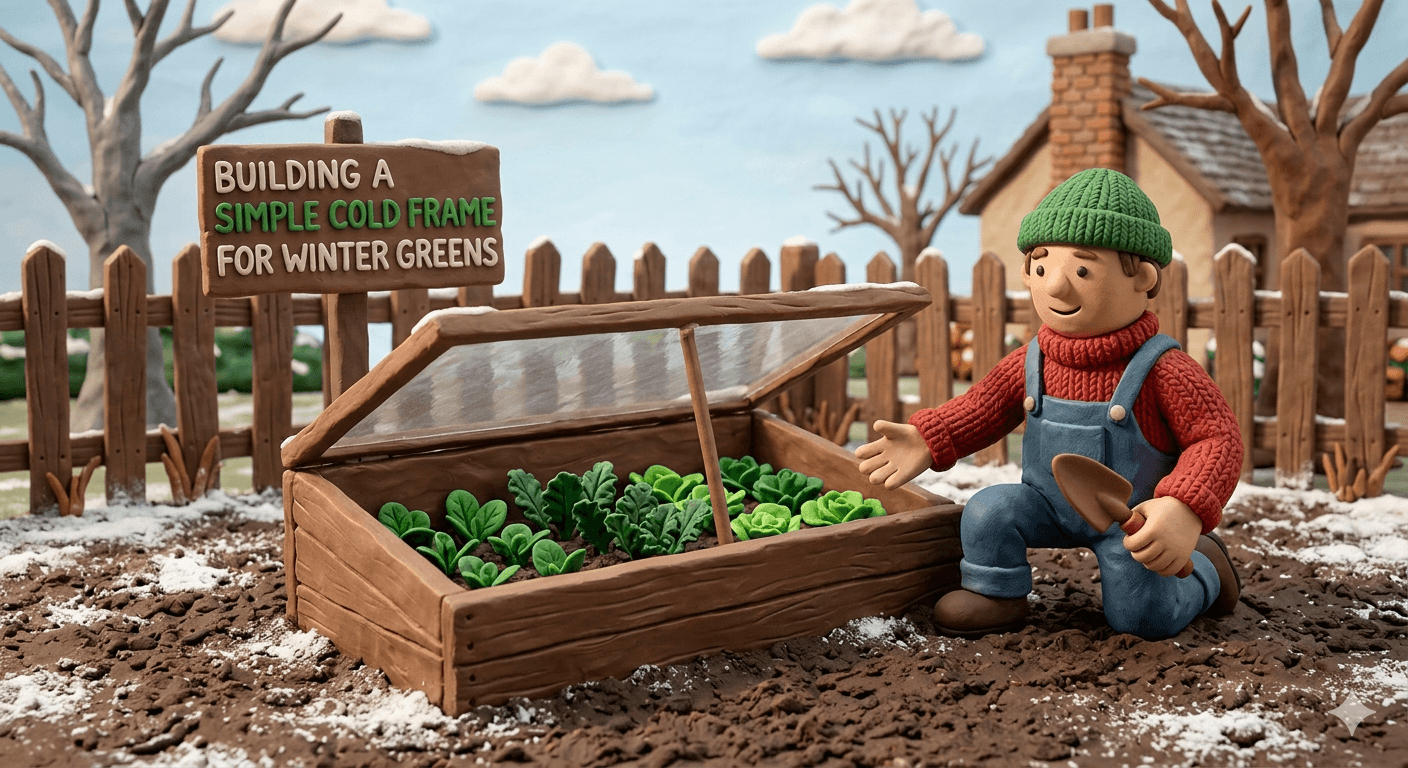
Fresh spinach in February. Crunchy lettuce in January. A handful of kale on Christmas morning. A simple cold frame makes all of that possible, even if your garden is sitting under a foot of snow.
A cold frame is the cheapest, easiest, most beginner friendly way to extend your growing season. No greenhouse. No grow lights. No power. Just a small, slope topped wooden box with a clear lid that traps the sun and turns a sunny corner of your yard into a tiny winter garden.
This guide walks you through a weekend build in plain language. You will get a clear materials list, the right tools, the exact cut sizes, and a step by step build that takes most folks about 4 to 6 hours. The basic frame costs around $30 to $80 in new materials. With a salvaged storm window and a handful of scrap lumber, you can finish the same build for under $20.
If you are still planning out the rest of your winter garden, take a look at our free raised garden bed plans for a matching companion build. Otherwise, grab a tape measure and let us get into it.
What Is a Cold Frame?
A cold frame is a small, bottomless wooden box with a clear, sloped lid. You set it directly on prepared garden soil. The lid lets sunlight in. The walls hold the warmth in. The sloped angle catches the low winter sun and sheds rain and snow.
Inside that little box, you can keep cold hardy greens alive and growing right through the heart of winter. The air inside a closed cold frame on a sunny day can sit 20 to 30 degrees Fahrenheit warmer than the outside air. At night, the soil and the box walls hold that warmth like a thermos.
The whole system runs on sun and time. There is no plug, no pump, no thermostat. Open the lid on warm days, close it before sundown, and let the seasons do the rest.
Why a Cold Frame Beats a Greenhouse for Beginners
A greenhouse is wonderful. A greenhouse is also a major project, with a foundation, framing, glazing, and often a heater and a fan. A cold frame gives you most of the same magic for almost none of the work.
- Cheap. A solid cold frame costs $30 to $80 in new lumber. A starter greenhouse runs $500 and up.
- Quick to build. A weekend project, not a summer project.
- No foundation. The frame sits on prepared soil. Lift it and move it whenever you like.
- No permits in most areas. Always check your local code, but a small, ground level box is almost never regulated.
- No heat needed. The sun does all the work in zones 5 and warmer. Even in zone 3, a well sited frame holds plenty of greens through winter with a layer of straw or row cover at night.
- Scales to any garden. Build one frame to start. Build a second next year. Line them up beside each other for a winter salad bar.
- Doubles as a spring nursery. Once your winter harvest is finished, the same frame hardens off seedlings in March and April.
If you have ever wanted a greenhouse but the money or the project size scared you off, a cold frame is the place to start. It will teach you almost everything you need to know.
What You Can Grow Through Winter
Not every vegetable wants to live through winter. The ones that do are some of the tastiest greens on the homestead. Cold actually sweetens many of them by concentrating sugars in the leaves.
Here is what works best in a 3 ft by 6 ft cold frame.
- Spinach. The undisputed king of the cold frame. Sweet, hardy, and steady through hard freezes.
- Kale. Tuscan, curly, and red Russian all hold up beautifully. The leaves get sweeter every cold snap.
- Mache (corn salad). Tiny, mild rosettes that laugh at single digit temperatures.
- Claytonia (miner's lettuce). Mild, succulent, and almost impossible to kill.
- Arugula. Spicy and quick. One sowing in October feeds the kitchen until March.
- Tatsoi and bok choy. Asian greens that thrive in cool light.
- Parsley. Flat leaf and curly both overwinter happily under cover.
- Scallions and chives. Plant them once and harvest all winter.
- Baby chard. Picked young, chard will keep producing right through the coldest months.
A 3 ft by 6 ft frame holds a generous mix. Plan on one row each of spinach, kale, mache, and arugula and you will have salad on the table from October to April.
Sizing and Siting
The plan in this guide is a 3 ft by 6 ft frame, sloped from 16 inches at the back to 10 inches at the front. That is the sweet spot for a backyard build. It uses standard lumber lengths, fits a single 4 ft by 8 ft polycarbonate panel cut to size, and gives you 18 square feet of growing space.
You can shrink or scale the same plan. A 2 ft by 4 ft frame is plenty for one person who just wants a winter salad. A 4 ft by 8 ft frame feeds a family of four and is about the largest size you can comfortably reach across without stepping inside.
Where you put the frame matters more than how big it is.
- Face the lid south. The low winter sun comes from the south. The lid slope should tip down toward the south to catch as much light as possible.
- Pick a sheltered spot. A south facing wall, a hedge, or a row of evergreens to the north blocks cold winter wind and adds reflected heat.
- Find level, well drained ground. Standing water under a cold frame freezes solid and chills the soil. Sandy or loamy beds work best.
- Stay close to the kitchen. A cold frame 50 feet from the back door gets harvested. A cold frame on the back of the property does not.
- Skip deep shade. Six hours of winter sun is the minimum. More is better.
Walk your yard at noon on a sunny day in December if you can. The spot that feels warmest on your face is the right spot for the frame.
Tools You Will Need
Most folks already own everything on this list.
- Cordless drill and driver
- Circular saw or hand saw
- Tape measure
- Carpenter's square
- Pencil
- Safety glasses
- Two pipe clamps or quick clamps
- Sandpaper or sanding block
- Paintbrush
A few optional items make the job easier.
- Miter saw for cleaner angle cuts on the side pieces
- Cordless impact driver for the long deck screws
- Step bit or countersink bit for clean screw heads
- A second set of hands to hold panels while you screw them together
Materials List and Cost Breakdown
Costs are approximate and based on average United States prices in 2026. The salvaged column assumes free pallet wood, free or thrift store cedar, and a free storm window from a remodel or local marketplace listing.
| Item | Quantity | New Cost | Salvaged Cost |
|---|---|---|---|
| 2x10 x 6 ft cedar (back wall) | 1 | $25 | $0 to $8 |
| 2x6 x 6 ft cedar (front wall) | 1 | $14 | $0 to $5 |
| 2x10 x 8 ft cedar (cut for sides) | 1 | $32 | $0 to $10 |
| 2x4 x 8 ft cedar (corner posts and lid frame) | 1 | $10 | $0 to $5 |
| Twin wall polycarbonate panel, 4 ft x 8 ft, 6 mm | 1 | $45 to $60 | n/a |
| Salvaged storm window, around 36 in x 72 in | 1 | n/a | $0 to $20 |
| 3 inch exterior deck screws | 1 small box | $8 | $8 |
| 1 5/8 inch exterior screws | 1 small box | $6 | $6 |
| 3 inch exterior hinges | 2 to 3 | $12 | $12 |
| Lid stay or wood prop stick | 1 | $0 to $15 | $0 |
| Exterior wood sealer or non toxic paint | 1 quart | $15 | $15 |
| Foam weatherstripping (optional) | 1 roll | $6 | $6 |
| Build total with new materials and polycarbonate | ~$170 | ||
| Build total with salvaged window and reclaimed wood | ~$60 |
Cedar is the standard recommendation because it stands up to wet soil and freezing for a decade or more without treatment. Pine is cheaper and works for 3 to 5 years if you seal it well. Skip pressure treated lumber. The chemicals in modern treated wood are not made for food garden contact, especially with greens you eat raw.
If you can find a heavy old wooden storm window for free, the cost of the build drops dramatically and the frame looks beautiful. The walls and the lid frame are the parts you build. The window is the lid.
Choosing Your Lid: Polycarbonate vs Salvaged Window
The lid is the most important part of the cold frame. It does the work. Two options cover almost every situation.
Twin wall polycarbonate
Twin wall polycarbonate is the modern, easy choice. It is a clear plastic panel about 6 mm thick with two layers and a honeycomb of air channels in between. It is light, almost indestructible, and the trapped air gives it real insulation value. It cuts with a utility knife or a fine tooth saw.
A single 4 ft by 8 ft panel cuts down cleanly to the 3 ft by 6 ft lid in this plan with very little waste. It will not shatter, it will not crack from a thrown snowball, and it shrugs off hail. The slight haze of the panel actually diffuses light evenly across the bed, which is great for greens.
Salvaged storm window
A heavy old wooden storm window has charm that a plastic panel cannot match. It is also free or close to it on most local marketplaces. The trick is to size your box to fit the window, not the other way around. Measure the window first, then cut your back, front, and side pieces so the rough opening matches.
Stick to double pane storm windows or true insulated units if you can find them. A single pane window works, but it loses warmth fast at night and shatters dramatically if a tree branch finds it. If you do use single pane, run a strip of safety film on the inside face. It costs almost nothing and keeps any broken glass out of your salad.
Warning
Never use a single pane glass lid in a cold frame where children or pets play. A failed pane can drop sharp shards onto the bed below. Twin wall polycarbonate, double pane glass, or any pane covered with safety film are all safe choices. Plain single pane glass is not.
Step by Step Build Instructions
Plan on 4 to 6 hours from first cut to finished frame. Work outdoors or in a garage with the door open. Polycarbonate dust is mostly harmless but it does float everywhere.
Step 1: Cut the Side Pieces with the Slope
The two side pieces give the frame its slope. Each side starts as a 2x10 board, 36 inches long. Make a single diagonal cut from 9 1/4 inches tall at one end (full board height) down to about 5 1/2 inches tall at the other end. That diagonal becomes the top edge of the side wall once the back and front are added.
The actual slope works out to about 6 degrees, which is plenty to shed rain and to catch the December sun in most of the country. A steeper slope (8 to 10 degrees) catches a little more sun but uses taller back walls and more lumber. A flatter slope sheds water poorly.
Cut both side pieces identical so the lid sits flat across the top.
Step 2: Build the Back and Front Walls
The back wall is a 2x10 cut to 72 inches. The front wall is a 2x6 cut to 72 inches. No fancy cuts. Just two straight rips at length.
Stand the boards on edge. Sand any rough corners. Set them aside next to the side pieces.
Step 3: Attach the Corner Posts and Assemble the Box
Cut four corner posts from a 2x4. The two back posts are about 9 1/4 inches long (matching the height of the 2x10 back wall). The two front posts are about 5 1/2 inches long (matching the 2x6 front wall).
Stand the back wall up on its long edge. Set a back corner post flush against each end. Drive three 3 inch deck screws through the wall into each post. Repeat for the front wall and front corner posts.
You now have two long wall assemblies, each with corner posts attached. Stand them up in your work area, parallel and 36 inches apart. Set one side piece between them, sloped edge up. Drive 3 inch screws from the outside of the back and front walls into the side piece. Repeat for the other side.
The box is now a rectangle, 6 ft long by 3 ft wide, with the back wall at 9 1/4 inches and the front wall at 5 1/2 inches.
Step 4: Square the Box and Reinforce
Measure both diagonals of the open top of the box. If they match, the box is square. If they do not, push gently on the longer corner until they do. Drive an extra screw through each corner post once the box is square.
Run a bead of exterior caulk along every inside seam if you live in a cold or wet climate. The caulk seals tiny gaps and adds years of life to the box. Skip the caulk if your climate is dry.
Step 5: Build the Lid Frame
The lid frame holds the polycarbonate or the salvaged window. Cut two 2x4 pieces 72 inches long for the front and back of the lid. Cut two more 2x4 pieces 33 inches long for the sides. Lay them out flat to form a 3 ft by 6 ft rectangle. Square the rectangle. Drive two 3 inch screws through each corner.
If you are using a salvaged window as the lid, skip this step entirely. The window already is the lid.
Step 6: Attach the Polycarbonate Panel
Set your 4 ft by 8 ft polycarbonate panel on a clean, flat surface. Mark a 3 ft by 6 ft rectangle on the protective film. Cut along the lines with a sharp utility knife (score and snap) or a fine tooth saw with low pressure. Pull off the protective film.
Lay the polycarbonate over the lid frame. The panel should cover the wood completely with about a half inch of overhang on every side. Drive 1 5/8 inch exterior screws through the panel into the frame at every corner and every 12 inches along each edge. Use a slightly oversized hole in the polycarbonate (a step bit works well) so the plastic can expand and contract with temperature without cracking.
A single bead of clear silicone caulk under the panel before screwing it down seals the lid against drafts. Optional, but worth it in cold climates.
Step 7: Hinge the Lid to the Back Wall
Set the finished lid on top of the box. The 6 ft length of the lid sits along the 9 1/4 inch back wall. Make sure everything sits flush.
Mount two or three exterior hinges along the back. Two hinges are plenty for a small frame. Three are better for a 6 ft lid. Center the outer hinges about 6 inches in from each corner and the third in the middle.
Add a lid stay or a simple wooden prop stick. A 14 inch stick of scrap 1x2 with a notch cut in the bottom does the job perfectly. Prop the lid open at 6 inches for a light vent and 12 inches for a full vent.
Tip
A small thermometer hung inside the cold frame is the best $5 you can spend. Once you see what the frame does at noon on a 30 degree day, you will never forget to vent again.
Step 8: Seal, Paint, and Place
Sand any rough edges. Brush on a coat of exterior wood sealer or a non toxic exterior paint. Cedar can be left bare and will gray with weather, which looks lovely. Pine should always be sealed.
Carry the frame to its garden spot. Set it down. Check that the lid still opens and closes without binding.
The frame is done.
Reclaimed Window Variant
A salvaged window changes the build in three ways.
First, you measure the window before you cut anything. The rough opening of your box (back wall length, front wall length, and side piece length) needs to match the outside dimensions of the window so the window sits flush all the way around.
Second, you skip the lid frame entirely. The window is the lid. Two heavy duty exterior hinges screwed into the top edge of the window frame and the top edge of the back wall do all the work.
Third, you double check the wood condition of the window. A storm window that spent ten years in the sun can have soft, punky frame wood that will not hold a screw. Probe every edge with a screwdriver. If the wood gives way, replace the bad sections with new strips of cedar or pass on that window.
A salvaged window cold frame looks like something out of an old farm catalog. People always comment on it. Just make sure the glass is double pane or covered with safety film for the reasons covered above.
Setting It Up in the Garden
Before you set the frame down, prep the soil under it.
Pull any sod or weeds. Loosen the top 8 to 10 inches with a fork. Mix in 2 to 3 inches of finished compost from your three bin compost system or a quality bagged compost. Rake smooth.
Inset the frame 2 to 3 inches into the soil. This single step blocks cold air from sneaking under the walls and pays back hours of building time on the very first cold night. Bank loose soil, mulch, or straw against the outside walls all the way around. The bank acts as a sweater for the frame.
If you live in zone 4 or colder, set a few bricks or paving stones on the inside floor along the south wall. They warm in the sun all day and release heat into the frame at night. A cheap, simple thermal mass that adds 3 to 5 degrees overnight.
Planting and Timing
Cold frames work in two seasons. Fall and winter for a long harvest of cold hardy greens. Late winter and spring for a head start on the main garden.
Fall and winter sowing
Sow seeds 6 to 8 weeks before your first frost. That gives the plants enough warmth and daylight to size up before growth slows for the year. In most of the country, that means seeding the cold frame between mid August and late September.
A 3 ft by 6 ft frame fits four neat rows running the long way. Try this layout for your first winter.
- Row 1 (front): mache and claytonia, 4 inches apart
- Row 2: arugula, 4 inches apart
- Row 3: spinach, 6 inches apart
- Row 4 (back): kale and parsley, 8 inches apart
Water the bed in lightly. Close the lid. Vent during warm afternoons. By late October, you will be picking the first salads.
Spring sowing
In late February or early March, sow a second round of cold hardy greens for an early spring crop. The lengthening daylight and slowly warming soil push fast growth even before the snow is fully gone.
In late March and April, the same frame becomes a hardening off station. Move flats of tomato, pepper, and broccoli starts into the frame on warm days. Crack the lid. Close it at night. Two weeks of frame life and the seedlings are ready for the main garden.
Daily and Weekly Care Through Winter
A cold frame is not zero maintenance, but the maintenance is small and quick.
Venting on sunny days
Open the lid whenever the inside air temperature climbs above 40 degrees Fahrenheit. Crack it 6 inches for light venting on a 35 degree sunny day. Open it all the way (12 inches or more) on a 50 degree afternoon. A closed frame on a sunny 45 degree day can hit 90 degrees inside, and that level of heat can wilt or scorch the greens you worked so hard to grow.
Close the lid at least an hour before sundown so the frame can trap the day's warmth before the cold sets in.
A small inside thermometer is the easiest way to know when to vent. After a couple of weeks, you will know by feel.
Watering
Water far less than you think. Cold air holds little moisture. The lid keeps rain out. The plants grow slowly. Once every 10 to 14 days is plenty in most climates. Touch the soil under the lid before you water. If it feels damp an inch down, wait.
When you do water, use room temperature water on a mild day so you do not shock the plants or freeze them.
Insulating during deep cold snaps
When forecasts call for nights in the single digits or below, give the frame a little extra protection.
- Drape an old wool blanket, a moving blanket, or a heavy frost cloth over the closed lid at sundown. Pull it off in the morning.
- Stack straw bales against the north and west walls for the worst weeks of January and February.
- Lay a single layer of frost cloth directly over the plants inside the frame. The little tunnel of trapped air buys another 5 to 10 degrees of protection.
These small steps stretch the safe range of the frame from zone 6 down to zone 3 without changing the build.
Common Mistakes to Avoid
A few traps to watch for, especially on a first build.
- Facing the wrong way. The lid must slope down toward the south. North facing frames lose more heat than they gain.
- A lid too steep or too flat. Six degrees is the sweet spot for a 3 ft by 6 ft frame. Too steep and the lid catches wind. Too flat and water pools and finds its way in.
- Single pane glass over a food bed. Use polycarbonate, double pane glass, or single pane with safety film.
- Forgetting to vent on sunny days. A closed frame can cook the greens inside in a few hours. Vent every sunny day.
- Planting too late. Sow at least 6 weeks before the first hard frost. A cold frame holds plants. It does not magically speed up growth in the dark days of winter.
- Skipping the soil bank. A frame sitting flat on the surface loses heat under the walls. Inset it 2 to 3 inches and bank soil or straw around the outside.
- Pressure treated lumber. Use cedar, untreated pine, hemlock, or larch. Skip anything chemically treated.
- Sealing the lid completely airtight. Some air exchange is healthy. A perfectly sealed frame builds humidity and invites mold. Foam weatherstripping is fine. Caulking the lid shut is not.
- Putting the frame in shade. Six hours of direct winter sun is the minimum.
- Skipping the thermometer. A $5 thermometer answers every venting question. Hang one inside on day one.
Avoid these and your cold frame will hold winter greens for years.
Frequently Asked Questions
Frequently Asked Questions
A well sited and well sealed cold frame holds tender greens through nights as cold as 10 degrees Fahrenheit on its own. With a wool blanket draped over the lid and a layer of frost cloth on the plants inside, you can reliably grow spinach, mache, kale, and claytonia through nights as cold as minus 10 degrees Fahrenheit. The plants slow down or stop growing in the deepest cold but they stay alive and start producing again the moment the days lengthen.
Almost never. A cold frame is designed to run on sun and stored heat in the soil. Adding a heat source is rarely worth the cost or complexity. If you live in zone 3 or colder and want to push fresh harvests through January, a single heat cable buried 6 inches below the soil and connected to a thermostat at 40 degrees Fahrenheit is the simplest upgrade. For most homesteads, no heat is needed.
An angle equal to your latitude plus about 15 degrees catches the most December sun. For a homestead at 40 degrees north latitude, that works out to about 55 degrees. That said, a 6 to 10 degree slope is plenty for a small backyard frame. The difference in winter yield between a perfect 55 degree lid and a simple 6 degree lid is small for greens, and the simple lid is far easier to build, easier to vent, and far less prone to wind problems.
Yes, and it is one of the best uses for a frame. From late February through April, the frame becomes a hardening off station. Move flats of tomato, pepper, broccoli, and brassica starts into the frame on warm days. Crack the lid for light venting. Close it at night. Two weeks of frame life and the seedlings are ready for the main garden, much sturdier than indoor only starts.
Twin wall polycarbonate is the safer choice for almost every backyard build. It will not shatter, it weighs a fraction of a glass pane, it cuts with a utility knife, and the air channels inside add real insulation value. Double pane glass is also safe and lasts forever, but it is heavy and expensive. Single pane glass should always be covered with safety film if you use it, especially around children, pets, and food beds.
Cedar lasts 10 to 15 years untreated, longer if you brush on an exterior wood sealer every few years. Untreated pine lasts 3 to 5 years and twice that if you seal it. Hemlock and larch fall in the middle. Inserting the frame 2 to 3 inches into damp soil shortens the life of any wood, so sealing the bottom edges of the box before placement adds several extra years.
Not unless you want to. Once the spring harvest is finished, prop the lid wide open on a stick or remove it entirely and store it. The empty frame can hold a summer crop of basil, lettuce, or low growing herbs that appreciate a little wind protection. Many homesteaders use the frame as a permanent hardening off station and a slug trap (slugs love the warm soil under the closed lid in spring).
Not as a winter crop. Tomatoes and peppers want warm nights and long days, both of which are missing in winter. A cold frame is the wrong tool for them. The frame is excellent for hardening off tomato and pepper seedlings in April and May, and a tall version of the same build can serve as a season extender for early summer planting in cool climates. For winter eating, stick to greens and herbs.
Ready to Build Your Cold Frame?
That is the whole build. A weekend of work, less than $80 in new materials, and a small wooden box that delivers fresh greens through the months when nothing else in the garden is alive. Once you pull your first January handful of spinach, you will wonder why you ever let winter shut down the garden.
When the frame is in place and the seeds are sown, take the next step on your homestead build out. Pair the cold frame with our free raised garden bed plans for a matched set of beginner builds, or grab our three bin compost system so you have a steady supply of rich compost feeding the cold frame soil every fall.
For more weekend projects, browse the full DIY hub. For a complete walk through your first season in the dirt, head over to our starting a garden guide.
Happy building, and happy growing.

Cole
Founder & Lead Researcher
Cole is the founder of Plan Your Homestead. He works in clinical research and brings a research-first lens to every guide on the site, drawing on a long family line of farmers for grounded, practical perspective.
More in DIY
More articles coming soon. Check back for new diy content.