What a Feed Cost Calculator Actually Tells You
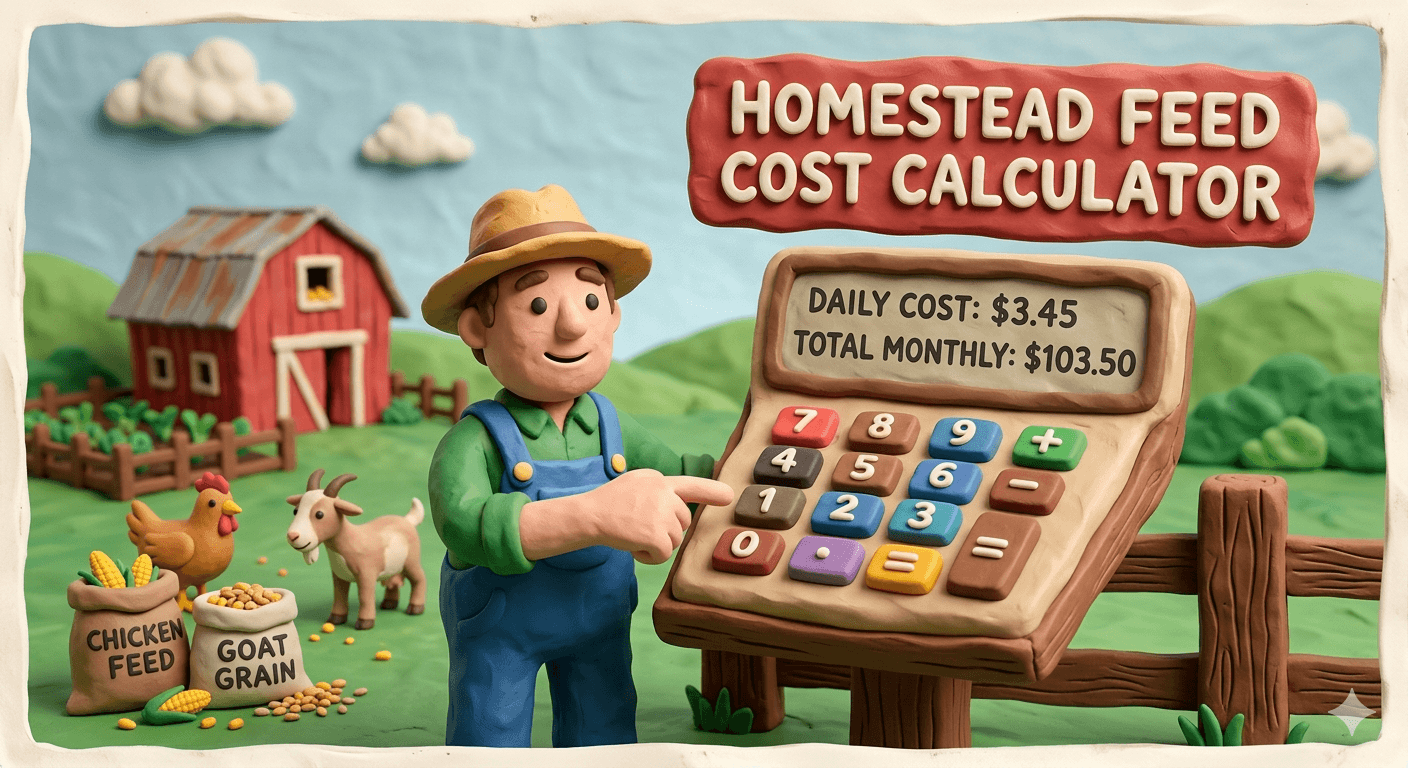
A feed cost calculator answers the one question every homesteader eventually faces. How much will it really cost to feed this animal for a year? You can guess by glancing at the price tag on a single bag of layer crumble. The number that matters, though, is the rolling total of every bag you buy, month after month, across every animal you own.
The tool above does that math for you. You list each animal group. You tell it how many bags you go through per month. You enter what you actually pay at the feed store. It returns a clean monthly total and an annual total in real time. No spreadsheets, no calendar math, no manual receipts.
Both numbers matter, and they matter for different reasons. The monthly figure tells you what to set aside each payday so the feed run never blindsides the budget. The annual figure tells you whether your homestead is paying for itself. If your hens cost you four hundred dollars a year in feed and produce six hundred dollars worth of eggs at grocery store prices, you are in the green. Run the same math without a calculator and most people never know.
How to Use the Calculator Above
The whole workflow takes about thirty seconds once you have your receipts handy.
Step 1. List each animal group. Use one row per type of feed you buy. Laying hens, meat birds, dairy goats, breeding pigs, and the dog if you mill bulk dog food all get their own row. If your laying flock eats one kind of crumble and your chicks eat starter, give them two rows.
Step 2. Enter bags per month. Look at your last receipt or pull up the feed store app on your phone. A fifty pound bag is the standard unit. If you buy by the ton or use bulk totes, divide your monthly total by fifty and enter that number.
Step 3. Enter cost per bag. Use the actual current price at your local store, not last year's number. Feed prices have climbed steadily for the past five years and rounded down estimates undersell your real budget.
Step 4. Watch the totals update. The sticky dashboard at the top of the page keeps your monthly and annual totals visible while you tweak rows. Add a row, remove a row, change a price, and you see the impact instantly.
Step 5. Print it for the shed. Hit the Print button to export a clean copy. Tape it inside the feed room door so the next time you wonder why the credit card statement looks fat, the answer is two steps away.
How Much Feed Each Common Homestead Animal Needs
If you have not bought feed yet, you need rough averages before you can fill out the calculator. Here is the working math for the most common homestead animals. These are baseline numbers. Your real consumption will move up or down with breed, body size, weather, and pasture quality.
Laying hens
A standard layer eats about a quarter pound of crumble or pellets per day. That works out to roughly one and a half pounds per week and around six and a half pounds per month. A fifty pound bag of layer feed feeds about five to six hens for a month. Six birds is the size of a typical backyard starter flock, which puts you at one bag a month with light scratch supplementation. A flock of twelve eats two bags a month. A flock of twenty five eats four bags a month. If you want a tighter per bird number for your specific flock, use our Feed Requirements Calculator.
Meat birds
Cornish Cross broilers eat far more than layers because they grow much faster. A single broiler eats roughly twelve pounds of feed from chick to processing weight at about eight weeks. A batch of twenty five meat birds will burn through about six fifty pound bags before you put them in the freezer. Slower growing heritage breeds eat about fifteen to eighteen pounds per bird across a longer ten to twelve week grow out. The total feed bill is similar. The cash flow is just stretched out.
Dairy goats
A milking doe needs one to two pounds of dairy grain per day on the milk stand. Most homestead does eat about a bag and a half of grain per month while in milk. The bigger expense is hay. A standard doe eats roughly three to four pounds of grass hay daily, or about a hundred pounds a month. A small herd of three milkers can put down a square bale every two to three days through winter. Nigerian Dwarves eat about half that.
Pigs
A feeder pig takes roughly six hundred to eight hundred pounds of feed to grow from weaning at thirty pounds to a finished hog at two fifty. That is twelve to sixteen fifty pound bags over five or six months. If you raise two feeder pigs, double those numbers. Pasture and quality kitchen scraps cut the bag count significantly. A pig finished on woodland forage and dairy waste might only need three or four hundred pounds of purchased feed across the same five months.
Rabbits
A breeding doe eats about four to six ounces of pellets per day plus free choice hay. That is roughly one fifty pound bag of pellets per breeding doe every three to four months. Add nursing kits and her appetite doubles for about a month after kindling. A trio of one buck and two does plus their litters runs through one bag a month during active production.
Why Feed Is the Biggest Variable Cost on Most Homesteads
When new homesteaders sketch a budget for their first batch of animals, the conversation usually centers on big one time numbers. The coop. The fencing. The breeding stock. Those numbers feel dramatic because they show up all at once.
Feed is sneakier. A single bag is twenty five dollars. That feels like a small number. Multiply it by fifty two weeks of purchases across multiple species and feed becomes the largest single line on your homestead spreadsheet. For most operations, feed runs four to ten times the cost of the initial infrastructure within the first two years of ownership.
This is the value of running real monthly numbers before you commit to an animal. A starter flock of six hens looks cheap. The coop is a few hundred dollars and the chicks are five dollars each. Plug six hens into the calculator at one bag per month and that simple little flock costs you about three hundred dollars a year. Add a second flock for meat. Add two goats. The annual feed bill clears two thousand quickly.
None of that means the animals are a bad idea. It means the numbers deserve a clear look before the coop goes up. For a wider view of how feed fits with land, infrastructure, and equipment, run your full picture through our Homestead Budget Calculator.
Planning for Winter Without Sticker Shock
Most feed bills jump in winter. The reasons are predictable, but they catch first year homesteaders every November.
Pasture goes dormant. Animals that grazed half their calories through summer now eat all of them from a bag or a bale. A flock of free ranging hens that took one bag a month in July often takes two by January.
Cold burns calories. A laying hen at twenty degrees needs roughly fifteen to twenty percent more feed than the same hen at sixty degrees. The body uses the extra calories for thermoregulation. Goats and pigs show the same pattern.
Hay replaces grass. If you keep ruminants, winter hay is the single biggest line on the feed bill. A medium sized dairy goat eats roughly a hundred pounds of hay a month. A cow eats five to seven times that. Buy hay in late summer when first cutting is plentiful and prices are at their low. Wait until February and you will pay double, if you can find any.
Pile two months ahead. The single best move for winter feed planning is buying a buffer. If you usually keep two weeks of feed in the bins, push it to two months from October through March. You insulate yourself against winter price spikes, supply disruptions, and the stretch of icy days when you cannot get to the feed store.
Six Ways to Lower Your Feed Bill
Once you can see the real number, the question becomes how to bring it down without compromising the health of your animals. Six moves work for almost every small homestead.
1. Buy direct from the mill. Tractor Supply and other chain stores mark up bagged feed by twenty to forty percent. A local mill will sell you the same crumble in fifty pound bags for roughly fifteen percent less, and in bulk totes for thirty percent less. Find your closest mill, drive out once a month, and you can save a few hundred dollars a year on a mid sized homestead.
2. Ferment chicken feed. Soaking layer crumble in water for two to three days makes the nutrients more bioavailable. Hens eat about twenty five percent less by weight to hit the same daily nutrition. A bucket, a lid, and a slotted spoon is the entire setup.
3. Grow fodder. Sprouted barley or wheat grows from seed to fresh forage in seven days using nothing but trays of water. A pound of seed turns into roughly six to eight pounds of green fodder. Goats, rabbits, and chickens all eat it. Winter fodder racks are a small upfront project that pays back every cold month afterward.
4. Manage pasture rotation. A small paddock grazed continuously is destroyed in a season. The same square footage divided into four or five paddocks and rotated weekly carries roughly twice the animals on half the feed bill. Move your hens behind your goats or cattle and they clean up parasites while gleaning insects. The pasture builds itself.
5. Treat scratch grains as a supplement, not a meal. Cracked corn and scratch are calorie dense, low protein, and cheap by the bag. They are useful as a winter warmer or a foraging incentive. They are not a replacement for layer or grower feed. Tossing a quart of scratch in the run twice a day will fatten the birds and tank their egg production at the same time.
6. Treat kitchen scraps as a bonus, not a plan. Vegetable peels, stale bread, and leftover oatmeal are perfectly good supplements for chickens and pigs. They are not consistent enough or balanced enough to replace a complete ration. Use them to stretch the bag, not to skip it.
How This Calculator Fits With Your Other Homestead Planning
Feed cost is one number in a much bigger picture. The tools across this site stack together so you can see the full operation before you commit a single dollar.
Start with the species before the spreadsheet. If you have not yet picked which animals fit your land and your goals, run our Livestock Quiz. It walks you through space, climate, and lifestyle fit and points to the species worth starting with.
If chickens are on your list, the choice of breed makes a measurable difference in feed efficiency. A heavy dual purpose breed eats more than a smaller production layer for the same number of eggs. Our Chicken Breed Picker lets you compare twenty five breeds side by side, including their feed to egg ratios.
Once you have your animals chosen, plug the bag counts into this calculator for a quick monthly and annual feed total. Then take that figure into the full budget. Run the rest of your homestead numbers through our Homestead Budget Calculator to see how feed lines up against land, infrastructure, and one time costs like the coop and fencing.
A homestead is built one decision at a time. A feed cost calculator will not feed your animals for you. It will keep you from looking up in October and wondering where the year went.
Frequently Asked Questions
How much feed does a chicken need per day?
What is the average monthly feed cost for a small flock?
Is it cheaper to mix my own feed?
Does pasture feeding actually save money?
How do I budget for feed when prices keep changing?
How much hay does one goat or cow need per winter?
Should I buy organic feed?
Can I feed kitchen scraps instead of buying feed?
Written by Cole. Last updated May 2026.