Most new beekeepers go wrong in one of two ways. They either drop $700 on a glossy starter kit packed with gear they will never use, or they show up the morning their bees arrive and realize they forgot a hive tool. Both mistakes are easy to avoid with one good checklist.
This guide is that checklist. Every essential piece of beekeeping equipment, every optional upgrade, what you can absolutely skip, and what each item actually costs in 2026. It is built for homesteaders running one to three backyard hives, not commercial operations.
If you are still picking your first hive, start with the bee hive types comparison. And if you want the full picture of your first year with bees, the raising bees for beginners pillar guide walks through everything from picking a spot to surviving your first winter.
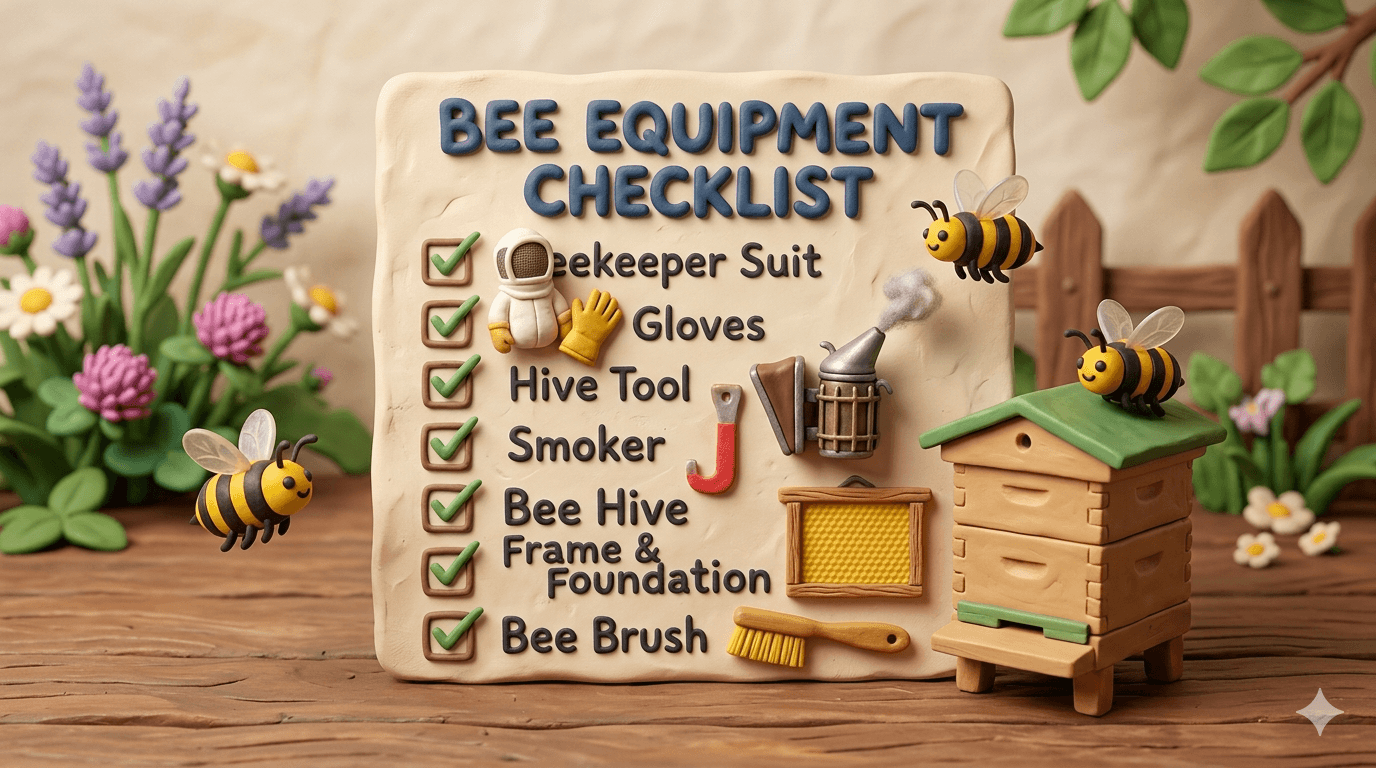
The Quick Reference Checklist
Here is the master list at a glance. Every item below is broken down in detail later in the article.
| Item | Essential or Optional | Cost (2026) | When You Need It |
|---|---|---|---|
| Hive body (deep box) | Essential | $30 to $50 | Day one |
| Frames with foundation | Essential | $3 to $5 each | Day one |
| Bottom board | Essential | $20 to $35 | Day one |
| Inner cover | Essential | $15 to $25 | Day one |
| Telescoping outer cover | Essential | $25 to $40 | Day one |
| Hive stand | Essential | $30 to $80 or DIY | Day one |
| Bee suit or jacket | Essential | $80 to $200 | Day one |
| Veil | Essential | Bundled with suit | Day one |
| Beekeeping gloves | Essential | $15 to $30 | Day one |
| Smoker | Essential | $30 to $60 | Day one |
| Smoker fuel | Essential | $5 to $15 | Day one |
| Hive tool | Essential | $8 to $20 | Day one |
| Frame grip | Optional | $15 to $25 | First inspections |
| Bee brush | Optional but cheap | $5 to $10 | First inspections |
| Entrance feeder | Essential year one | $5 to $15 | Day one |
| Top feeder or frame feeder | Optional | $15 to $30 | First spring |
| Sugar (for syrup) | Essential | $25 per 25 lb bag | Day one |
| Mite test kit (alcohol wash) | Essential | $15 to $25 | First summer |
| Oxalic acid vaporizer | Optional but recommended | $40 to $150 | First fall |
| Oxalic acid or mite strips | Essential | $15 to $40 | First fall |
| Entrance reducer | Essential | Often bundled, or $3 | Day one |
| Mouse guard | Essential | $5 to $10 | First fall |
| Honey super (medium box) | Essential by year two | $25 to $40 | Spring of year two |
| Super frames | Essential by year two | $3 to $4 each | Spring of year two |
| Queen excluder | Optional | $10 to $20 | Year two |
| Uncapping knife or scratcher | Essential at harvest | $15 to $80 | Harvest day |
| Honey extractor | Essential at harvest (borrow) | $0 borrowed, $200 to $500 owned | Harvest day |
| Double sieve strainer | Essential at harvest | $20 to $35 | Harvest day |
| Food grade bucket with honey gate | Essential at harvest | $25 to $45 | Harvest day |
| Glass jars and lids | Essential at harvest | $1 to $2 per jar | Harvest day |
| Insulation wrap or quilt box | Climate dependent | $20 to $60 | First fall |
| Refractometer | Optional upgrade | $30 to $60 | Year two |
| Hive scale | Optional upgrade | $50 to $300 | Year two |
That is everything. Now let us break it down piece by piece.
Hive Bodies and Frames
The wooden boxes are the heart of the setup. For a standard Langstroth hive, you start with one deep brood box for year one. By year two, most homesteaders run two deeps stacked on top of each other.
Deep hive body. One $30 to $50 box. It holds 10 frames where the queen lays eggs and the colony stores winter food.
Frames and foundation. You need 10 frames per box. Wooden frames with wax or plastic foundation run $3 to $5 each. Plastic foundation is cheaper and almost indestructible. Wax foundation is what the bees prefer. Most beekeepers run a mix.
Bottom board. The floor of the hive. A screened bottom board runs about $30 and lets debris fall through, which helps with mite monitoring. A solid bottom board is cheaper at $20 and gives a touch more winter warmth in cold climates.
Inner cover. A thin wooden lid that sits between the top box and the outer cover. Runs $15 to $25. It gives the bees a flat surface to glue propolis to instead of gluing the outer lid shut.
Telescoping outer cover. The metal topped lid that sheds rain. $25 to $40. Buy one with galvanized steel on top. It will outlast you.
Hive stand. Keeps the hive 12 to 18 inches off the ground, away from skunks and damp. A pair of cinder blocks works. A pressure treated 4x4 frame works. Premade stands run $30 to $80.
Tip
Buy unassembled and unpainted boxes if you have any woodshop skills. They run about 40 percent less, and you get to paint the outsides any color you like. Just make sure to paint only the exteriors. Bees do not want paint inside their home.
Protective Gear
You will get stung at some point. The right gear keeps it from happening every inspection.
Bee suit or jacket. A full suit covers ankle to wrist with an attached veil. A jacket covers waist to head and runs cheaper. New beekeepers should go full suit for the first year. Ventilated mesh suits run $120 to $200 and are worth every dollar in summer heat. Cotton suits are cheaper at $80 to $120 but feel like a sauna in July.
Veil. The mesh hood that keeps bees off your face. Almost always comes attached to the suit or jacket. A round veil with a stiff hat brim keeps the mesh off your face. A fencing style veil zips directly to the jacket and is fast to put on. Both work.
Beekeeping gloves. Goatskin or cowhide with long elastic cuffs that go past your elbow. $15 to $30. Stings rarely make it through. Some experienced beekeepers work bare handed for finer control, but new beekeepers should always glove up.
Boots. Any closed toe boot with a tall sock tucked into your suit. You do not need to buy special bee boots.
Warning
Suit fit matters more than suit price. A loose cuff that exposes your wrist will get you stung no matter how expensive the suit was. Try the suit on before your bees arrive, tuck every gap, and walk around the yard in it once just to find the loose spots.
Hive Tools
The handful of small tools you reach for every single inspection.
Smoker. The classic stainless steel bellows smoker. $30 to $60. A 10 inch model is right for one to three hives. Buy one with a heat shield wrapped around the firebox. Your forearms will thank you.
Smoker fuel. Pine needles, burlap scraps, dried grass, or commercial pellets. A bag of pellets runs $5 to $15 and lasts a whole season. Free fuel is everywhere if you look.
Hive tool. A flat metal pry bar. The J hook style is best for new beekeepers because the hook lets you lift frames out without crushing bees. $8 to $20.
Frame grip. A spring loaded grabber that lifts frames straight up out of the box. $15 to $25. Not strictly essential, but it saves your back and your fingertips. Most new beekeepers love it after one inspection.
Bee brush. A soft bristled brush for gently moving bees off a frame. $5 to $10. Cheap enough that there is no reason to skip it.
Feeding Equipment
You will feed your bees sugar syrup in their first spring while they draw comb, and possibly again in fall if winter stores look light.
Entrance feeder. A jar with a perforated lid that sits in the hive entrance. $5 to $15. Cheap, easy to check, but invites robbing from other colonies once nectar flow drops.
Top feeder or frame feeder. Holds a gallon or more of syrup right inside the hive. $15 to $30. Better than entrance feeders once you have more than one colony nearby. Top feeders sit on top of the brood box. Frame feeders replace one frame inside the box.
Sugar. Plain white cane sugar. A 25 pound bag runs about $25 at warehouse stores. You mix it 1:1 with water for spring feed and 2:1 for fall feed.
Pest and Disease Management Gear
Varroa mites are the number one cause of dead colonies in the United States. You manage them or you lose your bees. There is no third option.
Mite test kit. The alcohol wash kit is the gold standard. $15 to $25 for a Varroa EasyCheck or similar. You shake 300 bees in alcohol, the mites drop off, and you count them. Test once a month from May through October.
Oxalic acid vaporizer. A heating wand that vaporizes oxalic acid crystals into the hive. $40 to $150. The most effective late fall mite treatment when the colony is broodless.
Oxalic acid or formic acid strips. The chemicals themselves. Oxalic acid runs $15 to $25 for a year of supply. Formic Pro strips are easier but pricier at $30 to $40 per treatment cycle.
Entrance reducer. A thin strip of wood that narrows the hive entrance. Often comes bundled with new hive kits, or $3 if bought separately. Wasps, mice, and robbing bees cannot squeeze through a reduced entrance.
Mouse guard. A piece of metal mesh that staples across the entrance in fall. $5 to $10. A field mouse will move into a warm hive in October and shred comb all winter if you let her.
Warning
A summer mite count above 3 percent is a hive on track to die in winter. Test in late July or early August, every year, no exceptions. Mites you ignore in August become deformed wing virus in October and a collapsed cluster in January. The full seasonal calendar lives in our bees seasonal management guide.
Harvest Equipment
Year one homesteaders almost never harvest honey. The bees need every drop for winter. By year two, you start pulling supers and need this gear. Most of it can be borrowed from a local bee club for free.
Honey super (medium box). A shorter box that holds frames of honey, stacked on top of the brood box. $25 to $40. Mediums are lighter than deeps and easier to lift when full.
Super frames and foundation. 10 frames per super, $3 to $4 each.
Queen excluder. A metal or plastic grid that keeps the queen out of the supers so she does not lay eggs in your honey frames. $10 to $20. Some beekeepers swear by them. Others call them honey excluders because bees are slow to cross. Optional.
Uncapping knife or capping scratcher. The knife heats up and slices wax caps cleanly off the comb. $40 to $80. A capping scratcher is a metal fork that works on uneven comb for $15. Both work.
Honey extractor. A drum that spins frames and flings honey out. A two frame hand crank extractor runs $200 to $300. A four frame electric runs $400 to $500. Almost every local bee club loans extractors free during harvest season. Borrow first, buy in year three or four if you scale up.
Double sieve strainer. A two layer mesh strainer that catches wax bits and bee parts. $20 to $35.
Food grade bucket with honey gate. A 5 gallon bucket with a spigot at the bottom. $25 to $45. Holds about 60 pounds of honey and lets you fill jars without dripping everywhere.
Glass jars and lids. Pint, half pint, and quart mason jars all work. $1 to $2 per jar. Sanitize in the dishwasher on hot before bottling.
The full harvest workflow, including timing and yield expectations, lives in our how to harvest honey on a homestead guide.
Winter Prep Gear
What you need here depends entirely on your climate. Bees in coastal Georgia need almost nothing. Bees in northern Vermont need real protection.
Insulation wrap. Black tar paper or a foam wrap that goes around the hive in late fall. $20 to $40. Adds five to ten degrees of warmth inside the cluster on the coldest days.
Quilt box or moisture board. A shallow box filled with wood shavings or burlap that sits above the inner cover. $25 to $60. Soaks up condensation, which is what actually kills wintering bees in most climates. Wet bees die. Cold dry bees survive.
Candy board or fondant. Emergency winter food that sits on top of the frames. $15 to $30 for a premade board, or you can make your own with sugar and water. Bees will eat this if they run out of honey before spring.
Windbreak. Hay bales, plywood, a row of evergreens. Free or close to it. Blocks the worst winter wind from hitting the hive entrance.
Nice to Have Upgrades
The year two and year three wishlist. None of these are essential, but each one earns its keep.
Refractometer. Measures the water content of honey in seconds. $30 to $60. Aim for 18.6 percent or lower so honey will not ferment. Pays for itself the first time you almost pull a wet super.
Hive scale. A digital scale that sits under the hive and tracks weight all year. $50 to $300. You learn exactly when the nectar flow starts, when it ends, and when winter stores are running low. Game changer.
Marked queen. Buying queens with a paint dot on the thorax. Adds $5 to the queen price. Makes the queen 10 times faster to spot during inspections.
Second hive stand. Always start a second hive in year two. Two hives let you swap frames between colonies if one runs into trouble. The single biggest survival upgrade you can make.
Observation window. A hive box with a glass side panel. Lets kids and visitors watch the colony work without opening the hive. Great for getting family hooked on beekeeping.
What You Can Actually Skip
Beekeeping suppliers will sell you all kinds of gear. Most of it is fluff. Here is what to leave on the shelf.
Electric fencing for one or two backyard hives. Useful in serious bear country. Overkill almost everywhere else. Save the $200.
Premium $400 ventilated suits. A $150 ventilated suit fits the same and stings the same. Brand name does not matter.
Plastic queen catcher cages. Fun gadget. You will use it once.
Fancy hive painting kits. A $20 gallon of exterior latex paint covers four hives easily.
Pollen traps in year one. Trapping pollen weakens a colony that is trying to build. Wait until year three.
Honey bottling tank with built in warming. Useful if you scale to 50 plus pounds of honey per year. Skip for backyard volumes. A bucket with a gate handles it.
Pre printed inspection sheets. A plain notebook and a pencil work better and cost a dollar.
Total Cost Breakdown
Three honest budgets for the same hobby. Pick the one that matches your starting cash.
| Setup | What You Get | 2026 Cost |
|---|---|---|
| Bare minimum | One Langstroth deep, 10 frames, suit, gloves, smoker, hive tool, entrance feeder, mite kit, oxalic acid. Borrow the extractor at harvest. | $350 to $450 |
| Comfortable starter | Above plus second deep, screened bottom board, frame grip, top feeder, oxalic acid vaporizer, mouse guard, insulation wrap. | $550 to $750 |
| Full kit with harvest gear | Above plus two honey supers with frames, queen excluder, uncapping knife, two frame extractor, double sieve, honey gate bucket, 24 jars. | $1,000 to $1,400 |
Add bees on top of any setup. A 3 pound package of bees with a queen runs $150 to $200. A nuc with five frames of brood runs $200 to $300.
Sourcing Tips
Where you buy your gear matters almost as much as what you buy.
Local bee clubs. Your single best resource. Most clubs sell members discounted gear, run group buys on bees and queens, and loan out extractors. Annual dues are usually $25 to $40. Joining a club before you buy any equipment will save you hundreds.
Mann Lake. The largest beekeeping supplier in the United States. Reliable gear, free shipping over a certain order size, fair prices. A safe default.
Dadant. Old and well respected. Slightly pricier than Mann Lake but excellent quality and great phone support if you have questions.
Betterbee. Vermont based, friendly customer service, runs sales often.
Used gear. A great way to save money on woodenware, smokers, suits, and tools. Never buy used brood frames, foundation, or comb. American foulbrood spores survive for decades and you can wipe out your colony with infected used comb. Empty boxes are fine if you scrape and torch the inside surfaces first.
Tip
Your county extension office often runs a free or cheap beginner beekeeping short course in late winter. Sign up before you spend a dollar on equipment. The class will save you from a dozen rookie mistakes and connect you to the local bee club in one shot.
Common Mistakes When Buying
The five buying mistakes that cost new beekeepers the most money.
- Buying a complete starter kit without reading the box list. Some packaged kits include parts you do not need, like a fancy queen catcher, and leave out the things you actually do need, like a hive tool. Always read the contents.
- Skipping the second deep box. A single deep is not enough for winter in most of the country. You will need to add a second deep in late summer no matter what. Buy both up front.
- Buying a cheap cotton suit because it is cheaper. You will sweat through inspections, hate every minute of it, and quit by August. Spend the extra $50 on a ventilated suit.
- Going straight to two hive kits as a first time beekeeper. Start with one. You will make mistakes. Doubling the gear means doubling the mistakes.
- Buying an extractor in year one. You will not harvest honey in year one. Borrow from the club in year two. Buy in year three or four once you know you are sticking with the hobby.
- Forgetting the mite test kit. This is the cheapest piece of gear that saves your colony. Order it the same day you order your bees.
FAQ
Frequently Asked Questions
One Langstroth deep brood box with 10 frames, a bottom board, inner cover, telescoping cover, a bee suit, gloves, a smoker, a hive tool, an entrance feeder, sugar for syrup, and a mite test kit with oxalic acid. That is roughly $350 to $450 in 2026 and it gets you through your full first year. Everything else can wait.
A complete starter kit with a single hive, full protective gear, and tools runs $400 to $600. A comfortable starter setup with two deeps, better feeders, mite treatment gear, and winter prep runs $550 to $750. Add harvest equipment in year two and the full kit lands around $1,000 to $1,400. None of those numbers include the bees themselves, which run $150 to $300 per colony.
No. New colonies almost never produce surplus honey in year one because they are still drawing comb and building winter stores. Borrow an extractor from your local bee club in year two. Most clubs loan them free during harvest season. Buy your own in year three or four only if you stick with the hobby and your hives are producing 40 pounds or more of harvestable honey per year.
Some experienced beekeepers work in a jacket and veil, or even a tee shirt with just a veil. New beekeepers should not. A full ventilated suit is $120 to $200 and removes the fear factor from your first ten inspections. Once you have a season under your belt and know how to read the colony, you can downgrade to a jacket. Always wear a veil. Stings to the face go badly fast.
A hive body is a deep box where the queen lays eggs and the colony stores brood and winter food. A honey super is a shorter box, usually a medium or shallow, that sits on top of the brood boxes and holds only honey for you to harvest. The deeps stay on the hive year round. The supers go on in spring and come off at harvest.
Plastic foundation is cheaper, never breaks, and is easier for new beekeepers because the bees draw straighter comb on it. Wax foundation is what the bees prefer and what most experienced beekeepers run. A common compromise is to run plastic in the brood boxes and wax in the honey supers. Both work fine. Pick one and do not stress about it.
Yes. Varroa mites are the number one cause of dead colonies in the United States and untreated hives almost always collapse within two years. A $25 alcohol wash test kit and a $20 bottle of oxalic acid is the difference between bees that live through winter and bees that die in January. Test monthly from May through October, treat any time the count goes above 3 percent, and always treat once in late fall when the colony is broodless.
Yes for most of the woodenware. Hive bodies, bottom boards, inner covers, and hive stands all have free plans online and require basic woodshop skills. Frames are usually not worth building from scratch because precut frame kits run $3 each and take 30 seconds to assemble. Smokers, extractors, and bee suits are not realistic DIY projects. Buy those.
Painted wooden hive bodies last 15 to 25 years with normal use. Frames last 5 to 10 years before the comb needs swapping out. Smokers and hive tools last a lifetime. A cotton bee suit lasts 5 years. A ventilated mesh suit lasts 3 to 5 years before the mesh starts to fail. Galvanized outer covers outlast everyone. The upfront investment pays off for a long time.
Used wooden boxes, smokers, hive tools, suits, and even extractors are fine. Used brood frames, foundation, and drawn comb are not. American foulbrood spores survive for 50 years and will infect a new colony placed on contaminated frames. If you buy used boxes, scrape them clean and torch the inside surfaces with a propane torch until the wood just barely browns. That kills any lingering spores.
The Bottom Line
Three takeaways to walk away with.
- Start simple. One hive, the essential gear, and a borrowed extractor will carry you through year one and most of year two.
- Never skip mite gear. The cheapest box on the checklist is the one that decides whether your bees live through winter.
- Join a local bee club before you spend a dollar. Club discounts, free extractor loans, and the wisdom of beekeepers who have done this for 30 years are worth more than any starter kit.
When you have your gear sorted, the next step is picking the right hive style for your homestead. Our bee hive types comparison walks through Langstroth, top bar, Warre, and Flow Hive side by side. Once your bees arrive, the bees seasonal management guide keeps you on track every month of the year, and the honey harvest guide covers everything you need for the day you finally pull your first super.
Cole
Founder & Lead Researcher
Cole is the founder of Plan Your Homestead. He works in clinical research and brings a research-first lens to every guide on the site, drawing on a long family line of farmers for grounded, practical perspective.
More in Animals
More articles coming soon. Check back for new animals content.