
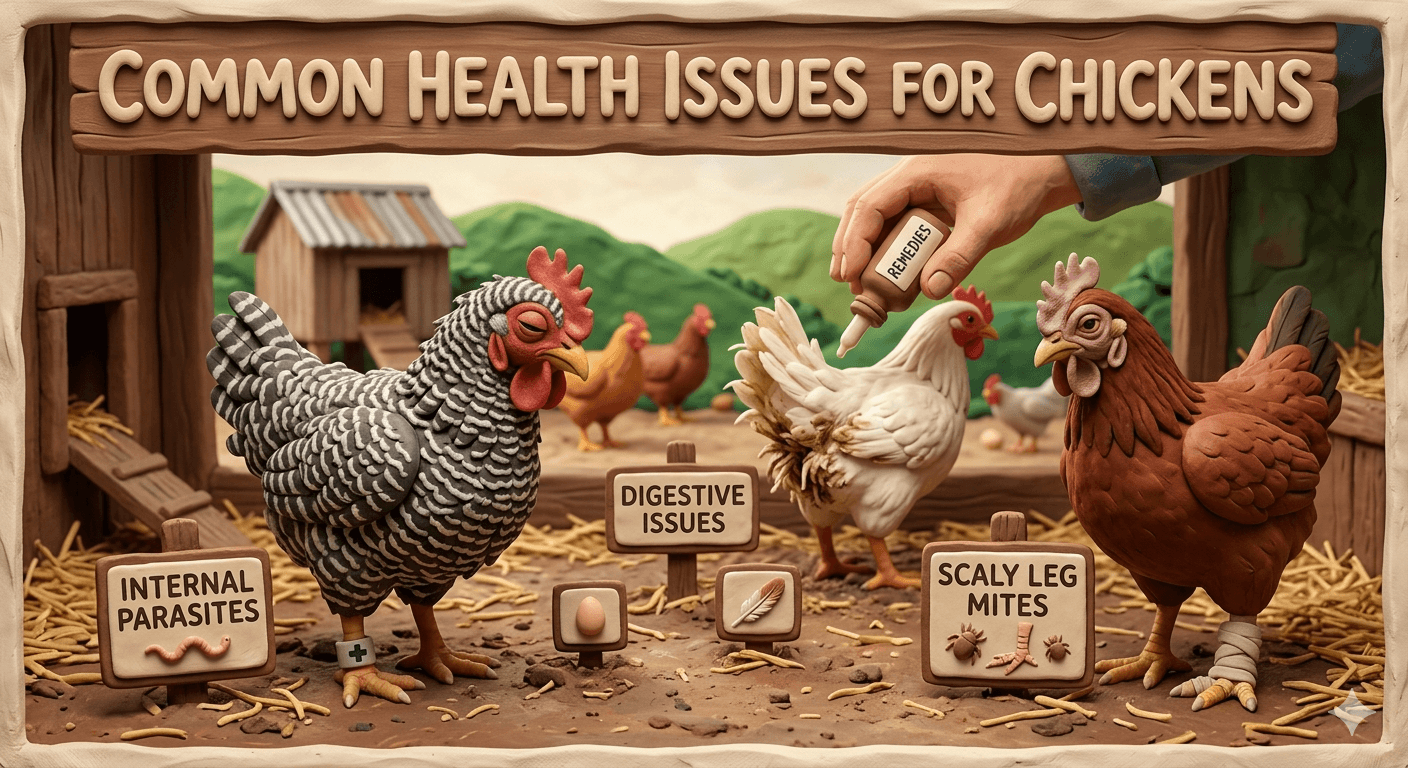
A healthy flock is a quiet flock. Hens scratching, dust bathing, laying eggs, and ignoring you is the goal. Most homestead chickens stay that way most of the time. But sooner or later something goes sideways. A hen sneezes. A foot swells. Eggs stop showing up. The basket goes empty for a week. That is when knowing the common chicken health issues pays for itself in saved birds and saved money.
The good news is that almost every common chicken disease falls into one of about ten buckets. Once you know what each one looks like, you can spot trouble in the morning chore round and treat most of it at home with a cheap first aid kit. The expensive vet bills come from waiting too long, not from acting fast.
This guide walks through the big ones. Parasites inside and out. Respiratory bugs. Egg binding. Bumblefoot. Crop problems. Viral threats. Heat stress and frostbite. You will learn the early signs, what to do at home, when to call a vet, and how to prevent the issue from coming back. If you are still piecing together the rest of your flock plan, the complete guide to raising chickens covers coops, brooding, and daily care.
The Daily Five Second Check That Catches Almost Everything
A sick chicken hides her symptoms as long as she can. In the wild, a bird that looks weak gets eaten. That instinct does not go away in the backyard. By the time a hen looks obviously sick, she has usually been struggling for days.
The fix is a quick daily scan every time you open the coop. It takes five seconds per bird and catches almost every issue early.
Posture. A healthy hen stands tall, alert, and a little nosy. A sick hen stands hunched, with her tail down and her head pulled into her shoulders.
Eyes. Bright and round means healthy. Dull, half closed, watery, or crusted means trouble.
Comb. A red, full comb means good circulation and active laying. A pale, shrunken, or floppy comb often points to anemia, illness, or the end of the lay cycle.
Droppings. Look at the poop board or the run dirt. Normal droppings are firm and brown with a white cap of urates. Watery, foamy, bloody, or bright green droppings all mean something is off.
Appetite and activity. A hen that ignores breakfast or stands apart from the flock is almost always the first one to get worse. Pull her out for a closer look.
The keepers who catch problems early are not smarter than the rest. They are just watching the flock for the first ten minutes of every morning. The cup of coffee at the coop fence is the single best diagnostic tool on a homestead.
Tip
Keep a small notebook in the feed bin. Jot down the date when a hen looks off, what you saw, and what you did about it. Two months later when a similar issue pops up, your notes are gold. Patterns show up that you would never remember on your own.
External Parasites: Mites and Lice
External parasites are the most common health issue on a homestead flock. They show up in almost every coop eventually. The signs are subtle at first. Egg production dips. Combs go pale. Birds look ragged around the vent. A hen scratches more than usual.
There are three main culprits to know.
Northern fowl mites live on the bird all day and all night. They cluster around the vent and under the wings. They feed on blood, which is why they cause pale combs and dropped production. Look for tiny moving specks at the base of the feathers, sometimes leaving dark dirty smudges on the skin.
Red mites (also called chicken mites) live in the cracks of the coop during the day and crawl onto the birds at night to feed. You will not see them on a daytime inspection. Check the coop at night with a flashlight, especially the underside of roosts and the seams of nest boxes. Red mites look like tiny red or gray dots that scatter when the light hits them.
Lice are larger than mites and do not feed on blood. They feed on dead skin and feather debris. They crawl on the skin and lay clusters of pale eggs at the base of feathers near the vent. Lice cause itching and feather damage but rarely kill a bird on their own.
How to Treat Mites and Lice
Treatment is the same for all three. Pick up each bird and dust her thoroughly with a poultry safe permethrin powder. Work the powder into the feathers around the vent, under the wings, and along the back. Wear gloves and a mask. Repeat in seven to ten days to kill newly hatched mites that survived the first round.
Strip the coop down at the same time. Pull all bedding. Scrub the roosts and nest boxes. Dust the corners, cracks, and undersides with permethrin. Add fresh bedding once everything is dry. For red mites, treat the coop more aggressively than the birds, because the bugs spend most of their life in the wood.
How to Prevent External Parasites
Keep a dust bath stocked at all times. A dust bath is a low sided box filled with dry sandy soil, wood ash, and a small amount of food grade diatomaceous earth. Hens roll in it daily to suffocate parasites and clean their feathers. A flock with a good dust bath rarely has a bad mite problem.
Quarantine any new birds for at least two weeks before adding them to the flock. Mites and lice travel on the bird and on equipment. Most outbreaks trace back to a new addition that was not isolated long enough.
Clean the coop on a real schedule. A simple monthly deep clean catches infestations before they boom.
Internal Parasites: Worms and Coccidiosis
What goes on outside the bird is easier to spot than what goes on inside. Internal parasites work quietly and the signs are often blamed on something else. Dropped egg production, weight loss, pale combs, lethargy, and sometimes diarrhea.
The two big ones are worms and coccidia.
Worms
Roundworms, tapeworms, and cecal worms all show up in homestead flocks, especially in birds that free range on rich pasture. A small worm load is normal and harmless. A heavy load drains a hen's nutrition and tanks production.
You usually cannot see worms in the droppings, but a good poultry vet or extension office can run a fecal float for under twenty dollars and tell you exactly what you are dealing with. That test is worth doing once a year for any flock that free ranges.
For treatment, fenbendazole (sold as SafeGuard) is the workhorse dewormer. Most homesteaders dose the flock once in spring and once in fall. Follow the label for dosing by weight. Toss the eggs during treatment and for a couple of weeks after, since the medicine passes into the yolk.
Rotating where your chickens forage helps prevent reinfection. A flock that is always on the same patch picks up the same worm eggs over and over. Even a simple paddock shift every few weeks breaks the cycle.
Coccidiosis
Coccidia are tiny protozoa that live in the gut. Adult chickens carry a small load with no problem. Chicks under eight weeks old are the ones at real risk. A coccidia bloom in a damp brooder can wipe out half the chicks in 48 hours.
The classic sign is bloody droppings, lethargy, ruffled feathers, and a chick that stops eating. The droppings may look red, brown, or chocolate colored.
Treatment is Corid, a poultry safe medicine sold at every feed store. Mix it in the water at label rate for five days. Pull all medicated feed during treatment, since the meds can interact. Most chicks bounce back within a day or two of starting Corid.
Prevention is the easier path. Use medicated chick starter feed for the first eight weeks unless your chicks are vaccinated against coccidiosis. Keep the brooder dry. Change bedding often. Move waterers up off the bedding so they do not get contaminated. The damp dirty brooder is where coccidiosis blooms, every time.
Respiratory Illness
A sneezing chicken sounds funny the first time you hear it. The second time you hear it, you stop laughing. Respiratory infections spread fast through a flock and some of them never fully clear.
The signs are easy to spot. Sneezing. Coughing. Rattling or wheezing on the breath. Foamy or bubbly eyes. Swollen face or sinuses. A discharge from the nostrils. Open mouth breathing in severe cases. A hen that sounds wet when she breathes.
There are several common respiratory bugs and they often look alike from the outside. The most common in backyard flocks are infectious bronchitis, mycoplasma (often called CRD or chronic respiratory disease), and infectious coryza. Without a lab test it is hard to tell them apart, but the home response is mostly the same.
How to Treat Respiratory Illness
Isolate any bird showing symptoms in a clean, warm, well ventilated space away from the flock. A dog crate in the garage works fine. This buys you time and slows the spread.
Improve coop ventilation immediately. A damp, poorly ventilated coop is the single biggest cause of respiratory illness. Add vents up high. Pull the top layer of damp bedding. The respiratory environment matters more than the medicine.
Add electrolytes and vitamins to the drinking water for the whole flock during an outbreak. Sav A Chick or any poultry electrolyte powder works. This supports the immune system while birds fight off the bug.
Mild cases often resolve in a week or two on their own with rest, ventilation, and supportive care. Severe cases (open mouth breathing, refusing food and water, swollen face) need a vet visit. A vet can prescribe a tylosin or oxytetracycline based antibiotic that knocks down bacterial respiratory infections fast.
Warning
Mycoplasma never fully leaves a flock. Birds that catch it become lifelong carriers and shed the bug when stressed, even after they look healthy again. If you suspect mycoplasma and you sell hatching eggs or chicks, get a lab test through your state vet. A confirmed positive flock has hard decisions to make.
Prevention
Ventilation, ventilation, ventilation. Most respiratory issues in backyard flocks come back to a damp coop. Vents up high above the roost level let warm moist air escape without blowing on the birds.
Quarantine every new bird for at least two weeks. Carriers can look perfectly healthy. The two week window catches most active infections before they reach the flock.
Avoid bringing birds home from poultry swaps and auctions. These events are where respiratory disease spreads the fastest. If you must buy from a swap, quarantine for a full month and watch carefully.
Egg Binding and Reproductive Issues
Egg binding is when a hen has an egg stuck inside her oviduct that she cannot push out. It is one of the scariest things a new homesteader sees, but it is also one of the most treatable if you catch it in the first few hours.
The signs are unmistakable once you know them. A hen sits puffed up in the nest box or in a corner for hours. She walks in a wide stance, almost penguin like, because the stuck egg is pressing on her insides. She strains visibly. She pumps her tail up and down. She may refuse food and water. Her vent may look swollen or pulsing.
How to Treat Egg Binding at Home
Bring the hen inside to a warm, quiet space. Fill a tub or sink with comfortably warm water (around 100 degrees Fahrenheit, like a warm bath for a baby). Stand her in the water so her lower body and vent are submerged. Hold her gently for 20 to 30 minutes. The warmth relaxes the muscles and often lets the egg pass on its own.
While she soaks, you can gently massage her abdomen toward the vent. Be patient and gentle. Never squeeze hard on the egg, because a broken shell inside her can be fatal.
After the bath, towel her dry and apply a small amount of vegetable oil or coconut oil around the vent with a cotton swab. Put her in a quiet dim crate with food and water. Most bound eggs pass within a few hours of the warm soak.
If 24 hours pass and the egg has not moved, call a poultry vet. Egg binding can become life threatening fast. A vet can sometimes manually extract the egg or give oxytocin to trigger contractions.
Related Reproductive Issues
Soft shelled or shell less eggs show up now and then in a normal flock, especially in young pullets just starting to lay. If they keep showing up, the hen is short on calcium. Offer oyster shell free choice in a separate dish and make sure the layer feed has 3 to 4 percent calcium. The feeding guide covers calcium and protein balance for layers.
Vent prolapse is when the lower reproductive tract pushes out through the vent. It looks like pink or red tissue protruding from the rear of the bird. This is an emergency. Isolate the hen immediately. Gently rinse the tissue with saline. Apply Preparation H to reduce swelling and gently push the tissue back in. Keep her in a dark crate for several days so she stops laying and the tissue can heal. Severe or repeating prolapse usually means the hen needs to be culled, since the issue almost always returns.
Internal laying is when an egg drops into the body cavity instead of the oviduct. There are no good outward signs early on. Over time the hen looks bloated, walks oddly, and stops laying. There is no real home treatment. Internal layers usually decline over weeks or months. Many homesteaders cull at that point to avoid prolonged suffering. Catching dropped production early and tracking which hen is laying can help spot the issue sooner.
If you want a clearer picture of how the laying cycle works and why production sometimes drops, the egg production guide walks through every stage of a laying hen's life.
Bumblefoot and Foot Injuries
Bumblefoot is a staph infection in a chicken's foot pad. It almost always starts with a small cut, splinter, or scrape from a hard landing or a sharp object in the coop. The wound gets infected and slowly builds up a hard, dark scab over a pocket of pus.
The signs are easy to spot if you look. A round black or dark brown scab on the bottom of the foot. Swelling on the foot pad or up between the toes. A hen that limps, hops, or favors one leg. In bad cases the whole foot can swell to twice its normal size and the bird stops walking.
Stages and Treatment
Early bumblefoot (small black scab, no real swelling) often clears with daily Epsom salt soaks. Soak the foot in warm Epsom salt water for 15 minutes a day for a week. Dry the foot. Apply antibiotic ointment. Wrap with vet wrap. Keep the hen on clean dry bedding. Most early cases heal without surgery.
Moderate bumblefoot (clear scab with swelling) usually needs the infected core removed. This sounds scarier than it is. Soak the foot in Epsom salt water for 20 minutes to soften everything. Wrap the bird snugly in a towel so she cannot kick. Use a clean scalpel or sharp knife to lift the scab. The infected core is a yellow, cheesy plug. Press gently around the wound to push out the core. Flush the wound with saline. Pack with antibiotic ointment. Wrap with vet wrap. Repeat the wrap and cleaning every two days until the wound closes.
Severe bumblefoot (large swollen foot, bird cannot walk) often needs a vet. The infection may have reached the bone, which is much harder to treat at home.
Prevention
Lower the roosts. A roost more than two feet off the ground is the single biggest cause of bumblefoot. Hens jump down in the morning and crash land. Drop roosts to 18 inches and add a few stepped perches for taller designs.
Use a 2 by 4 board with the flat side up for roosts, not a round dowel. The flat surface spreads the weight evenly and reduces foot pressure points.
Walk the run regularly looking for sharp objects. Old nails, broken hardware cloth, sharp rocks, and splintered wood all cause foot injuries.
Keep the coop and run dry. Constant wet feet soften foot pads and make infections easier.
Crop Issues: Sour Crop and Impacted Crop
The crop is a small pouch at the base of a chicken's neck where food sits before it moves into digestion. A normal crop fills during the day as the hen eats and empties overnight while she sleeps. If you press gently on the crop first thing in the morning, it should feel almost flat.
Two things go wrong with crops. Both are common, both are treatable at home, and both can kill a hen if ignored.
Sour Crop
A sour crop feels squishy, watery, and balloon like in the morning. The bird's breath smells fermented or sour. She may shake her head, drool, or look uncomfortable. The crop has filled with fluid and gas as undigested food ferments, often because a yeast called Candida has bloomed.
To treat, isolate the hen and pull all food for 12 hours. Offer plain Greek yogurt with active cultures (a tablespoon or two) and small bits of bread soaked in apple cider vinegar water. Gently massage the crop several times throughout the day to help it move. Most sour crops resolve in two or three days with this routine.
For stubborn cases, you can carefully tip a hen upside down for a few seconds and let the crop fluid drain out the beak. This is risky because of the choking hazard, so be brief and gentle and only try it if you are comfortable. If she is not improving after three days, call a vet.
Impacted Crop
An impacted crop feels hard and bound, like a tennis ball under the skin. The hen looks normal but stops eating because her crop is full of undigested fibrous material. Often this is long grass clippings, tough vegetable scraps, or straw bedding.
Treatment is the opposite of sour crop. Offer a teaspoon of olive oil dripped into the beak to help lubricate. Massage the crop firmly but gently several times a day to break up the mass. Offer small amounts of soft food and water. The mass usually breaks up and moves through over a day or two.
If the impaction does not clear after two days of massage and oil, the hen needs a vet. In rare cases the crop has to be opened surgically.
Prevention
Cut grass clippings short before tossing them in the run. Long grass strands are the most common cause of impaction.
Provide grit free choice in a small dish. Grit is small hard stones that help grind food in the gizzard. Hens on a free range diet usually pick up grit from the ground. Hens in a bare run need it offered.
Keep an eye on what the flock eats during cleanup. A pile of long stringy vegetable scraps is a classic crop bomb.
Marek's Disease and Other Viral Threats
Marek's disease is a viral cancer of chickens. It causes paralysis, tumors, blindness, and death, usually in birds between 12 weeks and a year old. There is no treatment and no cure. It is one of the few chicken diseases that genuinely scares homesteaders.
The signs are usually slow and progressive. A bird drags one leg. Then both legs. She loses weight even though she eats. Her eye may turn gray or cloudy. She becomes lethargic and stops perching. Death usually comes within weeks.
The only real defense is the Marek's vaccine, given to day old chicks at the hatchery. The vaccine does not prevent infection but it prevents the cancer that kills the bird. Most major hatcheries offer it for an extra dollar or two per chick. Always ask for it when ordering. Local feed store chicks may or may not be vaccinated, so ask before buying.
Marek's is everywhere in the environment. Most flocks are exposed and most birds carry the virus with no symptoms. The vaccinated birds simply do not develop the disease. There is no good reason to skip the vaccine.
Other Viral Threats
Avian influenza (bird flu) is the big one in the news. Symptoms include sudden death, swollen face, purple combs, watery eyes, and respiratory distress. There is no treatment. If you suspect bird flu, contact your state vet immediately. They will test and may require depopulation. Avoid contact with wild waterfowl and their droppings, which is the main vector.
Infectious bronchitis is a respiratory virus covered in the respiratory section above. Symptoms run their course in a week or two. There is no specific treatment, just supportive care.
Fowl pox causes scabby black bumps on the comb, wattles, and around the eyes (dry pox) or yellow lesions in the mouth and throat (wet pox). Dry pox is mild and clears on its own in two to four weeks. Wet pox can kill. Mosquitoes spread fowl pox, so reduce standing water and check for the vaccine if your area sees regular outbreaks.
Biosecurity Basics
Most viral threats come into a flock from outside. A few simple habits keep most viruses out.
Dedicated coop shoes that never leave the property. A pair of cheap rubber boots by the coop door is enough.
Quarantine every new bird for at least two weeks. Make it a full month for any bird from a poultry swap or auction.
Wash your hands before and after handling birds, especially if you visit other farms.
Keep wild birds out of the run as much as possible. Cover feeders. Pick up spilled grain. Wild birds carry many of the same diseases as your flock and shed them in droppings.
Pecking, Bullying, and Feather Loss
Bare spots on a hen are not always a health problem, but they always need a second look. There are three common causes and the treatment depends on which one you are seeing.
Molt is a normal annual process. Hens drop their feathers and grow new ones, usually in late summer or fall. Bare patches show up symmetrically (both sides of the body), the skin underneath looks clean and healthy, and pin feathers (new feathers in waxy sheaths) appear within a week or two. Egg laying often stops during molt. There is nothing wrong with the bird. Increase protein temporarily with a 20 percent grower feed or mealworms and let the process finish.
Feather picking is when other birds in the flock pull feathers from one hen. The bare spots are asymmetric, often around the vent or on the back. The skin underneath may be raw, red, or bleeding. There are no pin feathers because the feathers are being pulled before they can regrow. This is a behavior problem.
External parasites can also cause feather loss, especially around the vent. See the mites and lice section above.
How to Stop Feather Picking
Add space. Crowding is the most common cause of bullying. A flock crammed into too small a coop or run will pick on the weakest bird first.
Add protein. A flock on too little protein will sometimes eat feathers to fill the gap. Bump the layer feed to 18 percent protein or add a daily handful of mealworms or sunflower seeds.
Add entertainment. A bored flock picks. Toss in a head of cabbage on a string, a flock block, or a pile of leaves. Activity stops a lot of bullying.
Treat any bleeding hen immediately. Chickens are drawn to the color red and will pile on a wounded bird. Spray a bleeding spot with Blu Kote (a purple antiseptic spray) to cover the red color. Isolate the wounded hen until she heals.
If one specific bird is the bully and the picking continues after these changes, isolate the bully for a week. When she returns to the flock she usually drops in rank and the picking stops.
Pecking Order Notes
A normal pecking order involves some chasing, posturing, and the occasional peck. That is healthy flock behavior. The line between normal pecking and harmful bullying is whether one bird is being kept from food and water or is getting bloodied. Normal pecking, leave it alone. Bullying that draws blood, intervene.
Adding new birds always triggers a pecking order reset. Introduce new birds slowly with a divider in the run, let everyone see each other for a week, then let them mingle in a neutral space like a fresh patch of yard. Most flocks settle within a week.
Heat Stress and Frostbite
Climate based health issues are predictable and almost entirely preventable. Heat is harder on chickens than cold, but both can kill if you ignore them.
Heat Stress
Chickens have no sweat glands and they wear a feather coat. They cool down by panting, by holding their wings out from their body, and by lying belly down on cool ground. A healthy chicken handles 90 degree heat without much fuss. Above 100 degrees, watch carefully.
Signs of heat stress include open beak panting, wings held out, lethargy, pale comb, and refusing to move. Severe heat stress causes seizures and death within hours.
To prevent heat stress, provide constant shade. A run with no shade is a death trap in summer. Refresh water several times a day and consider adding ice cubes on the worst afternoons. Freeze water bottles overnight and toss them in the run in the morning for birds to lean against. Skip the corn and scratch during heat waves, since corn raises body temperature during digestion. Provide a shallow pan of cool water for hens to stand in.
If a hen is in active heat distress, move her immediately to a cool shaded space. Submerge her lower body in cool (not cold) water for a few minutes. Offer water with electrolytes. Most hens recover within an hour if you catch it in time.
Frostbite
Frostbite hits combs and wattles first, then toes. The damaged tissue turns black, dies, and falls off over a week or two. Mild frostbite heals on its own. Severe frostbite can cause infection and lasting damage.
The cause is almost always moisture in the coop, not cold air. A dry coop at zero degrees Fahrenheit is fine for cold hardy breeds. A damp coop at 20 degrees will frostbite a comb overnight.
To prevent frostbite, ventilate the coop high above the roost level. Warm moist air rises and escapes through the high vents. Dry air below stays around the birds.
Apply a thin layer of petroleum jelly to large combs and wattles on the coldest nights. This is most useful for breeds like Leghorns with tall single combs.
Use a 2 by 4 board flat side up as a roost. Hens cover their feet with their feathers when they roost on a flat surface, which prevents frostbitten toes.
Pick cold hardy breeds for cold regions. Wyandottes, Buckeyes, Chanteclers, and Brahmas all have small combs or feathered bodies that resist frostbite better than thin combed Mediterranean breeds.
If frostbite happens, leave it alone. Do not pop blisters or trim black tissue. The body sloughs off dead tissue on its own. A bird with a frostbitten comb may not lay for a few weeks but usually recovers fully.
Building a Homestead Chicken First Aid Kit
The first time you need a first aid item, you will not have time to drive to the feed store. Build a small kit now and store it in a labeled bin in the feed area. A reasonable kit covers almost every common chicken health issue you will see in a year.
A solid first aid kit includes:
- Permethrin poultry dust for mites and lice
- Corid (amprolium) for coccidiosis in chicks
- SafeGuard (fenbendazole) liquid for worms
- Electrolyte powder (Sav A Chick or similar) for heat stress and recovery
- Vetericyn wound spray or Blu Kote for cuts and pecks
- Triple antibiotic ointment (the plain kind, no pain relief added)
- Vet wrap in two or three colors
- Gauze pads in several sizes
- Saline solution for flushing wounds
- Epsom salts for soaking sore feet
- Petroleum jelly for cold weather comb protection
- Sharp scissors and a small scalpel for trimming feathers and lancing bumblefoot
- Disposable gloves
- A small headlamp or flashlight
- A cardboard pet carrier or wire crate for isolating sick birds
- A small bottle of plain vegetable oil for egg binding and impacted crop
- Plain Greek yogurt (kept in the fridge) for sour crop
You can build this kit for around 60 to 100 dollars. It pays for itself the first time you skip a vet visit for a bumblefoot or a mild respiratory case.
Tip
Keep a printed list of common chicken health issues and their treatments inside the bin lid. When something goes wrong at 6 a.m. and you are not fully awake yet, that cheat sheet saves you from second guessing. The list does not need to be long. Just the basics: mites, sour crop, egg binding, bumblefoot, respiratory illness, and the right product for each.
When to Call a Vet vs Cull vs Treat at Home
Not every sick chicken can be saved. Part of homesteading is learning where the line is between treating, calling a vet, and making the hard call. Three rules of thumb help.
Treat at home when the bird is alert, eating, drinking, and the issue is one of the common ones in this guide. Mites, mild respiratory bugs, early bumblefoot, sour crop, egg binding caught early, mild feather picking. All of these are well within home care.
Call a vet when the bird is severely ill, the home treatment is not working after two or three days, or the issue could spread through the flock. Major respiratory outbreaks, severe bumblefoot, egg binding that does not resolve in 24 hours, mass die offs, or anything you suspect could be a reportable disease like avian influenza.
Many livestock vets work with chickens, but not all. Find a poultry savvy vet in your area before you need one. Your state extension office or the American Association of Avian Pathologists can point you to one. Have the number saved in your phone.
Cull when the bird is suffering with no real chance of recovery. Severe Marek's disease, advanced internal laying, a major predator attack with grave wounds, or a bird with permanent neurological damage. Culling is hard the first time. It gets easier when you remember it is the kindest option for a bird that will not recover. Quick cervical dislocation or a cone setup are the most humane methods. Watch a few YouTube tutorials and practice the technique mentally before you need it.
A flock kept for years will eventually face all three categories. The keepers who do well are the ones who decide ahead of time what their thresholds are, not the ones who try to figure it out in the moment.
Where to Go From Here
Healthy chickens are mostly the result of three things. A dry well ventilated coop. A clean dust bath. A keeper who watches them every morning. Get those right and you will dodge most of the issues in this guide entirely.
The handful of issues that do show up will be familiar from this guide and your first aid kit will handle most of them. The flock that lasts five or ten years on a homestead is not one that never gets sick. It is one whose keeper noticed the early signs and acted on them the same day.
If you want to keep building out your flock plan, the complete guide to raising chickens covers coops, brooding, and daily routines. The homestead chickens feeding guide walks through nutrition for chicks, pullets, and laying hens. The egg production guide explains the laying cycle and why production rises and falls through the year. And if you are still picking out breeds, the chicken breed picker tool helps you filter by temperament, climate hardiness, and egg production.
A coop full of healthy clucking hens is one of the small good things in life. A little daily attention keeps it that way.
Frequently Asked Questions
The most common chicken health issues on a homestead are external parasites (mites and lice), internal parasites (worms and coccidiosis), respiratory infections, egg binding, bumblefoot, and crop issues like sour crop and impacted crop. Most can be treated at home with a simple first aid kit if caught early.
A sick chicken stands hunched with her tail down, has dull or watery eyes, shows a pale or shrunken comb, produces abnormal droppings, and stands apart from the flock. Healthy hens are alert, active, eating, and curious. A daily five second check on each bird catches most issues early.
Severe heat stress, advanced respiratory illness, untreated egg binding, predator attacks, and severe coccidiosis in chicks can kill a chicken within hours. Avian influenza can take down a whole flock in days. Most fast killers can be prevented with shade, ventilation, a secure coop, and good biosecurity.
A well stocked dust bath is the best natural prevention. Mix dry sandy soil, wood ash, and food grade diatomaceous earth in a low sided box. Hens roll in it daily to suffocate parasites. For active infestations, poultry safe permethrin powder works fast and is the standard treatment. Repeat in seven to ten days.
An egg bound hen sits puffed up for hours, walks in a wide penguin like stance, strains visibly, pumps her tail, and may refuse food and water. The vent looks swollen. Bring her inside and soak her lower body in warm water for 20 to 30 minutes. Most bound eggs pass within a few hours of a warm soak.
Treat at home when the bird is alert, eating, and the issue is one of the common ones. Call a vet when symptoms are severe or home treatment is not working after two or three days. Cull when the bird is suffering with no real chance of recovery, such as advanced Marek's disease or severe injury. The kindest call is often the hardest one.
Most chicken diseases stay in the flock, but a few can spread to humans. Salmonella is the most common, which is why washing your hands after handling birds matters. Avian influenza can spread to humans in rare cases. Avoid kissing or snuggling chickens against your face, and keep coop activities separate from kitchen activities.
A basic chicken first aid kit includes permethrin dust for mites, Corid for coccidiosis, SafeGuard for worms, electrolyte powder, wound spray, antibiotic ointment, vet wrap, gauze, saline, Epsom salts, petroleum jelly, scissors, gloves, and an isolation crate. The whole kit runs about 60 to 100 dollars and pays for itself the first time you skip a vet visit.

Cole
Founder & Lead Researcher
Cole is the founder of Plan Your Homestead. He works in clinical research and brings a research-first lens to every guide on the site, drawing on a long family line of farmers for grounded, practical perspective.
More in Animals
More articles coming soon. Check back for new animals content.