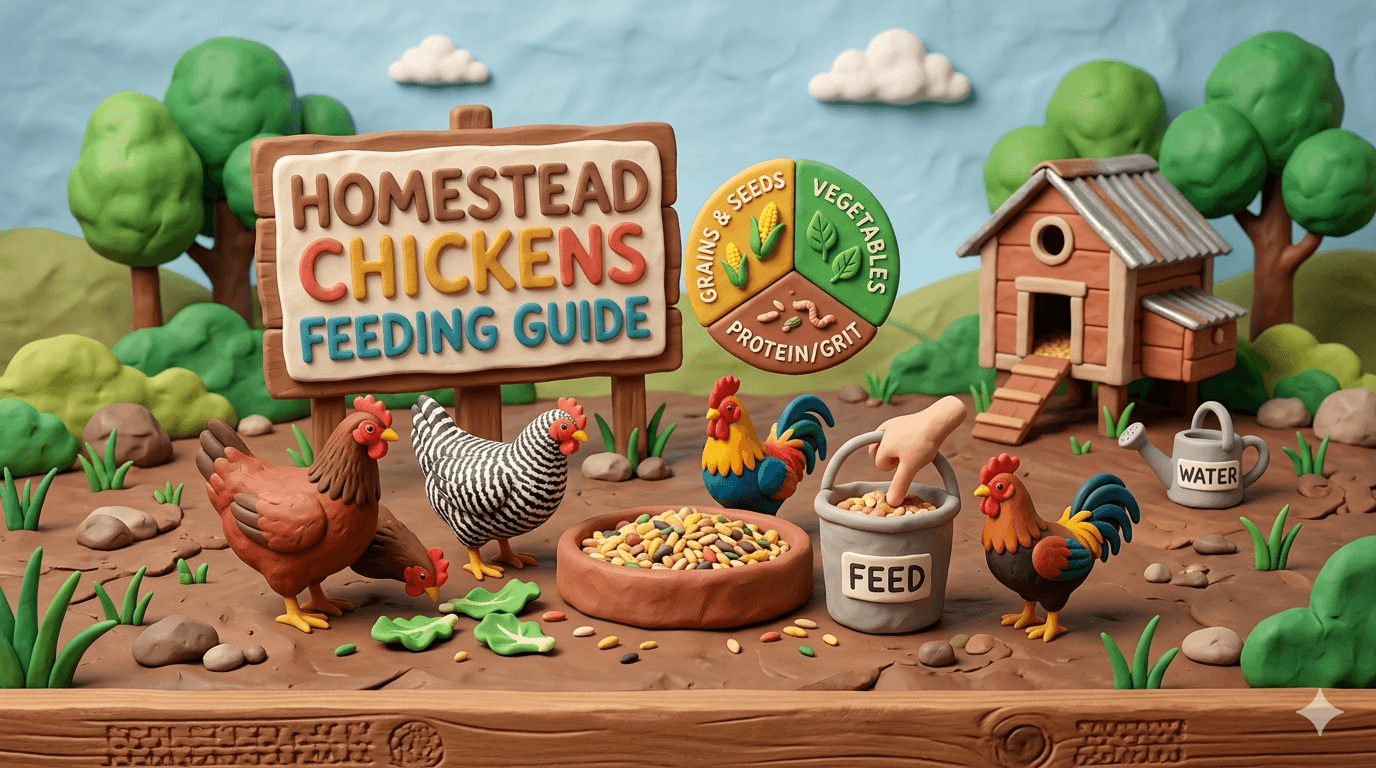
Feed is the biggest ongoing cost of keeping chickens on a homestead. It is also the single biggest lever on egg production, feather quality, and flock health. The good news is that figuring out what to feed homestead chickens is simple once you know the basics. A few smart choices in week one save you money and headaches for the next five years.
This homestead chickens feeding guide walks through every stage of life, from the first crumble in the brooder to the rich yolks on your breakfast plate. You will learn what feed to buy, when to switch it, how much to give, which supplements actually matter, and which treats are safe. We will also cover the homestead specific tricks that small farm keepers use to stretch a feed bag further.
If you are still piecing together the rest of your chicken plan, the complete guide to raising chickens covers coops, brooding, and daily care. This guide is just about the food bowl.
Why Feed Is the Single Biggest Lever on a Homestead Flock
Commercial chicken feed is not just convenience. It is a carefully balanced formula built around the three nutrients that drive almost every part of your flock's performance.
Protein builds feathers, muscle, and the eggs themselves. A standard egg holds about 6 grams of protein, which means your hens are essentially manufacturing a small protein bar every day. When protein drops too low, eggs shrink, feathers look dull, and birds start picking each other.
Calcium is what builds eggshells. A laying hen burns roughly 2 grams of calcium per egg. Shells go thin or soft the moment her supply runs short. Too much calcium too early in life is also a problem, which is why young birds need a different feed than layers.
Energy comes from the carbohydrates and fats in the feed. Energy keeps birds warm in winter, fuels foraging, and powers digestion. Appetites drop in summer heat and surge in winter cold. A well formulated feed handles that swing for you.
A good commercial feed delivers all three nutrients in the right balance. Your job is to pick the right formula for the right age, offer a few targeted supplements, and avoid the feeding mistakes that quietly cost most homesteaders eggs and dollars.
The Three Feeds Every Homestead Chicken Keeper Needs
There are three core formulas. Choose the right one for the right life stage and you have most of chicken nutrition solved.
Chick Starter (Day 1 to Week 6)
Chick starter is the first food your birds will ever eat. It is high in protein, usually 20 to 22 percent, and low in calcium. Chicks double and triple in size during this stretch, and that growth runs on protein.
Starter comes as a fine crumble that tiny beaks can pick up. Most feed stores carry two versions, medicated and unmedicated. The medicated version contains amprolium, which helps prevent coccidiosis. Coccidiosis is a gut parasite that thrives in damp brooder bedding and can wipe out young chicks fast. If your chicks were vaccinated for coccidiosis at the hatchery, use unmedicated starter so the medication does not interfere with the vaccine. If they were not vaccinated, medicated starter is the safer pick.
Keep starter available at all times. Chicks eat little and often. A simple chick feeder with a narrow trough works for the first few weeks. Store the bag in a sealed metal container away from heat, moisture, and rodents. Vitamins start breaking down after about six weeks, so buy what you can use up.
Grower Feed (Week 6 to First Egg)
Around six weeks, switch to a grower formula. Protein drops to about 16 to 18 percent and calcium stays low. The slower growth of an adolescent bird needs less protein. The low calcium protects developing kidneys.
Transition gently. Mix the two feeds for a few days, or just switch when you open the next bag. Chickens handle most feed changes well as long as you do not flip the menu overnight.
Pullets stay on grower until they lay their first egg, usually between 18 and 24 weeks. Do not rush the move to layer feed. Excess calcium in a young bird's system has to go somewhere, and that somewhere is often her kidneys over time.
Layer Feed (First Egg Onward)
Layer feed is the workhorse of the homestead chicken pantry. Protein sits at about 16 percent and calcium climbs to 3 to 4 percent, enough to build a steady supply of strong shells.
Layer comes in three forms. Pellets waste the least feed because birds cannot kick them out of the feeder. Crumbles are easier for smaller breeds. Mash is the most expensive per pound and the messiest, but some keepers swear it is the easiest on a hen's gut.
Stick with a reputable brand from your local feed store. Farm co op blends and major brands like Purina, Nutrena, and Kalmbach all do the job. Organic and soy free options cost roughly double but are popular with homesteaders selling eggs at a farmers market premium.
Calcium, Grit, and the Side Dishes
Layer feed already includes calcium, but the demand of an active laying hen can outrun what is in the bag. Two simple supplements close the gap.
Oyster shell is the cheapest calcium boost on the market. A 5 pound bag costs a few dollars and lasts a backyard flock months. Offer it in a separate small dish, free choice. Hens who need extra calcium will eat what they need and ignore the rest. Roosters and pullets will leave it alone.
Grit is the tiny stones chickens use to grind feed in their gizzard. Birds that free range on natural ground usually pick up enough on their own. Birds in a bare run, or birds eating scratch grains and whole seeds, need a small dish of granite grit available at all times. Do not confuse grit with oyster shell. Grit grinds food. Oyster shell builds shells.
Tip
If you have a mixed age flock with both young pullets and laying hens, feed everyone a grower or all flock formula at 16 to 18 percent protein with low calcium. Offer oyster shell free choice on the side. The hens will eat the oyster shell when they need it and the young birds will ignore it. This is the easiest way to feed a mixed flock without juggling bags.
How Much to Feed and When
A standard backyard hen eats about a quarter to a third of a pound of feed per day, which works out to roughly 1.5 pounds per week. Heavier dual purpose breeds like Buff Orpingtons eat closer to a third of a pound. Lighter Leghorn types come in around a quarter pound. Free ranging birds eat less commercial feed because they fill in with bugs and greens.
For most homesteaders the simplest plan is free choice feeding. Fill a hanging feeder, top it off as needed, and let the hens self regulate. Chickens are good at eating what they need and stopping when they are full, especially with a balanced layer feed.
A hanging feeder beats a ground feeder because it stops birds from kicking feed out, keeps rodents from camping next to the food, and stays cleaner. Hang the lip at about the height of your hens' backs. Lower wastes feed. Higher leaves shorter birds straining for every bite.
If you are managing a larger homestead flock or trying to cut waste, switch to measured feeding once or twice a day. Offer just what the flock cleans up in 15 to 20 minutes. This works well when feed is expensive, when rodents are a problem, or when you want a more predictable bill.
Want a real monthly number for your specific flock? Plug your bird count into the feed cost calculator for a quick estimate. The feed requirements tool will tell you how many pounds per week you need to budget.
Treats, Kitchen Scraps, and Foraging
Treats and scraps make chicken keeping fun. They also derail nutrition if you go overboard. The rule of thumb is the 10 percent rule. Treats and scraps should make up no more than about 10 percent of the daily diet. The rest should be balanced layer feed.
Safe treats include leafy greens, squash, melon rinds, berries, cooked rice and pasta, oatmeal, cooked beans, sunflower seeds, mealworms, and most vegetable trimmings from the kitchen. Hens go nuts for cooked eggs, which sounds odd but is completely fine and a great protein boost during molt.
Scratch grain is the most popular chicken treat in the country. It is a mix of cracked corn, wheat, oats, and other grains. Birds love it. The problem is that scratch is low in protein and lacks the vitamins and minerals in a complete feed. Treat it like candy. A small handful in the run each afternoon is a nice enrichment. A scoop replacing meals is a slow nutritional disaster.
Homestead flocks have a real edge on scraps and forage. A vegetable garden trims, a compost pile turns up bugs, a pasture rotation drops fresh greens. Hens that free range a yard pull 10 to 30 percent of their diet from the land, which lowers the monthly feed bill and produces darker yolks with more omega 3s.
Foods That Can Hurt Your Flock
A short list of foods to keep out of the run. Most are common kitchen items.
- Avocado pits and skins contain persin, which is toxic to birds. The flesh is safer but easy to confuse, so just skip the whole avocado.
- Raw beans of any kind contain phytohemagglutinin, which is fatal even in small amounts. Cooked beans are fine.
- Moldy or rotten food can carry mycotoxins that damage a chicken's liver. If you would not eat it, do not toss it to the hens.
- Chocolate, coffee grounds, and tea contain theobromine and caffeine, both toxic to chickens.
- Large amounts of onion, garlic, or chives can damage red blood cells and taint eggs.
- Salty processed foods like chips, lunch meat, and table scraps with heavy seasoning. Chickens have very low salt tolerance.
- Raw potato peels and green tomato leaves contain solanine. Cooked potato is fine.
- Citrus peels in large quantities can disrupt calcium absorption.
Warning
If something looks questionable, throw it in the compost instead of the run. Compost cooks out a lot of the risk, and your hens still benefit through the bugs and worms that bloom in a healthy compost pile.
Water Is the Cheapest Nutrient and the Most Forgotten
Hens drink about a pint of water per day, double that in summer heat or during laying peaks. A water shortage drops production within hours. A water shortage of 24 hours can stop laying for weeks.
Refresh the water at least once a day. Scrub the waterer once a week with a brush and a splash of white vinegar to kill algae and biofilm. Position the waterer where droppings cannot get into it, ideally elevated on a brick or hung from the coop.
In summer, drop a frozen water bottle into the waterer to keep it cool. Hens drink more cool water and lay better through a heat wave. In winter, swap to a heated waterer or a heated base under a standard waterer. Frozen water is the most common reason backyard hens stop laying in January. The fix is a 30 dollar heated base.
For larger homestead flocks, a poultry nipple system on a 5 gallon bucket or rain barrel is the cleanest, lowest maintenance option. Birds learn to use the nipples in a day. The water stays clean for weeks. The whole rig costs about 20 dollars and serves 25 birds.
Seasonal Feeding Adjustments
A homestead flock eats differently across the year. Small tweaks at the right moment keep production steady.
Molt hits most hens in late summer or fall. Feathers drop, laying pauses, and birds look ragged for four to six weeks. Feather growth burns serious protein, so bump up the protein during molt. Switch temporarily to a 18 to 20 percent grower feed, add mealworms and black oil sunflower seeds, and offer cooked eggs a few times a week. Lay rates recover faster when protein is plentiful.
Winter changes the energy equation. Hens burn more calories staying warm, especially in northern states. Keep layer feed available all day. Add a small handful of scratch grain in the late afternoon, an hour before roost. The slow digestion of corn generates body heat through the night. Skip the morning scratch. Birds need their balanced feed first thing.
Summer flips the script. Appetites drop in heat. Hens may not eat enough to maintain laying. Move feeders into shade. Offer cool treats like frozen berries, watermelon rinds, or a shallow tray of chilled greens. A pinch of electrolytes in the water for two days helps after a heat spike. Avoid scratch in summer afternoons. It generates internal heat the birds do not need.
Spring is when laying ramps back up. Hens that paused for the winter often resume production in late February or March. Make sure oyster shell is topped off and a balanced layer feed is back as the primary diet if you bumped to grower for molt.
Saving on Feed Without Cheating Your Birds
Feed is roughly 70 percent of the cost of keeping chickens. A few homestead specific tricks can knock that bill down 20 to 40 percent without compromising nutrition.
Buy bulk. A 50 pound bag is almost always cheaper per pound than a 25 pound bag. If you have storage space and a tight lid, go larger.
Ferment your feed. Submerge layer feed in water, cover, and let it sit at room temperature for two to three days. The result is a tangy, partially predigested feed that birds love. Fermented feed reduces consumption by 15 to 20 percent because more of the nutrients are bioavailable. Skim and feed daily.
Sprout grains. Soak whole grains like wheat, barley, or oats for 12 hours, drain, and rinse twice a day for three to five days until they sprout. Sprouted grain doubles in volume and adds vitamins. A few cents of seed turns into a tray of fresh greens for the flock in the middle of winter.
Run a kitchen scrap bucket. A small bucket on the counter for vegetable trimmings, ends, and leftovers turns into daily flock enrichment. The hens get variety and you get less trash.
Free range when you can. Even an hour a day in a fenced yard cuts feed costs and improves egg quality. A movable chicken tractor lets you rotate fresh ground without losing birds to predators.
Grow your own feed. A homestead acre can grow most of what a small flock needs. Field corn, sunflowers, mangel beets, comfrey, amaranth, and a patch of wheat or oats all store well and supplement commercial feed. Start small. The math gets interesting fast.
Plant a chicken forage strip. A 20 by 20 patch of clover, alfalfa, dandelion, plantain, and chicory becomes a self serve salad bar. Rotate birds in and out so the plants recover.
Putting It All Together
Feeding homestead chickens comes down to a few simple habits. Buy the right feed for the right life stage. Keep it available in a clean feeder. Offer oyster shell and grit on the side. Refresh the water every day. Limit treats to 10 percent of the diet. Adjust for molt, winter, and summer. Skim some cost off the top with ferment, sprouts, and forage.
That is the entire system. It takes five minutes a day once it is dialed in.
Your hens will reward you with rich yolks, strong shells, and steady production. Your feed bill will stay predictable. And the morning routine of topping off the feeder, refilling the water, and tossing a handful of garden greens into the run will become one of those quiet homestead moments you look forward to every day.
If you are still picking your flock, the top 10 egg laying chicken breeds for beginners guide ranks the best birds for a productive backyard. If you are about to build, the predator proof coop guide covers the seven features that keep hens alive. If a hen looks off color or stops laying, check the common chicken health issues guide before assuming it is a feed problem. For a real monthly number on your feed bill, run your bird count through the feed cost calculator.
You have got this. Start with the right feed and everything else gets easier.
Frequently Asked Questions
A quality layer feed with about 16 percent protein and 3 to 4 percent calcium is the foundation. Pellets waste the least feed. Offer oyster shell free choice on the side for extra calcium. Stick with a reputable brand like Purina, Nutrena, Kalmbach, or your local farm co op blend and your hens will have what they need.
Switch from chick starter to grower feed at about six weeks of age. The transition does not need to be abrupt. Mix the two feeds for a few days or just switch when you open the next bag. Stay on grower until your pullets lay their first egg, usually between 18 and 24 weeks.
Yes, in moderation. Safe scraps include vegetables, fruits, cooked grains, leafy greens, cooked beans, and cooked eggs. Keep scraps under 10 percent of the daily diet. Avoid avocado, raw beans, chocolate, large amounts of onion, salty processed food, and anything moldy.
A flock of six laying hens runs roughly 15 to 25 dollars per month in conventional layer feed, plus a few dollars for oyster shell and treats. Organic feed costs about double. Free ranging or fermenting feed can knock 20 to 40 percent off the monthly bill.
Chickens that free range on natural ground pick up small stones as they forage and usually do not need supplemental grit. Birds kept in a bare run or fed scratch grains and whole seeds should have granite grit available free choice in a small dish near the feeder.
During molt, hens need extra protein to regrow feathers. Switch temporarily to grower feed at 18 percent protein or game bird feed at 20 percent. Add mealworms, black oil sunflower seeds, and cooked eggs as protein rich treats. Switch back to layer feed once new feathers are in and laying resumes.
No. Scratch grain is a treat, not a complete feed. It is low in protein and lacks the vitamins and minerals chickens need for egg production and overall health. Use scratch as an occasional enrichment, no more than a small handful per bird per day, never as a meal replacement.
Refresh the water at least once a day, more often in hot weather. Scrub the waterer with a brush and a splash of white vinegar once a week to prevent algae and bacteria buildup. Hens drink more when water is clean and fresh, which keeps laying steady.

Cole
Founder & Lead Researcher
Cole is the founder of Plan Your Homestead. He works in clinical research and brings a research-first lens to every guide on the site, drawing on a long family line of farmers for grounded, practical perspective.
More in Animals
More articles coming soon. Check back for new animals content.