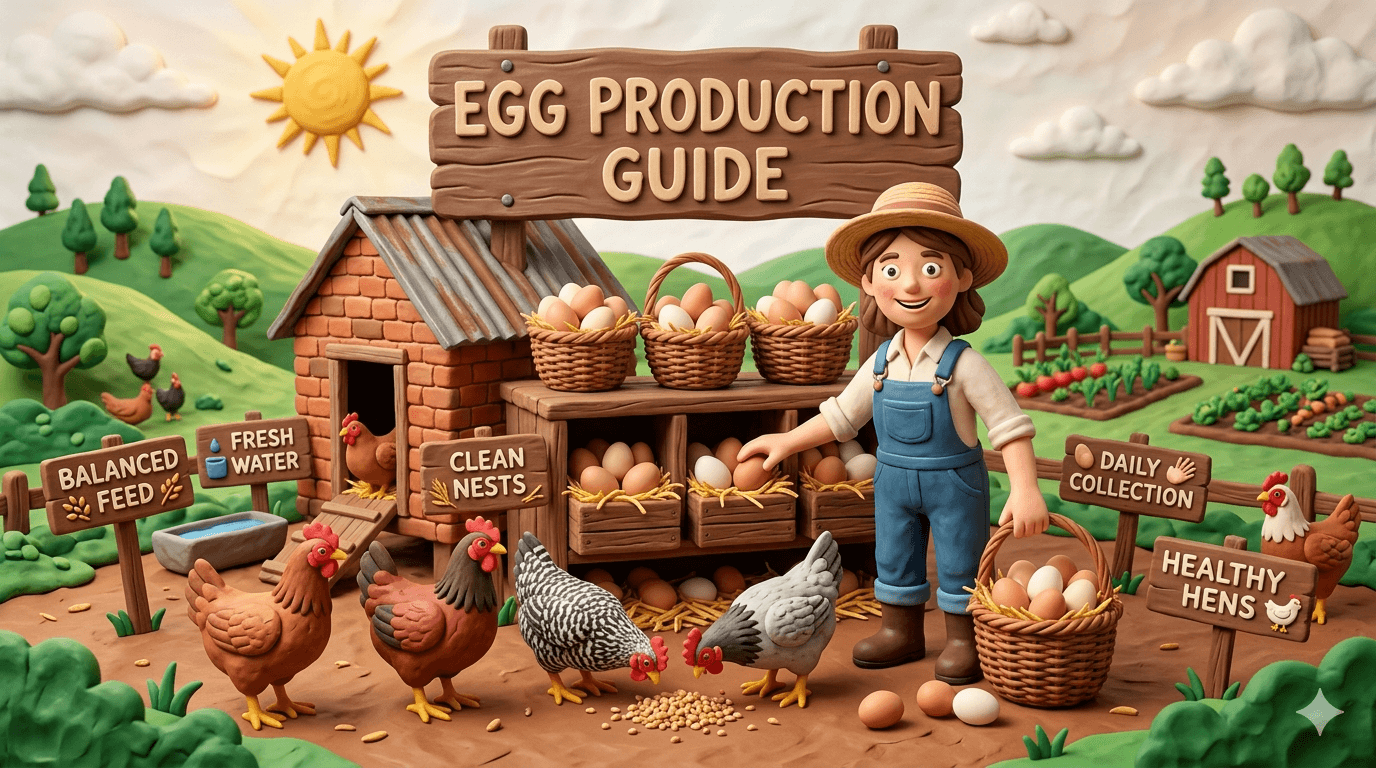
Egg production is the heartbeat of a homestead flock. It is the reason most of us bought chicks in the first place. Strong egg production turns a simple coop into a working part of your food system. Weak egg production turns it into an expensive hobby.
The good news is that homestead chickens egg production follows clear patterns. Once you know what to expect, you can plan your flock size, predict your monthly basket, and spot trouble early. You can also pull a few simple levers to keep eggs coming in seasons when most backyard flocks slow down.
This guide walks through the full picture. How many eggs your hens will actually lay, the life cycle of a layer, what drives daily production, why production drops, and how to plan a flock that feeds your family. If you are still piecing together the rest of your chicken plan, the complete guide to raising chickens covers coops, brooding, and daily care.
How Many Eggs a Homestead Hen Actually Lays
A healthy laying hen produces between 200 and 300 eggs in her first full year. That works out to roughly 4 to 6 eggs per week, or a little more than one egg every other day. The exact number depends on her breed, her feed, her stress level, and how many hours of daylight she gets.
High production breeds like Leghorns, ISA Browns, and Golden Comets sit at the top of the range, often clearing 280 eggs in a peak year. Dual purpose breeds like Plymouth Rocks, Orpingtons, and Sussex land in the 200 to 250 range. Heritage breeds and ornamental birds come in lower, sometimes around 150 eggs per year.
Production is not flat across her life. Year one is the peak. Year two drops about 15 to 20 percent. Year three drops another 15 to 20 percent. By year five most hens are laying less than half of what they did in their first season. Some heritage breeds keep going for seven or eight years, but the basket gets noticeably lighter every season.
For a small homestead, plan on an average of about 4 eggs per hen per week across a mixed age flock. That gives you a realistic monthly number once you account for molt, broody hens, and the occasional rough week.
The Egg Laying Life Cycle
Understanding the life cycle helps you set the right expectations and make the right decisions about replacements.
Point of lay happens between 18 and 24 weeks. Lighter breeds like Leghorns start around 18 weeks. Heavier breeds like Orpingtons can take until 26 weeks. The first eggs are small, often soft shelled, and sometimes laid in odd places. This is normal. The hen is figuring out her plumbing.
Peak production runs from about 6 months to 18 months of age. This is when you fill cartons fast. A flock of six pullets in their first year can give you 24 to 30 eggs a week, more than most families know what to do with.
Year two brings the first molt. Hens lose feathers in late summer or fall, pause laying for 4 to 8 weeks, then resume at a slightly lower rate. The pause is real and it always feels longer than it should.
Years three and beyond see steady decline. Hens lay larger eggs and longer pauses between them. By year four or five, many homesteaders rotate older birds out of the laying flock and bring in new pullets. Some keep retired hens around for bug control and compost work. Others process them for stew meat. Both choices are valid.
The simplest way to keep eggs steady year after year is to add new pullets every spring or every other spring. A staggered flock means you always have first year birds at peak production while older birds quietly slow down.
Top Egg Production Breeds at a Glance
Breed choice sets a ceiling on your basket. Here is how the most common homestead breeds stack up in their first laying year.
- Leghorn. 280 to 320 eggs per year. White shells. Flighty but unbeatable for sheer volume.
- ISA Brown. 300 to 320 eggs per year. Brown shells. Friendly, calm, and the workhorse of small farms.
- Australorp. 250 to 300 eggs per year. Brown shells. Dual purpose, cold hardy, and famously docile.
- Rhode Island Red. 250 to 280 eggs per year. Brown shells. Hardy, tough, and forgiving of beginner mistakes.
- Plymouth Rock. 200 to 280 eggs per year. Brown shells. Friendly, great with kids, and a strong cold weather layer.
- Sussex. 240 to 260 eggs per year. Cream to light brown shells. Curious, friendly, and good foragers.
- Buff Orpington. 200 to 280 eggs per year. Light brown shells. The golden retriever of chickens. Tends to go broody.
- Easter Egger. 200 to 280 eggs per year. Blue, green, or pink shells. Fun colors, friendly birds, modest layers.
The chicken breed picker tool lets you filter breeds by egg production, climate, and temperament. Use it to build a flock that matches your space and your weather.
For a deeper look at the friendliest and most productive starter breeds, the top 10 egg laying chicken breeds for beginners guide ranks the best picks for first time homesteaders.
What Drives Daily Egg Production
A laying hen is a small protein factory with five inputs. Pull any lever and the basket changes within days.
Daylight is the master switch. A hen needs about 14 hours of light to trigger her ovulation cycle. Shorter days slow laying. This is why production drops in fall and winter and surges back in spring. The light receptors are in her head, not her eyes, so even cloudy days count.
Nutrition is the fuel. A standard layer feed with 16 percent protein and 3 to 4 percent calcium covers the basics. Drop the protein and shells get thin or production stalls. The feeding guide covers what to feed at every life stage and how to keep your flock on the right formula.
Water is the most overlooked input. Hens drink about a pint of water a day, more in summer. A water shortage drops production within hours. A frozen waterer in January is the single most common reason homestead hens stop laying mid winter.
Stress is the silent killer of egg production. A new dog in the yard, a predator visit, a hawk overhead, a coop move, a new bird joining the flock. Any of these can pause laying for days or weeks. Hens crave routine more than anything else.
Age and health set the long term ceiling. A first year pullet at peak nutrition lays close to her genetic maximum. A four year old hen recovering from mites lays nothing for a while. Parasites, respiratory bugs, and worms all show up first as a drop in the basket. The common chicken health issues guide walks through how to spot and treat each one before they tank production.
The 14 Hour Light Rule and Whether to Add Supplemental Light
Hens need roughly 14 hours of light per day to lay at peak. In summer that happens naturally. In winter, daylight in most of the country falls to 10 hours or less, and production drops with it.
You have two options. The first is to let the hens take their natural winter break. The second is to add a small light in the coop on a timer.
Letting them rest is the traditional homestead approach. Hens evolved to slow down in winter. The rest gives their reproductive system a break and may extend their productive life by a year or more. Eggs come back strong in February or March without any intervention from you. The tradeoff is fewer eggs from October through January.
Adding supplemental light keeps production steady through the winter. A single 9 watt LED bulb on a timer is plenty for a small coop. Set it to come on in the early morning, before sunrise, so the total day length hits 14 hours. Adding light in the evening confuses birds when it suddenly cuts off and they get stranded outside the roost.
There is no wrong answer. Many homesteaders skip supplemental light for the first year, see how the flock performs, then decide. If your family eats a dozen eggs a day, the light is worth it. If you have plenty of preserved eggs from the summer surge, the rest is worth it.
Tip
If you decide to add supplemental light, do it gradually. A sudden shift from 10 hours to 14 hours can shock hens into stress molt. Add 30 minutes of light per week until you hit the target. Pull the light at the same gradual pace in spring when natural daylight catches up.
Seasonal Production Patterns
A homestead flock produces in waves across the year. Knowing the rhythm helps you plan canning, baking, and egg sales.
Spring is peak season. Daylight stretches past 14 hours by late March in most of the country. Hens that paused for winter ramp back up within a week or two. First year pullets that started laying in late winter hit their stride. Expect 5 to 7 eggs per hen per week from late March through June.
Summer brings a small dip in extreme heat. Hens lose appetite when temperatures climb past 90 degrees. Less feed means fewer eggs. Production drops 10 to 20 percent during heat waves and rebounds the moment things cool off. Shade, cool water, and afternoon mist help.
Fall is the molt season. Most hens drop feathers in September or October and pause laying for 4 to 8 weeks. The flock looks rough and the basket goes empty. This is normal. Bumping protein during molt speeds recovery. Switch temporarily to a 20 percent grower feed and add mealworms or cooked eggs as treats.
Winter is the slow season. Shorter days, colder temperatures, and the lingering effects of molt all add up. Without supplemental light, expect 1 to 3 eggs per hen per week from November through January in northern states. Southern flocks fare better. Light helps everywhere.
Why Your Hens Suddenly Stopped Laying
A sudden drop in eggs sends every homesteader running to the coop with worry. Most causes are simple. Run through this checklist before you panic.
- Daylight. Did the days shorten below 14 hours? Production drops on schedule every fall.
- Molt. Are feathers piling up in the coop? Molt pauses laying for weeks.
- Broody hen. Is one bird parked on the nest, fluffed up, and growling at you? Broody hens stop laying for the duration.
- Stress. New animal in the yard? Predator nearby? Recent move? Stress shuts down production fast.
- Hidden nests. Free range birds sometimes find a secret spot in the bushes. Check the entire yard before assuming the worst.
- Water. Is the waterer full, clean, and unfrozen? A dry waterer for 24 hours can stop laying for weeks.
- Diet change. Did you switch feed brands or run out of layer feed? Sudden protein or calcium changes show up in the basket within days.
- Parasites. Lice, mites, and worms drain a hen's resources. Inspect under the wings and around the vent. Treat if you see crawling specks.
- Age. Hens past four years lay much less. This is not a problem to solve, just the calendar catching up.
- Illness. Respiratory bugs, egg binding, and reproductive issues all stop production. Look for sneezing, lethargy, swollen abdomens, or unusual droppings.
Work through the list in order. Nine times out of ten the answer is one of the first five items, and the fix is patience.
Egg Quality on a Homestead
Homestead eggs are simply better than store eggs, and the reasons are visible the moment you crack one into a pan.
Shell color depends entirely on the breed. Leghorns lay white. Most production breeds lay brown. Easter Eggers and Ameraucanas lay blue and green. Marans lay deep chocolate brown. Olive Eggers lay olive green. Shell color does not affect taste or nutrition, but a basket of mixed colors is one of the small daily joys of homestead chicken keeping.
Yolk color depends on diet. Hens that free range on grass, bugs, and garden trimmings produce yolks that are deep orange, almost red. Hens on plain commercial feed produce pale yellow yolks. The difference is the carotenoids in the green stuff they eat. A handful of marigold petals tossed in the run produces shockingly orange yolks within a week.
Nutrition also shifts with diet. Pastured eggs from free ranging hens carry more vitamin A, more vitamin E, more omega 3 fats, and more lutein than confinement eggs. The numbers from independent studies are striking, often double or triple the levels found in standard store eggs.
Taste is the part most homesteaders never go back from. A fresh homestead egg cooked simply has a richness and depth that store eggs simply do not match. Even visitors who claim not to care about food notice on the first bite.
How to Boost Production Without Cheating Your Birds
You cannot push a hen past her genetic ceiling. You can absolutely keep her at the top of her potential with a few simple habits.
Keep layer feed available all day. Hens self regulate when food is always there. Skip the once a day meal plan unless you are managing for cost.
Offer oyster shell free choice. A small dish on the side gives each hen the extra calcium she needs without forcing it on the rest of the flock.
Refresh water every day. Clean, cool, fresh water in summer. Unfrozen water in winter. This single habit moves the needle more than almost anything else.
Provide one nest box per four hens. Too few boxes leads to crowding, broken eggs, and stress laying in odd places. Soft pine shavings or straw work fine.
Collect eggs at least once a day, twice if you can. Daily collection prevents broken eggs, egg eating habits, and broody behavior. Fresh eggs also keep their bloom longer when collected promptly.
Keep stress low. Routine matters. Same feeder spot, same waterer, same gentle handling, same daily check in. Hens that feel safe lay more.
Bump protein during molt and winter. A temporary switch to grower feed or a handful of black oil sunflower seeds in the afternoon helps hens through the rough patches.
Watch for parasites monthly. A quick check under the wings and around the vent catches mites and lice before they crash production.
Warning
Skip any product, supplement, or trick that promises to force hens into peak production year round. Hormones, forced molts, and harsh confinement all sacrifice future laying and bird welfare for a brief bump. Homestead chickens reward steady, patient care. Pushing them harder than that is a bad trade.
Math for Planning a Flock
How many chickens do you actually need? Use this simple math.
A family that eats a dozen eggs a week needs about three to four laying hens. A family that eats two dozen a week needs six to eight hens. A family that bakes, sells eggs, or feeds extras to the dog can easily justify ten or more.
Run the numbers with year round production in mind, not just peak season. If you want 24 eggs a week in February without supplemental light, you might need ten hens to deliver what six hens produce in May. Some homesteaders solve this by preserving the spring surge through water glassing, freezing, or pickling. Others add the light. Both work.
For a real monthly cost on feed, plug your bird count into the feed cost calculator. It will tell you what to budget for layer feed, oyster shell, and treats.
A reasonable starter flock for a family of four is six to eight pullets. Start there, watch the basket fill, and expand if you want more.
Putting It All Together
Homestead chickens egg production comes down to a few simple truths. Pick the right breed for your goals. Feed a quality layer ration and offer oyster shell on the side. Keep clean water in front of them every day. Watch the daylight clock and decide whether to add winter light. Collect eggs daily, keep stress low, and rotate in new pullets every couple of years.
Do those things and your flock will give you a steady stream of rich, golden yolked eggs for years. The first morning you walk to the coop and find a warm egg in the nest, you will understand why people get hooked on this part of homesteading.
If you are still picking your flock, the top 10 egg laying chicken breeds for beginners ranks the best birds for a productive backyard. If you are about to build, the predator proof coop guide covers the seven features that keep your hens alive long enough to lay all those eggs. And the chicken breed picker makes it easy to compare egg production across every breed at a glance.
You have got this. Start with the right birds, feed them well, and watch the basket fill.
Frequently Asked Questions
A healthy laying hen at peak production lays about one egg every 24 to 26 hours, which works out to roughly one egg per day or six eggs per week. Most hens do not lay every single day. A first year pullet of a high production breed like a Leghorn or ISA Brown will typically give you 5 to 6 eggs per week. Heritage breeds and older hens lay closer to 3 or 4 eggs per week.
Most chickens start laying between 18 and 24 weeks of age, depending on breed. Lighter breeds like Leghorns can start as early as 16 to 18 weeks. Heavier dual purpose breeds like Orpingtons and Brahmas often take 24 to 28 weeks. The first eggs are usually small and may have soft shells. Production becomes regular within a few weeks of the first egg.
Chickens can lay eggs in winter, but production drops significantly because hens need about 14 hours of daylight to maintain peak laying. In northern states without supplemental light, expect 1 to 3 eggs per hen per week from November through January. Adding a small LED light on a timer to extend daylight to 14 hours keeps production steady through winter.
Chickens lay eggs for most of their lives, but production declines sharply after the first two years. A typical hen lays at peak for 18 months, drops about 15 to 20 percent in year two, and continues declining each year after that. By year five, most hens lay less than half of what they did in year one. Some heritage breeds keep laying into their seventh or eighth year, but at a slow pace.
The most common reasons hens stop laying are shorter daylight in fall, molt, broody behavior, stress from a predator or new animal, a water shortage, parasites, or sudden diet changes. Work through these one at a time before assuming illness. Nine times out of ten the cause is environmental and resolves on its own within a few weeks.
A family of four typically needs six to eight laying hens to provide a steady supply of eggs year round. Six pullets in their first year will give you about 30 eggs per week during peak season and 12 to 18 eggs per week during winter without supplemental light. Add two more hens if you bake often, sell eggs, or want a cushion for slow months.
No. Hens lay eggs whether or not a rooster is present. The rooster only matters if you want fertilized eggs for hatching. A flock of hens with no rooster will lay just as many eggs as a flock with one. Many homesteaders skip the rooster entirely to avoid the noise, the aggression, and the local ordinances that ban them in residential areas.
Most hens lay in the morning, usually within six hours of sunrise. Some lay in the early afternoon. Very few lay in the evening or overnight. The exact timing varies by individual bird and by where she is in her 24 to 26 hour laying cycle. Collecting eggs once in the late morning and once in the afternoon catches almost everything.

Cole
Founder & Lead Researcher
Cole is the founder of Plan Your Homestead. He works in clinical research and brings a research-first lens to every guide on the site, drawing on a long family line of farmers for grounded, practical perspective.
More in Animals
More articles coming soon. Check back for new animals content.