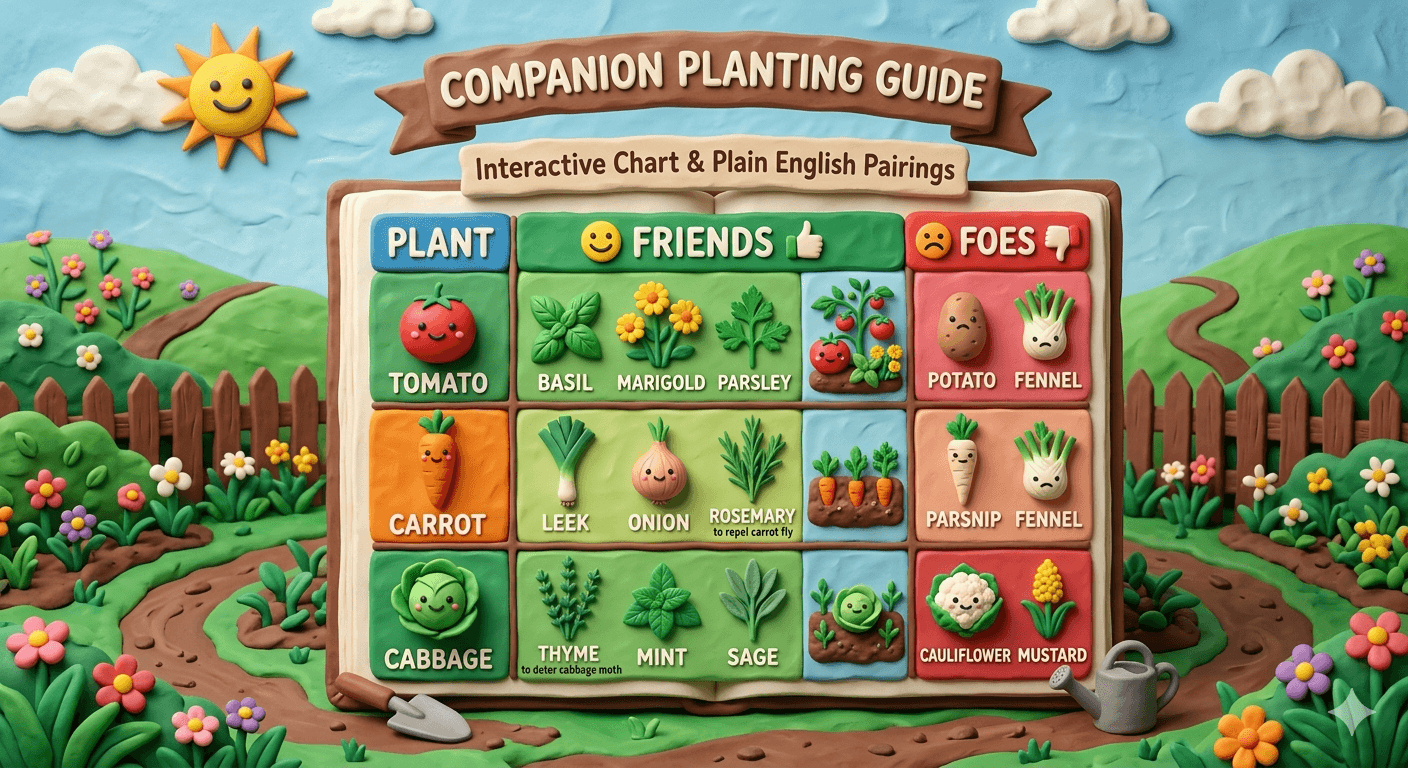
Companion planting is the simple practice of growing certain plants next to each other so they help one another grow. Some pairings repel pests. Some feed the soil. Some shade tender roots from the summer sun. Done well, companion planting cuts your pest pressure, raises your yields, and makes your garden healthier without a single bag of fertilizer or spray.
The hard part has always been the lookup. You stand in front of your bed holding a tomato seedling and try to remember what loves tomatoes and what hates them. Most companion planting charts on the internet are static images from 2008 or Pinterest infographics that scroll for miles. None of them let you just type in a plant and get a clean answer.
This guide fixes that. The interactive tool below lets you pick any vegetable or herb and instantly see its best companions, the plants to keep apart, and the spacing each one needs. Below the tool you will find a full color coded compatibility matrix you can scan or screenshot. After that, the rest of the guide explains the science behind why pairings work, walks through the ten most useful combinations every garden should know, and covers the most common mistakes that keep new gardeners from getting results.
Pick a plant and start exploring.
The Interactive Companion Planting Lookup
Tap any plant chip below to see its companions and conflicts.
Companion Planting Lookup
Pick any plant to see its best garden neighbors and which crops to keep apart.
Tomatoes
vegetable
Good companions
- 🌿Basil
Basil repels aphids and tomato hornworms and may improve flavor.
- Marigoldsnot in calendar
Marigolds deter root knot nematodes and whiteflies around tomato roots.
- 🥕Carrots
Carrots loosen the soil for tomato roots and use different nutrients.
Avoid planting near
- 🥔Potatoes
Both are blight prone nightshades. Disease spreads fast between them.
- 🥬Cabbage
Cabbage stunts tomato growth and competes for the same surface nutrients.
Spacing
24-36 inches
Sun
full sun
Water
high
See exact planting dates for these companions in your zone.
Open Planting CalendarWhat Is Companion Planting and Why Does It Work?
Companion planting is the practice of placing plants near each other based on a known relationship. That relationship can be biological, chemical, or physical. The science behind it is simple once you break it into the four main mechanisms.
Nitrogen fixing
Some plants pull nitrogen out of the air and convert it into a form roots can absorb. Beans, peas, clover, and other legumes do this through bacteria living in nodules on their roots. When those plants grow next to heavy nitrogen feeders like corn, squash, or tomatoes, the neighbors get a slow steady supply of free fertilizer. This is why the classic Three Sisters guild of corn, beans, and squash has fed people for thousands of years.
Pest confusion and chemical repellents
Many pest insects find their target plants by smell. When you mix in strongly scented herbs and flowers, you scramble that signal. Basil throws off the scent trail tomato hornworms follow. Onions and garlic deter aphids and rabbits. Marigolds release a compound from their roots that kills root knot nematodes. The pest never finds the plant it came for and moves on.
Allelopathy
A few plants release chemicals that actively suppress the growth of others. This is called allelopathy, and it cuts both ways. Black walnut trees famously poison the soil under them. On the negative side, fennel slows the growth of nearly every vegetable nearby. On the positive side, mustard and certain rye cover crops can suppress weeds in the same way. Knowing which plants do this helps you avoid the pairings that quietly stunt your harvest.
Shade, structure, and shared space
The simplest pairings just use space well. Tall corn shades short cucumbers from afternoon heat. Shallow rooted lettuce sits happily above deep rooted carrots without competing for the same soil. Quick growing radishes finish before slow growing cabbage even fills out. Good companion planting uses three dimensions, not just the flat layout.
If you want to take this thinking further, our composting 101 guide covers how to build the rich living soil that makes every companion pairing work better. Soil biology is the invisible engine under all of this.
The 10 Best Companion Planting Combinations
These are the pairings worth memorizing. They come up in almost every vegetable garden, they are easy to find seeds for, and the results are obvious within a single season.
1. Tomatoes and basil
The most famous pairing in gardening. Basil repels aphids, whiteflies, and tomato hornworms. Many gardeners swear it improves the flavor of the tomatoes themselves. Plant one basil for every two tomato plants and harvest both all summer.
2. The Three Sisters: corn, beans, and squash
Plant corn first. Once it is six inches tall, plant pole beans at the base of each stalk. Two weeks after that, sow squash seeds between the corn hills. The corn supports the beans. The beans feed nitrogen to the corn and squash. The squash shades the soil and keeps weeds and raccoons away. One garden bed produces three different crops.
3. Carrots and onions
Carrots attract carrot flies. Onions repel them. Onions attract onion flies. Carrots repel them. Plant the two in alternating rows and both pests stay confused. Both crops finish around the same time, so you can harvest the bed in a single afternoon.
4. Lettuce and radishes
Radishes mature in 30 days. Lettuce takes about 45. Sow them together in the same row. The radishes loosen the soil as they bulk up, then come out before the lettuce needs the space. You get two harvests from a single planting and the bed stays continuously productive.
5. Peppers and spinach
Spinach grows fast in the cool weather of early spring. By the time the peppers go in after the last frost, the spinach is ready to harvest. As the peppers grow tall, a second round of spinach can be planted in the partial shade beneath them. Two crops, one footprint.
6. Brassicas and alliums
Cabbage, broccoli, cauliflower, kale, and brussels sprouts all attract cabbage worms. Onions, garlic, and leeks repel them. Plant a row of alliums along every brassica bed and the worm pressure drops dramatically. This pairing alone can save a brassica crop from being eaten to the stems.
7. Eggplant and beans
Eggplant is heavily targeted by Colorado potato beetles. Bush beans planted between the eggplants confuse the beetles and add nitrogen to the soil at the same time. The beans finish their cycle before the eggplant fruits ripen, freeing the space when the eggplants need it most.
8. Cucumbers and radishes
Cucumber beetles are the single biggest threat to a cucumber crop. Radishes planted around the cucumbers act as a trap crop. The beetles go for the radishes, leaving the cucumbers alone. The radishes are still edible, just slightly chewed.
9. Herbs around fruit trees
A ring of garlic, chives, and yarrow around any young fruit tree deters borers, aphids, and Japanese beetles. The herbs also attract pollinators when they flower, which improves fruit set. This is one of the building blocks of a full fruit tree guild, which takes the same idea further with multiple plant layers.
10. Strawberries and spinach
Both crops have shallow roots and both finish quickly. Spinach acts as a living mulch around young strawberry plants in spring, then bolts and gets pulled before the strawberries need the room. The bed stays covered the whole season, which means fewer weeds and better moisture retention.
For exact planting dates for any of these pairings in your zone, drop your zip code into our planting calendar. It will show you when to start each crop indoors, when to transplant, and when to harvest based on your local frost dates.
Visual Compatibility Matrix
The chart below shows every pairing among the plants in our dataset. Green means good companions. Red means avoid. Gray means neutral. Hover or tap any cell for the reason.
Tip: scroll horizontally to see the full grid.
| Plant | 🫚Beets | 🥦Broccoli | 🥬Brussels Sprouts | 🥬Cabbage | 🥕Carrots | 🥦Cauliflower | 🌽Corn | 🥒Cucumbers | 🍆Eggplant | 🧄Garlic | 🫘Green Beans | 🥬Kale | 🥬Lettuce | 🌿Okra | 🧅Onions | 🫛Peas | 🫑Peppers | 🥔Potatoes | 🫚Radishes | 🥬Spinach | 🎃Squash | 🍠Sweet Potatoes | 🍅Tomatoes | 🥒Zucchini | 🍈Cantaloupe | 🎃Pumpkin | 🍉Watermelon | 🌿Basil | 🌿Cilantro | 🌿Parsley |
|---|---|---|---|---|---|---|---|---|---|---|---|---|---|---|---|---|---|---|---|---|---|---|---|---|---|---|---|---|---|---|
| 🫚Beets | ||||||||||||||||||||||||||||||
| 🥦Broccoli | ||||||||||||||||||||||||||||||
| 🥬Brussels Sprouts | ||||||||||||||||||||||||||||||
| 🥬Cabbage | ||||||||||||||||||||||||||||||
| 🥕Carrots | ||||||||||||||||||||||||||||||
| 🥦Cauliflower | ||||||||||||||||||||||||||||||
| 🌽Corn | ||||||||||||||||||||||||||||||
| 🥒Cucumbers | ||||||||||||||||||||||||||||||
| 🍆Eggplant | ||||||||||||||||||||||||||||||
| 🧄Garlic | ||||||||||||||||||||||||||||||
| 🫘Green Beans | ||||||||||||||||||||||||||||||
| 🥬Kale | ||||||||||||||||||||||||||||||
| 🥬Lettuce | ||||||||||||||||||||||||||||||
| 🌿Okra | ||||||||||||||||||||||||||||||
| 🧅Onions | ||||||||||||||||||||||||||||||
| 🫛Peas | ||||||||||||||||||||||||||||||
| 🫑Peppers | ||||||||||||||||||||||||||||||
| 🥔Potatoes | ||||||||||||||||||||||||||||||
| 🫚Radishes | ||||||||||||||||||||||||||||||
| 🥬Spinach | ||||||||||||||||||||||||||||||
| 🎃Squash | ||||||||||||||||||||||||||||||
| 🍠Sweet Potatoes | ||||||||||||||||||||||||||||||
| 🍅Tomatoes | ||||||||||||||||||||||||||||||
| 🥒Zucchini | ||||||||||||||||||||||||||||||
| 🍈Cantaloupe | ||||||||||||||||||||||||||||||
| 🎃Pumpkin | ||||||||||||||||||||||||||||||
| 🍉Watermelon | ||||||||||||||||||||||||||||||
| 🌿Basil | ||||||||||||||||||||||||||||||
| 🌿Cilantro | ||||||||||||||||||||||||||||||
| 🌿Parsley |
Save this chart, screenshot it, or come back to it any time you are planning a new bed. It is the fastest way to spot a pairing you might otherwise miss.
The Most Common Companion Planting Mistakes
A few pairings come up over and over in beginner gardens and quietly cut yields. Watch out for these.
Tomatoes near brassicas
Tomatoes and cabbage family plants both want heavy nitrogen and both compete fiercely for it. Worse, the tomatoes seem to chemically suppress brassica growth. Keep them in separate beds.
Beans or peas near onions and garlic
Onions and garlic kill the soil bacteria that beans and peas need to fix nitrogen. The legumes will grow weakly and produce almost no pods. This is one of the most overlooked conflicts in vegetable gardens.
Fennel near almost anything
Fennel releases compounds that slow the growth of most vegetables nearby. Plant it in a pot or a corner of the garden well away from anything else you care about. The same is true for wormwood and rue.
Mint without a barrier
Mint is a great pollinator plant and a useful pest deterrent, but it is also one of the most aggressive spreaders in the garden. It will take over a bed in two seasons. Always plant it in a buried pot or a contained barrier.
Tall crops south of short ones
This one is about light, not chemistry. If you plant corn or trellised beans on the south side of your bed, they shade out everything to the north. Always put tall crops on the north side of a bed in the northern hemisphere.
Companion Planting by Garden Type
The rules of companion planting stay the same across garden types, but the spacing changes a lot. Here is how to adapt them.
Raised beds
Raised beds are the easiest place to start with companion planting because the contained space forces tighter pairings. Plan around the square foot method. Put one tomato in a square, four basil around it, and tuck carrots between. For more on bed sizing and soil mix, see our raised bed gardening guide.
In ground rows
Traditional row gardens give you more space, which means you can use full size plants and longer companion runs. Run a single row of onions down one side of every brassica bed. Plant a full Three Sisters mound rather than a tight cluster. The pairings work the same, just at a larger scale.
Containers
Small containers limit what you can pair, but the principles still apply. Tomato in the center, basil around the edge, parsley filling in. A single pot can hold a complete companion guild if you choose plants with similar water and sun needs. Avoid putting a heavy water user like cucumber in the same pot as a dry loving herb like sage.
If you are just getting started with vegetables in any of these formats, our easiest vegetables for beginners guide will help you pick crops that succeed even when the pairings are imperfect.
Combining Companion Planting with Succession Planting
Companion planting handles space. Succession planting handles time. Together they let you triple the productivity of a single bed.
The simplest version looks like this. Plant peas in early spring with a row of carrots beside them. As the peas finish in early summer, pull them and replace with bush beans. The carrots stay in place. The beans feed nitrogen to the soil for the next round of fall greens, which you tuck in around the carrots and beans in late summer.
A bed managed this way produces three or four full crops in a season instead of one. The companion pairings keep pest pressure low. The succession keeps the soil covered and working all year.
We are working on a full succession planting guide that will pair directly with this one. In the meantime, the planting calendar will help you map out the timing for any zone.
Frequently Asked Questions
Frequently Asked Questions
Yes, but the size of the effect varies by pairing. Some combinations like beans with corn or basil with tomatoes have strong evidence behind them and produce visible results in a single season. Others are based on long observation by gardeners and may help in subtle ways like minor pest reduction or slightly better growth. Either way, companion planting costs nothing extra and never hurts as long as you avoid the known bad pairings.
Avoid planting tomatoes near potatoes, cabbage, broccoli, cauliflower, kale, brussels sprouts, fennel, and corn. Tomatoes and potatoes share blight that spreads fast between them. Brassicas compete for the same nutrients and stunt tomato growth. Fennel inhibits most vegetables. Corn shares the corn earworm and tomato fruitworm pests. Tomatoes do best next to basil, carrots, onions, garlic, parsley, and marigolds.
Yes, raised beds are actually easier for companion planting because the tight spacing forces good pairings. The square foot method works well. Plant your main crop in the center and tuck companions around the edges. A four by eight raised bed can hold a full companion guild with tomatoes, basil, carrots, onions, lettuce, and marigolds growing together productively all season.
Yes, and some of the best companions are flowers. Marigolds repel root knot nematodes, whiteflies, and beetles. Nasturtiums act as a trap crop for aphids and squash bugs. Borage attracts pollinators and is said to improve strawberry flavor. Calendula and alyssum bring in beneficial insects. Always include flowering companions in any vegetable bed for both pest control and pollination.
Basil is the top companion for peppers. It repels aphids, thrips, and spider mites that target pepper plants and grows in similar heat and sun conditions. Other strong companions include tomatoes, spinach, cilantro, and marigolds. Avoid planting peppers near beans, fennel, and brassicas, all of which compete for nutrients or release growth inhibiting compounds.
Close enough that the roots overlap or the leaves touch, but not so close that they compete for light. For most herb and vegetable pairings, six to twelve inches apart works well. Trap crops like radishes around cucumbers can sit just two or three inches away. Tall plants providing shade need to be far enough north of their companions to actually cast shade in the afternoon.
It can dramatically reduce your need for them, but it rarely replaces them in every situation. A well planned companion bed with strong scented herbs, trap crops, and flowering insectaries will handle most light pest pressure on its own. In high pressure years or with sensitive crops, you may still need an organic spray as a backup. The goal is to make sprays a rare event, not a weekly routine.
Yes, crop rotation still matters even with good companion planting. Move heavy feeders, light feeders, and nitrogen fixers to different beds each year. A simple four year rotation works well. The companion pairings come with you. Plant tomatoes with basil in bed one this year and bed two next year. Rotation keeps soil borne diseases from building up in any single spot.

Cole
Founder & Lead Researcher
Cole is the founder of Plan Your Homestead. He works in clinical research and brings a research-first lens to every guide on the site, drawing on a long family line of farmers for grounded, practical perspective.
More in Gardening
More articles coming soon. Check back for new gardening content.