
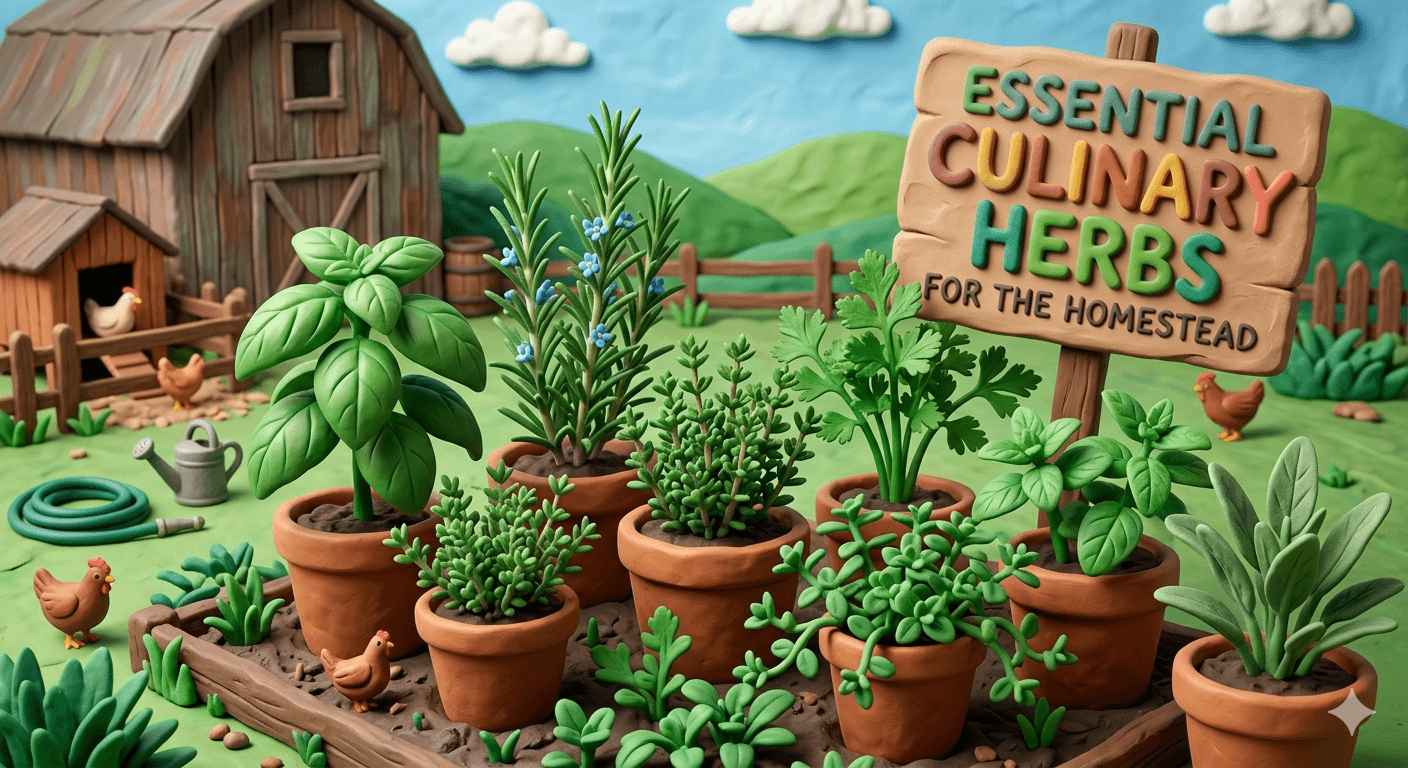
A well stocked culinary herb garden is one of the highest payoff projects on any homestead. The plants are small. The seeds are cheap. And the flavor they add to your cooking is something a grocery store jar simply cannot match.
If you have ever paid four dollars for a tiny plastic clamshell of basil that wilted in two days, you already understand the math. One basil plant in a pot will give you that same handful every week all summer long. Multiply that by ten herbs and you have a kitchen pantry that pays for itself in a month.
The best part is that culinary herbs are some of the most forgiving plants you can grow. Most of them prefer poor soil. Most of them shrug off drought. Many of them come back year after year with zero replanting. If you have struggled to grow vegetables, herbs are the comeback win you need.
This guide covers the 10 culinary herbs every homestead kitchen should have. You will learn when to plant each one, how to keep it happy, when to harvest, and how to actually use it in your cooking.
Why Grow Culinary Herbs on Your Homestead
Fresh herbs change the way food tastes. A sprig of rosemary in roasted potatoes. Torn basil over a summer tomato. Chives snipped onto eggs at breakfast. These are the small touches that make homestead food feel like a real meal instead of just calories on a plate.
There is also the cost angle. Fresh herbs at the grocery store are wildly overpriced for what you get. A four dollar package of thyme is maybe two tablespoons worth. The same money buys a plant that will give you that amount every week for years.
Freshness matters too. The volatile oils that give herbs their punch start fading the moment a leaf is cut. By the time grocery store herbs reach your kitchen, they have lost most of their flavor. Herbs picked from your own garden five minutes before dinner are a completely different ingredient.
Culinary herbs pull double duty in the garden as well. Many of them attract pollinators when they flower. Some repel pests from nearby vegetables. Others, like dill and parsley, host beneficial insects that hunt aphids and caterpillars. Your herb bed is not just feeding you. It is feeding the whole ecosystem.
And then there is the year round factor. Most culinary herbs dry beautifully. A summer of growing means a winter pantry stocked with seasoning that you grew yourself.
Before You Plant: A Few Quick Basics
Culinary herbs share a few common preferences that make them easy to group together.
Most herbs love sun. Six to eight hours a day is the sweet spot for the Mediterranean herbs like rosemary, thyme, oregano, and sage. The leafy ones like basil, parsley, and cilantro will accept a bit less.
Soil should drain well. Herbs hate wet feet more than almost anything else. If your soil holds water, plant in raised beds or containers. If you grow in pots, use a quality potting mix and make sure the pot has drainage holes.
Watering is simple. Stick your finger an inch into the soil. If it is dry, water. If it is damp, wait. Overwatering kills more herbs than any pest or disease.
Tip
If you are new to gardening and want a clearer picture of when to start seeds in your zone, the planting calendar below will walk you through it.
Planting Calendar Tool
Enter your zip code to get a personalized planting schedule based on your USDA zone.
Try it free →The 10 Essential Culinary Herbs
These ten herbs cover almost every flavor profile you need for everyday cooking. Start with the three or four that match how you cook, then expand from there.
1. Basil
Basil is the herb that turns a tomato into a meal. It is the flavor base of pesto, the topping on pizza, and the one fresh herb that should never be cooked too long.
Why it belongs in your garden. Basil is fast, productive, and pairs with more summer crops than any other herb. One plant easily produces enough leaves for a family of four all season.
When and how to plant. Basil is a warm weather annual. Wait until two weeks after your last frost. Soil temperatures need to be above 60 degrees. Direct seed or transplant starts into the garden once nights stay reliably warm.
Sun, water, spacing. Full sun. Consistent moisture. Space plants 12 inches apart.
How to harvest. Pinch the top set of leaves above a pair of side shoots once the plant is six inches tall. This forces it to branch out instead of going to seed. Never let basil flower if you want more leaves.
Best uses in the kitchen. Pesto, caprese salad, tomato sauce, summer salads, infused oils.
2. Rosemary
Rosemary is the workhorse of the herb garden. It is evergreen, drought tolerant, and one of the few herbs that gets better as the plant gets older.
Why it belongs in your garden. A mature rosemary plant is a forever ingredient. It looks beautiful as a landscape shrub, attracts bees in early spring, and gives you fresh seasoning even in winter.
When and how to plant. Buy a transplant rather than starting from seed. Rosemary seeds are slow and inconsistent. Plant in spring after the last frost. In cold climates, grow rosemary in a pot you can bring inside for winter.
Sun, water, spacing. Full sun. Sandy, well drained soil. Water deeply but infrequently. Space plants 24 to 36 inches apart.
How to harvest. Snip individual sprigs as needed. The plant will replace what you take. Never take more than a third of the plant at one time.
Best uses in the kitchen. Roasted potatoes, lamb, chicken, focaccia, infused oils, simple syrups for cocktails.
3. Thyme
Thyme is the quiet workhorse. It blends into almost every savory dish without overpowering anything else.
Why it belongs in your garden. Thyme is tough, pretty, and a magnet for pollinators when it flowers. Once established it asks for almost nothing.
When and how to plant. Start from transplants in spring. Thyme is a perennial in most zones and will come back year after year.
Sun, water, spacing. Full sun. Lean, sandy soil. Drought tolerant once established. Space plants 12 inches apart.
How to harvest. Snip the top few inches of the stems. The flavor is strongest just before the plant flowers.
Best uses in the kitchen. Soups, stews, braises, roasted vegetables, marinades, herb butter.
4. Oregano
Oregano is the flavor of Italian and Greek cooking. A homegrown plant is dramatically more flavorful than the dusty stuff in the spice jar.
Why it belongs in your garden. It is a perennial. It is drought tolerant. And one plant produces more oregano than most families can use in a year.
When and how to plant. Plant transplants in spring. Greek oregano is the variety you want for cooking. Avoid the ornamental types like Italian oregano, which are pretty but bland.
Sun, water, spacing. Full sun. Well drained soil. Space plants 12 to 18 inches apart.
How to harvest. Cut stems just before the plant flowers for the strongest flavor. Strip the leaves off the stem and use fresh or dry the whole bunch.
Best uses in the kitchen. Pizza, pasta sauce, Greek salad, roasted chicken, chili.
5. Sage
Sage is the flavor of cooler weather cooking. Stuffing, sausage, butternut squash, brown butter. Once you have fresh sage in the garden, you start finding excuses to use it.
Why it belongs in your garden. Sage is a hardy perennial that doubles as a beautiful silver gray landscape plant.
When and how to plant. Start from transplants in spring. Sage is slow from seed and not worth the trouble.
Sun, water, spacing. Full sun. Well drained soil. Water sparingly. Space plants 24 inches apart.
How to harvest. Snip individual leaves or stem tips as needed. The leaves intensify in flavor after the first frost.
Best uses in the kitchen. Thanksgiving stuffing, brown butter sauces, roasted root vegetables, fresh pasta, breakfast sausage.
6. Parsley
Parsley is the most underrated herb on this list. It is not a garnish. It is a vegetable in herb form.
Why it belongs in your garden. Parsley adds bright fresh flavor to almost any savory dish. It is also rich in vitamins A, C, and K.
When and how to plant. Direct seed in early spring. The seeds are slow to germinate, so soak them overnight first. Flat leaf Italian parsley has more flavor than curly parsley.
Sun, water, spacing. Full sun to part shade. Rich, moist soil. Space plants 8 to 12 inches apart.
How to harvest. Cut outer stems at the base. New growth comes from the center. The plant is technically a biennial, so it flowers and bolts in its second year.
Best uses in the kitchen. Tabbouleh, chimichurri, soups, stocks, salad dressings, mixed into ground meat dishes.
7. Cilantro
Cilantro is the love it or hate it herb. If you love it, you cannot grow enough of it. If you do not, the seeds (coriander) are still worth the garden space.
Why it belongs in your garden. Cilantro is essential for Mexican, Thai, Indian, and Middle Eastern cooking. It is also fast. You can harvest in as little as 30 days.
When and how to plant. Direct seed every two to three weeks for a continuous supply. Cilantro bolts quickly in hot weather, so spring and fall plantings work best.
Sun, water, spacing. Full sun in cool weather, part shade in summer. Consistent moisture. Space plants 6 inches apart.
How to harvest. Snip outer leaves when the plant is six inches tall. Once it sends up a flower stalk, the leaf flavor fades but the seeds become coriander.
Best uses in the kitchen. Salsa, guacamole, tacos, curries, pho, rice bowls.
8. Chives
Chives are the easiest perennial in the herb garden. Plant once. Harvest forever.
Why it belongs in your garden. A mild onion flavor any time you need it. Plus the purple flowers are gorgeous and edible.
When and how to plant. Plant transplants or divisions in spring. Chives also self seed if allowed to flower.
Sun, water, spacing. Full sun to part shade. Average soil. Space plants 8 to 12 inches apart.
How to harvest. Use scissors to snip the green tops to within an inch of the soil. The plant will regrow within a week or two.
Best uses in the kitchen. Eggs, baked potatoes, sour cream dips, cream cheese, soft cheeses, salad garnish.
9. Mint
Mint is incredibly useful and incredibly aggressive. Treat it with respect and it will reward you for life.
Why it belongs in your garden. Tea, cocktails, lamb, tabbouleh, fruit salads, ice cream. Mint has more uses than most people realize.
When and how to plant. Plant transplants in spring. Choose a variety that matches your cooking. Spearmint is the all purpose kitchen mint. Peppermint is for tea. Chocolate mint and apple mint are fun specialty varieties.
Sun, water, spacing. Part sun to full sun. Moist soil. Space plants 18 to 24 inches apart, but only if you contain them.
How to harvest. Cut stems at the base. The plant will rebound aggressively. Harvest hard and often.
Best uses in the kitchen. Mint tea, mojitos, tabbouleh, lamb dishes, fruit salads, simple syrups, ice cream.
Warning
10. Dill
Dill is the flavor of summer. Pickles, potato salad, fish, fresh cucumbers. It is also one of the prettiest herbs in the garden and a magnet for beneficial insects.
Why it belongs in your garden. Dill brings bright, grassy flavor that no other herb matches. The feathery foliage also hosts swallowtail butterfly caterpillars and attracts parasitic wasps that hunt garden pests.
When and how to plant. Direct seed after the last frost. Dill does not transplant well, so seed it where you want it to grow. Succession plant every three weeks for a continuous supply.
Sun, water, spacing. Full sun. Average soil. Consistent moisture. Space plants 12 inches apart.
How to harvest. Snip feathery leaves any time. Once the plant flowers, the seed heads can be harvested for pickling spice.
Best uses in the kitchen. Pickles, potato salad, salmon, tzatziki, ranch dressing, cucumber salads.
Quick Reference Table
| Herb | Type | Sun | Water | Harvest Window | Top Kitchen Use |
|---|---|---|---|---|---|
| Basil | Annual | Full | Moderate | 60 days to frost | Pesto, tomato dishes |
| Rosemary | Perennial | Full | Low | Year round | Roasted meats, potatoes |
| Thyme | Perennial | Full | Low | Year round | Soups, braises |
| Oregano | Perennial | Full | Low | Spring through fall | Pizza, pasta sauce |
| Sage | Perennial | Full | Low | Year round | Stuffing, brown butter |
| Parsley | Biennial | Part to full | Moderate | 70 days to frost | Tabbouleh, chimichurri |
| Cilantro | Annual | Cool season | Moderate | 30 to 60 days | Salsa, curries |
| Chives | Perennial | Part to full | Moderate | Spring through fall | Eggs, baked potatoes |
| Mint | Perennial | Part to full | Moderate | Spring through fall | Tea, cocktails |
| Dill | Annual | Full | Moderate | 50 days to frost | Pickles, fish |
Companion Planting with Vegetables
Culinary herbs play well with the rest of the garden. Tuck basil between your tomatoes. The two plants share the same growing conditions and basil is said to repel hornworms. Dill planted near brassicas attracts parasitic wasps that prey on cabbage worms. Chives are a great underplanting for fruit trees and roses because the onion scent confuses pests.
If you are building out a beginner vegetable plot, our guide to the easiest vegetables to grow pairs naturally with this herb list. And if you are designing a longer term planting, the fruit tree guild guide shows how herbs like chives, dill, and mint fit into a permaculture system.
Preserving Your Harvest
Most herbs preserve beautifully, which means a summer garden can stock your spice rack for the entire year.
Drying. The simplest method. Cut stems just before the plant flowers. Bundle them with twine and hang upside down in a warm, dry, dark spot for one to two weeks. Once the leaves crumble between your fingers, strip them off the stems and store in jars. Rosemary, thyme, oregano, sage, and mint all dry exceptionally well.
Freezing in oil. Best for herbs that lose flavor when dried, like basil, parsley, cilantro, dill, and chives. Chop the herbs, pack them into ice cube trays, cover with olive oil, and freeze. Drop a cube into pans for instant fresh flavor.
Herb butter. Mix soft butter with chopped fresh herbs, roll into a log in parchment paper, and freeze. Slice off coins as needed for steaks, vegetables, or pasta.
Herb salt. Layer fresh herbs and coarse salt in a jar. Let it sit for a few weeks, then sift out the salt. A simple way to keep summer flavor on the table all year.
Frequently Asked Questions
Frequently Asked Questions
Basil, parsley, chives, mint, and thyme are the most reliable indoor herbs. They all tolerate the lower light of a sunny windowsill. Rosemary and sage can work indoors but need the brightest window in the house and good airflow to avoid mildew.
More than you think. Regular harvesting keeps herbs producing fresh, tender leaves and delays flowering. For most herbs, taking a third of the plant every one to two weeks during the growing season is ideal. Plants left untouched bolt faster and produce less.
If you want more leaves, yes. Once an herb flowers, it shifts energy from leaf production to seed production and the leaves often turn bitter. Basil, parsley, and cilantro are especially sensitive. The exception is if you want the flowers for pollinators or the seeds for spices, like coriander from cilantro or dill seed for pickling.
Rosemary, thyme, oregano, sage, chives, and mint are all perennials in most climates. Parsley is a biennial. Basil, cilantro, and dill are annuals that need to be replanted each year, though all three will self seed if allowed to flower.
Some, but most prefer sun. Parsley, chives, mint, and cilantro tolerate part shade with four to six hours of sun. The Mediterranean herbs like rosemary, thyme, oregano, and sage need at least six to eight hours of direct sun to develop their oils and full flavor.
Containment is the only answer. Grow mint in a pot, a deep sunken bucket with the bottom cut out, or a fully isolated bed surrounded by hard edging. Cutting back runners helps, but underground rhizomes spread fast and will reach surprising distances. When in doubt, give mint its own dedicated container.
Start Small and Grow From There
You do not need all ten herbs to start. Pick the three or four that match how you actually cook. If you make a lot of Italian food, start with basil, oregano, and parsley. If you grill, start with rosemary, thyme, and sage. If you love Mexican food, start with cilantro and chives.
An herb garden has a way of becoming the most used part of the homestead. It is the bed you walk past every day. It is the harvest you make every evening. And it is the smallest plot that gives back the most.
Plant a few pots this spring. By summer you will wonder how you ever cooked without them.

Cole
Founder & Lead Researcher
Cole is the founder of Plan Your Homestead. He works in clinical research and brings a research-first lens to every guide on the site, drawing on a long family line of farmers for grounded, practical perspective.
More in Gardening
More articles coming soon. Check back for new gardening content.