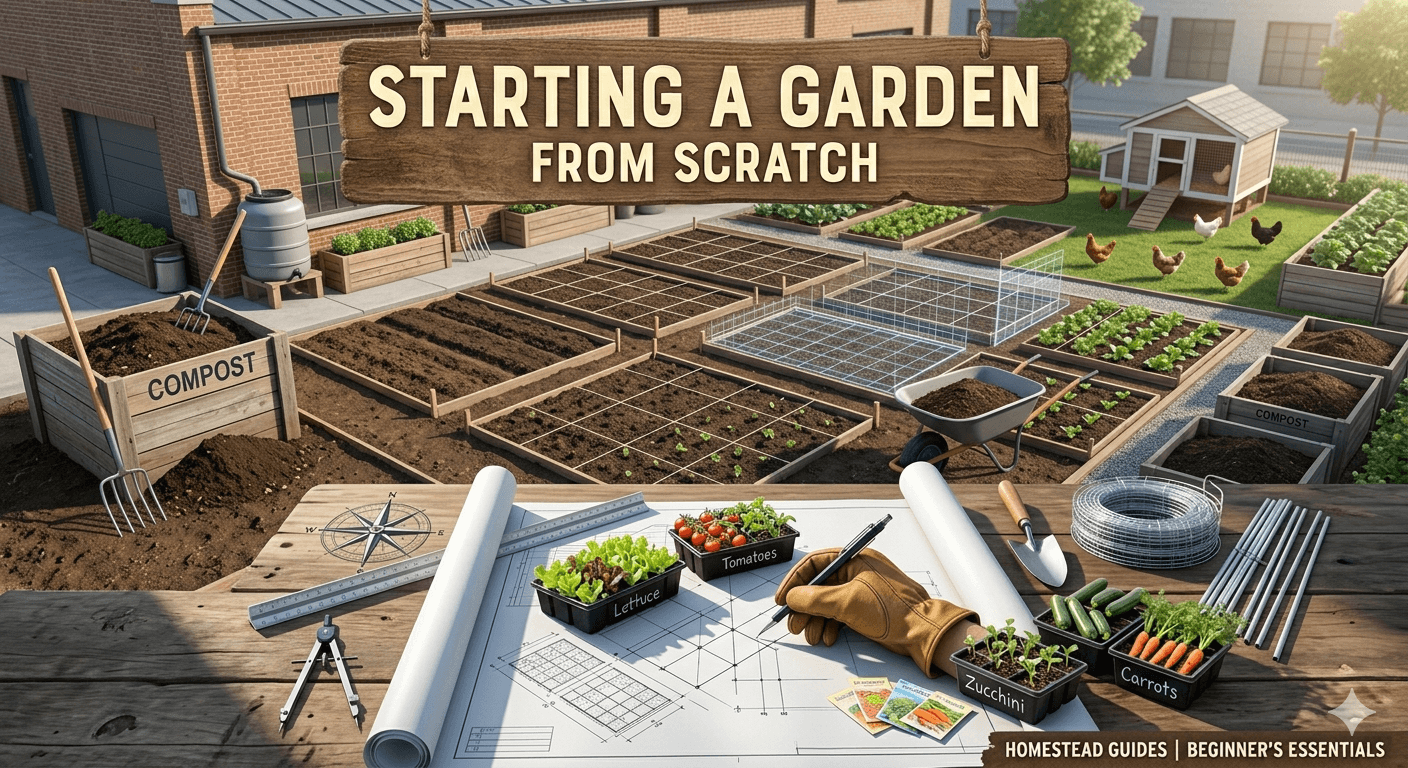
So you want to start a garden. Maybe you have been staring at a sunny patch of yard for years. Maybe you tasted a tomato from a friend's plot last August and have not stopped thinking about it since. Maybe grocery prices finally pushed you over the edge. Whatever brought you here, welcome. You are about to do something that will quietly change your life.
Starting a garden from scratch can feel bigger than it is. There are seed catalogs the size of phone books. There are gardeners on the internet talking about soil microbiology in the same tone of voice doctors use. There are tools you have never heard of and Latin names for plants you grew up calling by their plain English. It is easy to freeze before you plant a single seed.
Take a breath. You do not need any of that to begin. You need a sunny spot, a little patience, and the willingness to learn from one season. That is it. Every gardener you admire started exactly where you are right now. They were not born knowing this. They learned by planting, watching, failing a little, and trying again next year.
This guide is your calm, friendly walk through the first season. We will pick your spot, learn your climate, choose your style, build your soil, decide what to grow, plan a simple layout, and get you to harvest. By the end of this article you will know exactly what to do this weekend, this month, and this season. No fluff. No fear. Just a clear plan you can actually follow.
You can do this. Let us begin.
Why Start a Garden
Before we get into the dirt, it is worth saying out loud why this matters. A garden is small in the grand scheme of things. It is also the single most rewarding project most homesteaders ever take on.
A garden teaches you about your land. It teaches you about your weather. It teaches you about yourself. Every season, you learn what your soil wants, what your climate allows, and how much time you actually have to give. Those lessons compound. The gardener you are in year five is unrecognizable from the gardener you are in year one, and the only path between them is planting.
A garden also feeds you. Even a small bed can put real food on your table for months. Fresh tomatoes warm from the vine. Lettuce you cut at lunchtime and eat by dinner. Garlic you planted last fall and pulled this summer. The flavor is not comparable to anything you can buy. Once you taste it, the grocery store version starts to feel a little sad.
Beyond food, a garden gives you a quiet daily ritual. Walking out in the morning to check on your plants is one of the most settling things you can do for your mind. Gardens slow you down in the best way. They reward attention. They forgive mistakes. They keep showing up.
And if you have larger homesteading goals, a garden is the gateway. Almost every homesteader you can name began with a vegetable patch. Our broader homesteading for beginners pillar covers the bigger picture, but if you are just starting out, the garden is where the road begins.
Pick the Right Spot
The single most important decision you will make this season is where to put your garden. Get this right and your plants will reward you with very little fuss. Get it wrong and you will fight the same battle every weekend until October.
Here is what to look for.
Sun. Most vegetables need at least six hours of direct sun a day. Eight is better. Tomatoes, peppers, squash, cucumbers, beans, and corn are all sun lovers. A shady spot will grow lettuce and a few herbs, but it will starve fruiting crops. Stand in your yard at 8 a.m., noon, and 4 p.m. on a sunny day. Look for the spot that gets light at all three checks. That is your garden.
Water. Pick somewhere you can reach with a hose. You will be watering more than you expect, especially in the first six weeks after planting. If your only sunny spot is far from a spigot, plan for a longer hose or a drip line before you plant. Hauling buckets gets old fast.
Drainage. Walk your yard the morning after a heavy rain. Wet feet mean trouble. Garden soil should drain. Standing water will rot your roots and invite disease. If your only spot puddles, raised beds will solve the problem cleanly.
Slope. A gentle slope is fine, even helpful. A steep slope will erode your soil and run off your water. If your land slopes hard, terraces or raised beds keep things in place.
Distance from your kitchen. This sounds small. It is not. A garden ten steps from your back door gets visited every day. A garden a quarter acre away gets ignored after the third week of July. Visit equals harvest. Plan accordingly.
If you can, take a full week to observe before you commit. Watch the sun. Watch the wind. Watch the rain. Your garden will live in this spot for years. A few extra days of looking will pay you back many times over.
Know Your Climate Before You Plant
Two numbers will shape almost every decision you make this season. Your USDA hardiness zone and your local frost dates. Most beginners skip them. Most beginners also lose half their tomatoes to a late frost.
Your hardiness zone tells you how cold your winters get. It is a quick shorthand for which perennials, fruit trees, and overwintered crops will survive in your area. Frost dates tell you when your last spring freeze and your first fall freeze typically arrive. Those two days bracket your growing season.
Most vegetables fall into one of two camps. Cool weather crops like lettuce, spinach, peas, and broccoli can handle a light frost and actually prefer the chillier ends of the season. Warm weather crops like tomatoes, peppers, squash, and beans need consistent warmth and will sulk or die if you put them out too early. Get the timing wrong and you will plant the same crop twice.
The good news is none of this is hard. The better news is we built tools that do the math for you.
Planting Calendar Tool
Enter your zip code to get a personalized planting schedule based on your USDA zone.
Try it free →If you want a quick frost date lookup without the full calendar, our frost date finder takes a zip code and returns your average first and last freeze dates. Print it. Tape it inside a kitchen cabinet. You will glance at it more than you expect.
Choose Your Garden Style
There is no single right way to grow a garden. There are four common styles for beginners, and each one has honest pros and cons. Pick the one that fits your space, your budget, and your back.
Raised Beds
Raised beds are the most popular choice for new gardeners, and for good reason. You build a wooden or metal frame, fill it with quality soil, and start planting. You skip the headache of fixing bad native soil. You drain better. You bend less. You weed less. You can begin in the same week you build them.
The trade off is cost. Lumber, soil, and amendments add up. A simple four by eight foot bed can run two hundred dollars or more once everything is in. If raised beds appeal to you, our raised bed gardening guide covers materials, sizes, and layout in detail.
In Ground Rows
This is the classic vegetable garden. You till or fork your native soil, amend it with compost, and plant directly in the ground. It scales easily and costs almost nothing once you have a shovel.
The catch is that your soil has to cooperate. Heavy clay, pure sand, or rocky ground will fight you for years. A soil test up front saves a lot of grief. Once your in ground beds are healthy, they outproduce almost anything else on a per dollar basis.
Container Gardens
Pots, fabric grow bags, and stock tanks are perfect for patios, balconies, driveways, and shady yards where you have to chase the sun. Containers give you full control of the soil and let you move plants around as the seasons shift.
Containers dry out faster than ground beds. You will water more often. Larger containers buy you forgiveness. A five gallon bucket per tomato plant is a solid minimum. Smaller pots will work for herbs and lettuce, not for full size fruiting crops.
No Dig and Lasagna Beds
A no dig bed is built right on top of grass or weeds with cardboard, compost, and mulch. You do not dig. You let worms and time turn the layers into beautiful soil over a season or two. It is gentle, productive, and very forgiving.
The trade off is patience. The first year you may want to add purchased soil on top to plant into. The reward is a bed that gets better every year with very little work.
| Garden Style | Best For | Upfront Cost | Ease of Start |
|---|---|---|---|
| Raised Beds | Bad native soil, bad backs, fast starts | Moderate to high | Easy |
| In Ground Rows | Larger plots, decent soil, low budgets | Low | Moderate |
| Containers | Patios, balconies, renters, tight spots | Low to moderate | Very easy |
| No Dig | Lawn conversion, lazy gardeners, long horizon | Low | Easy after build |
You can mix styles in one yard. Many gardeners use raised beds near the kitchen, an in ground row for sprawling crops like winter squash, and a few containers on the porch for herbs. Start with whichever feels least intimidating. You can always add more later.
Build Your Soil First
If there is one secret in gardening, this is it. New gardeners obsess over which seeds to buy. Experienced gardeners obsess over soil. Healthy soil grows healthy plants. Tired soil grows tired plants no matter what variety you choose or how much you fuss.
Before you plant anything, do these three things.
Test your soil. Most county extension offices run a basic soil test for less than twenty dollars. Send them a sample. They will mail back your pH, your nutrient levels, and a list of recommended amendments. This single step will save you a season of frustration and probably a bag or two of unnecessary fertilizer.
Add compost. Compost is the universal soil improver. It loosens clay, binds sand, feeds microbes, and slowly releases nutrients. A two inch layer worked into the top six inches of soil in spring is a strong start. If you do not have your own pile yet, our composting 101 guide walks through how to start one for free with kitchen scraps and yard waste.
Mulch generously. Once your plants are in, cover the bare soil between them with two to three inches of mulch. Straw, shredded leaves, grass clippings, or wood chips all work. Mulch holds moisture, blocks weeds, moderates soil temperature, and slowly breaks down into more compost. Skipping mulch is the most common reason new gardens look stressed by July.
Skip the urge to buy expensive synthetic fertilizers in your first season. Compost and a balanced organic fertilizer are plenty for almost any beginner garden. For deeper guidance on building soil from scratch, our vegetable gardening for beginners hub goes further into the science without losing the friendly tone.
Tip
A simple soil test is the best fifteen dollars you will spend on your garden this year. Call your local extension office before you buy anything else. Most will tell you exactly how to collect a sample and where to drop it off. The results come back in a couple of weeks.
Decide What to Grow
Now the fun part. The seed catalog. The dreams. The sticky notes on the kitchen table.
Before you order a single packet, write down two simple lists. What does your family actually eat. What grows easily in your climate. The crops that show up on both lists are your starting menu.
Beginners almost always plant too many varieties their first year. Five to eight crops grown well will teach you more than thirty crops grown poorly. Save the purple carrots and obscure heirlooms for year two.
Here are crops that are forgiving, productive, and useful for almost any beginner garden.
- Tomatoes. The crown jewel of the home garden. Plant a couple of varieties. One paste type for sauces. One slicing type for sandwiches. One cherry type for snacking.
- Zucchini and summer squash. Famously productive. Plant two plants, not ten. Your neighbors will thank you.
- Green beans. Easy from seed. Pick a bush variety for less fuss. Once they start, they keep coming for weeks.
- Lettuce and salad greens. Fast, forgiving, and rewarding. You can harvest baby greens four weeks after sowing.
- Peppers. Sweet or hot, your call. They love heat and reward patience.
- Garlic. Plant a single head split into cloves in October. Pull a beautiful crop the following July. One of the easiest crops on earth.
- Potatoes. Cheap to plant, easy to grow, deeply satisfying to dig.
- Herbs. Basil, parsley, cilantro, and thyme. Small space, huge flavor return.
If you want a deeper crop selector that matches plants to your specific zone and family size, the vegetable gardening for beginners guide has a more thorough rundown.
Plan Your Layout
Once you know your spot and your crops, sketch a simple map. Pencil and a sheet of paper is plenty. Fancy garden software is not necessary in year one.
A few rules of thumb will keep you out of trouble.
Tall plants on the north side. This stops them from shading shorter crops. Trellised tomatoes, pole beans, and corn belong on the north or back edge of your bed.
Group thirsty crops together. Tomatoes, cucumbers, and squash all want regular water. Drought tolerant herbs like rosemary and thyme do better drier. Putting them in different zones makes watering easier.
Leave paths. A garden you cannot walk through is a garden that gets neglected. Eighteen inch paths between beds give you room to weed, harvest, and wheel a barrow if needed.
Think about companions. Some plants help each other grow. Basil near tomatoes. Marigolds near almost anything for pest control. Onions near carrots to confuse carrot flies. Our companion planting guide goes deeper, but a few classic pairings will serve you well your first year.
Plan for succession. Once your spring lettuce bolts in the heat, that space is empty. Plant a second round of beans or a fall crop of greens in its place. Few beginners do this in year one. Year two is the time to try.
Keep your map. Pin it to the fridge. Note what you planted where. Next winter, when you sit down to plan year two, those notes will be priceless.
Starting Seeds vs Buying Transplants
You have two ways to get plants in the ground. Start them yourself indoors, or buy starts from a local nursery. Both are valid. The right answer depends on your time, your budget, and your appetite for tinkering.
Buying transplants is the easy path. You drive to the garden center in May, pick the strongest looking plants, and bring them home. You skip the lights, the trays, and the timing puzzles. The trade off is variety. You will be limited to whatever your local store carries, and you will pay three to six dollars per plant.
Starting seeds opens the catalog. You can grow any variety you can dream of, and a packet of fifty seeds costs less than two transplants. The trade off is gear and timing. You will need a sunny window or a basic grow light, seed trays, a heat mat for warm weather crops, and the discipline to start things on the right week.
For your first year, a hybrid approach often works best. Buy your tomatoes, peppers, and a few herbs as starts. Direct sow the easy stuff like beans, squash, lettuce, and root crops right into the ground. Add seed starting in year two when you know what you actually want more of.
If you do want to start indoors, our seed starting calendar tells you exactly which week to begin each crop based on your zone.
Planting Day Step by Step
You have your spot, your beds, your soil, and your plants. Here is how to put them in the ground without setting yourself back.
Harden Off First
Plants raised indoors or in a greenhouse have soft tissue. They will burn in their first day of full sun. Set them outside in a shady, sheltered spot for one hour on day one. Add an hour or two each day for a week. By day seven they can handle a full day of sun. Skipping this step is the most common reason transplants struggle in their first week outdoors.
Plant on a Calm, Cloudy Day if You Can
Hot sun and stiff wind on planting day add stress to plants that are already adjusting. A cloudy afternoon, an evening, or a soft drizzle is ideal. Hot dry middays are the worst window. If the weather forces your hand, water deeply and shade new transplants for a couple of days.
Transplanting
Dig a hole slightly larger than the root ball. Lift the plant gently from its pot, supporting the soil and roots together. Loosen the bottom roots if they are circling. Set the plant at the same depth it was in the pot, except for tomatoes, which can be buried deeper than they grew. Backfill with native soil mixed with a small handful of compost. Press lightly. Water in deeply, right at the base.
Direct Sowing
For seeds going right into the ground, follow the depth on the packet. A good rule is to plant a seed about twice as deep as it is wide. Press the soil gently. Water with a fine spray so you do not wash the seeds away. Keep the surface moist for the first week. Cover seeded rows with floating row cover or a thin layer of straw if you have a problem with birds.
Water In
Every new plant needs a deep first drink. Run water at the base until you see the soil hold a small puddle, then walk away. Shallow watering encourages shallow roots. Deep watering encourages roots to chase down into the soil where they belong.
Watering, Mulching, and Daily Care
The first six weeks of your garden are the most important. Plants put on most of their root systems early. If they are stressed for water during that window, they spend the rest of the season catching up.
A few simple habits will keep you out of trouble.
Water deeply, not often. Most beginners water every day for five minutes. That trains roots to live near the surface, where the soil dries out fastest. Better to water heavily two or three times a week, soaking the soil six to eight inches deep, and let the top inch dry between waterings. The exception is brand new transplants and seeds, which need consistent surface moisture for the first week or two.
Water in the morning. Morning watering lets leaves dry by night, which prevents most fungal diseases. Evening watering is fine in a pinch. Midday is the worst window because half the water evaporates before it reaches the roots.
Use drip if you can. A simple drip line on a timer is the single best upgrade you can make to a vegetable garden. Drip puts water exactly where the roots are and keeps leaves dry. Hand watering with a hose works fine too, especially in a small garden, but it eats up your evenings.
Walk your garden every day. Five minutes a day is plenty. Pull a weed when it is small. Spot a bug before it becomes a swarm. Notice yellowing leaves before half the plant is gone. Daily attention is worth ten times more than weekend marathons.
Common Beginner Mistakes
Almost every new gardener makes the same handful of mistakes. The good news is that you can skip most of them by reading this list twice.
- Planting too early. A warm week in April is not spring. Wait for your last frost date plus a buffer. Late tomatoes catch up. Frozen tomatoes do not.
- Overcrowding. A pepper plant looks tiny in May. By August it will need two square feet to itself. Read the spacing on the seed packet and trust it.
- Skipping soil prep. You cannot fertilize your way out of bad soil. Start with compost. Always.
- Ignoring sun. A spot that gets four hours of sun is a herb garden, not a vegetable plot. Be honest about your light.
- Trying too many crops. Five crops grown well beats twenty grown poorly. Add variety in year two.
- Watering wrong. Shallow daily sprinkles are worse than deep weekly soaks. Stick a finger in the soil. If the top inch is dry, water.
- Quitting in July. July is hard. The bugs are loud. The weeds are winning. The heat is brutal. August is when the harvest arrives, and August will change your mind about everything.
Warning
If you only remember one thing from this article, remember this. Do not quit in July. Every gardener feels overwhelmed in mid summer. The ones who push through to August are the ones who become real gardeners. The harvest you are about to receive is bigger than you expect.
Your First Season Calendar
Timing varies by zone, but the rhythm of a first garden looks roughly like this. Treat this as a baseline for an average zone seven garden. Your dates will shift earlier in the south and later in the north. Use the planting calendar tool above for a personalized version.
| Month | Focus |
|---|---|
| January | Read seed catalogs. Sketch your beds. Order seeds early. |
| February | Start onions and slow growing seeds indoors. Build raised beds. |
| March | Start tomatoes and peppers indoors. Prep soil outside. Plant peas and lettuce. |
| April | Transplant cool weather crops. Harden off warm crops. Add compost. |
| May | After last frost, plant tomatoes, peppers, squash, beans, and cucumbers. |
| June | Mulch heavily. Set up irrigation. Stake tomatoes. Watch for early pests. |
| July | Harvest steadily. Water deep. Push through the heat. |
| August | Peak harvest. Preserve aggressively. Plant fall crops in cleared beds. |
| September | Harvest fall greens. Cure garlic and onions. Save seeds from your best plants. |
| October | Plant garlic for next year. Clean up beds. Add compost. |
| November | Cover crop, mulch, or sheet compost. Reflect on what worked. |
| December | Rest. Plan next year. Read. |
Keep a simple notebook. Date your entries. Note what you planted, when it sprouted, when it bolted, and what you wished you had done differently. Year one is your tuition. The notes are how you cash it in.
Beyond Year One
Your first season will end faster than you think. Suddenly the tomatoes will be gone. The garlic will be hanging in the garage. The beds will be tucked under leaves. You will look back and feel proud.
This is when most new gardeners stall. The tools come off the porch and into the shed. The catalogs go unread. By February the plan has gone fuzzy.
Do one or two simple things this fall and you will be three steps ahead next spring.
Preserve what you grew. A summer garden produces in waves. By August you will have more tomatoes, beans, and peppers than your fridge can hold. Learning to put food up turns your harvest from pressure into wealth. Our canning for beginners guide is a friendly entry point. Water bath canning, dehydrating, freezing, and fermenting are all worth learning over the next few seasons.
Save a few seeds. Pick your best plants and let one or two go fully to seed. Tomatoes, beans, and peppers are the easiest. Free seeds, adapted to your land, ready for next year. Few things feel more like real homesteading than this.
Sketch your year two map. Pull out your year one notes. What worked. What did not. What do you wish you had grown more of. Sketch a fresh map. Order seeds in January, not April. The gardeners who plan early are the ones who eat well.
Add one new project. A new bed. A small herb spiral. A row of berries. One cold frame for early spring greens. Adding one project a year is a sustainable pace and it compounds beautifully over five years.
You Can Do This
Here is the quiet truth about gardening. The first year is the hardest year you will ever have. You are learning your soil, your weather, your tools, and your own habits all at once. After year one, every season builds on the last.
Do not wait until the perfect spring to begin. There is no perfect spring. The crooked bed you build this weekend will produce more food than the perfect bed you have been dreaming about for three years. Start where you are. Use what you have. Plant something this week.
If you are still on the fence about timing, our planting calendar will tell you exactly what to start and when based on your zip code. Five minutes with that tool will replace five weeks of online research.
We are glad you are here. Now go plant something. Your future self, eating a tomato sandwich on the back porch in August, will thank you.
Frequently Asked Questions
Smaller than you think. A single four by eight foot raised bed or a ten by ten foot in ground plot is plenty for your first year. You will grow more from a small bed you tend well than from a large bed you cannot keep up with. Add space in year two once you know your rhythm.
Most fruiting vegetables like tomatoes, peppers, and squash need at least six hours of direct sun a day, and they thrive on eight. Leafy greens and some herbs can manage with four to six hours. If your yard is shadier, lean toward lettuce, spinach, kale, and herbs and skip tomatoes for now.
Aim for one to two inches of water per week, including rainfall, delivered in two or three deep waterings rather than daily light sprinkles. New transplants and seeds need more frequent surface watering for the first week or two. Stick a finger an inch into the soil. If it feels dry at that depth, it is time to water.
Neither is better. Raised beds give you instant good soil, easier weeding, and less back strain, but they cost more up front. In ground beds cost almost nothing once you have a shovel and they scale easily, but they only work if your native soil cooperates. Many gardeners use both.
Yes. Container gardens can be very productive, especially on patios and balconies. Use the largest containers you can manage. A five gallon bucket per tomato plant is a good minimum. Smaller pots work great for lettuce, herbs, and bush beans. Plan to water more often than in ground gardens since pots dry out fast.
It depends on your last frost date. Cool weather crops like peas, lettuce, and broccoli can go out two to four weeks before the last frost. Warm weather crops like tomatoes, peppers, and squash need to wait until after the last frost and ideally until soil temperatures are reliably above 60 degrees. Use our planting calendar tool for personalized dates.
Zucchini, green beans, and lettuce are nearly impossible to fail with. Garlic is the easiest crop you will ever grow, but it is planted in fall for a summer harvest. If you want a fast win this season, start with bush beans and a few lettuce varieties. You will be eating from your own garden in six to eight weeks.
No. A round point shovel, a sturdy garden fork, a hand trowel, a pair of pruners, and a hose will carry you through your first three seasons. Add a wheelbarrow if you have the budget. Skip the gadgets and battery powered tools until you know what you actually need. Cheap tools fail fast. One quality tool of each type is worth more than a shed full of bargain bin gear.

Cole
Founder & Lead Researcher
Cole is the founder of Plan Your Homestead. He works in clinical research and brings a research-first lens to every guide on the site, drawing on a long family line of farmers for grounded, practical perspective.
More in Guides
More articles coming soon. Check back for new guides content.