The best fruit trees by zone are the ones that match the actual winters and summers on your land. Pick a tree that fits your USDA hardiness zone and it will mostly thrive on its own. Pick the wrong tree and you will fight cold damage, blossom loss, disease, and disappointing harvests every single year.
This guide walks you through the best fruit trees for every USDA zone from 3 to 10. You will see which apples, pears, peaches, cherries, plums, figs, and citrus trees actually belong in your climate. You will also learn how to think about chill hours, ripening windows, and pollination partners so you can pick the right variety inside your zone.
If you have ever planted a peach tree in zone 4 or a Macintosh apple in zone 9, you already know what climate mismatch looks like. This guide will keep you out of that trap.
Let us dig in.
Why Zone Matters More Than Anything Else
Soil, sunlight, and water all matter. But none of them matter if the tree cannot survive your winter or get the chill it needs in spring.
USDA hardiness zones describe the average lowest winter temperature for an area. Zone 3 dips to negative 40 degrees Fahrenheit. Zone 10 rarely sees a frost. Most fruit trees are rated for a range of zones, and that range tells you whether the tree can survive a typical cold snap in your region.
Cold hardiness is only half the story. Many fruit trees also need a certain number of chill hours below 45 degrees Fahrenheit each winter to set fruit properly. Pick a high chill apple for a warm zone and the tree will leaf out but never bloom well. Pick a low chill peach for a cold zone and the buds will swell during a January warm spell and freeze a week later.
The right tree for your zone is one that survives your winters, gets the chill it needs, and ripens its fruit before your first fall frost. That is the trifecta. This guide gives you a shortcut to all three.
Note
The USDA updated its hardiness zone map in 2023. Many areas shifted half a zone warmer due to gradual climate change. If you have not checked your zone in a few years, look it up again before you order trees. You may now have options that were borderline a decade ago.
How to Find Your USDA Hardiness Zone
Finding your zone takes about ten seconds. Go to the official USDA Plant Hardiness Zone Map and type in your zip code. The site returns your zone and your half zone, such as 6a or 7b. Write it down and use it every time you shop for trees, perennials, or berries.
Microclimates matter too. A south facing hillside that catches afternoon sun is often a half zone warmer than the cold pocket at the bottom of your property. A low spot where cold air settles can be a full zone colder than the published map suggests. Walk your land in early spring. Notice where frost lingers longest and where snow melts first. Plant your most cold sensitive trees on the warm spots and your toughest trees in the cold pockets.
Once you know your zone and your microclimates, you can start picking trees with confidence.
Best Fruit Trees for Zones 3 and 4
Zones 3 and 4 cover the northern tier of the United States, much of interior Canada, and high elevation regions in the mountain west. Winters drop to negative 30 or negative 40 degrees Fahrenheit. Growing seasons are short. You need fruit trees that shrug off brutal cold and ripen quickly in cool summers.
Apples are the best choice here. Stick with varieties bred for cold climates by programs in Minnesota, Wisconsin, and the prairie provinces. Honeycrisp is rated to zone 3 and produces the famous crisp, juicy apple even in tough winters. Haralson, Sweet Sixteen, and Honeygold are reliable older varieties. State Fair ripens early enough to beat the first frost in even the shortest seasons.
Plums are another excellent option, especially the American hybrids developed for the upper Midwest. Toka, Pembina, Underwood, and Waneta all handle zone 3 winters. Most need a second plum tree for pollination, so plan to plant at least two compatible varieties.
Cherries in cold zones means sour cherries, not sweet. Sweet cherries struggle below zone 5. Sour varieties like North Star, Meteor, and Evans Bali are bred for the upper Midwest and produce heavy crops of tart cherries that are perfect for pies and preserves.
Pears are tougher than people realize. Ure, Golden Spice, and Summercrisp are zone 3 hardy and produce small, sweet fruit. They do not look like grocery store pears, but they taste wonderful fresh and process beautifully into sauce or canned slices.
Skip peaches, nectarines, apricots, sweet cherries, and almost all stone fruit in zones 3 and 4. They will not survive the winters. If you want stone fruit in this climate, focus on hardy plums and sour cherries and accept the trade off.
Best Fruit Trees for Zones 5 and 6
Zones 5 and 6 cover most of the Midwest, the Northeast, and the higher elevations of the mountain west. Winters drop to negative 20 or negative 10 degrees Fahrenheit. Summers are warm and reasonably long. This is the sweet spot for backyard fruit growing in the United States.
Apples thrive here. Almost any popular apple variety works, including Honeycrisp, Liberty, Empire, Cortland, Mutsu, and Jonathan. Liberty is especially valuable because it resists apple scab without spraying. Empire and Cortland are excellent for fresh eating. If you have room for two trees, plant varieties that bloom at the same time so they pollinate each other.
Pears are practically maintenance free in zones 5 and 6. European varieties like Bartlett, Bosc, and Anjou produce classic dessert pears. Asian pears like Shinseiki and Hosui give you crisp, juicy fruit on younger trees. Plant at least two pears for cross pollination.
Peaches become possible in zone 5 with hardy varieties like Reliance, Contender, and Madison. Zone 6 opens up many more options including Redhaven, Belle of Georgia, and Cresthaven. Peaches are self fertile, so a single tree will produce fruit. Plant them in a protected spot away from low frost pockets to avoid losing the blossoms to a late freeze.
Plums of all kinds work well. European plums like Stanley, Italian Prune, and Damson are reliable. Japanese plums like Santa Rosa and Methley produce earlier and need a second tree for pollination.
Cherries include both sweet and sour types in this range. Sweet varieties like Stella, Lapins, and Sweetheart are self fertile and produce dark, glossy cherries. Sour cherries like Montmorency are bulletproof and need almost no care once established.
Tip
Liberty apple is the best beginner choice in zones 5 through 7. It resists scab, fire blight, cedar apple rust, and powdery mildew. You can grow excellent apples without ever picking up a spray bottle. Pair it with a Honeycrisp or Empire for pollination and you have a productive home orchard with minimal fuss.
Best Fruit Trees for Zones 7 and 8
Zones 7 and 8 cover the mid Atlantic, the upper South, the Pacific Northwest, and large parts of California. Winters dip to 10 or 20 degrees Fahrenheit. Summers are long, warm, and often humid. The growing season runs eight or nine months.
Apples still work, but you want low chill varieties. High chill apples like Honeycrisp may not get enough cold to set fruit reliably in zone 8. Pick Anna, Dorsett Golden, Pink Lady, Fuji, or Gala for warmer regions. These need fewer chill hours and bear heavily.
Peaches are at their best in zones 7 and 8. Elberta, Redhaven, Georgia Belle, and O'Henry are the classic Southern peaches. Plant them in well drained soil and stay on top of pruning. A well pruned peach tree produces buckets of fruit by year three.
Pears include both European and Asian types. Add fire blight resistant varieties like Magness, Moonglow, and Warren in humid Southern climates where the disease is a constant threat. Asian pears like 20th Century and Chojuro are also fire blight tolerant.
Plums thrive in this range. Japanese types like Santa Rosa, Methley, and Burbank produce abundant fruit. European plums like Stanley do well too.
Figs become a serious option in zone 7 and a sure thing in zone 8. Brown Turkey, Celeste, and Chicago Hardy are the most reliable varieties. Figs are nearly self sufficient once established. They handle drought and poor soil that would kill other fruit trees.
Persimmons are worth planting here. American persimmons like Meader and Yates produce small, intensely sweet fruit and are zone 4 to 9 hardy. Asian persimmons like Fuyu and Jiro produce the large, non astringent fruit you see at the grocery store and prefer zones 7 through 10.
Pomegranates can grow outdoors in zone 7 with some winter protection and reliably in zone 8. Wonderful is the standard variety. They tolerate heat, drought, and poor soil with ease.
Best Fruit Trees for Zones 9 and 10
Zones 9 and 10 cover Florida, the Gulf Coast, Southern California, and the desert Southwest. Winters rarely drop below freezing. Chill hours are scarce. This is citrus country, and it opens up an entirely different list of fruit trees.
Citrus is the headline crop. Oranges, lemons, limes, grapefruit, tangerines, mandarins, and kumquats all grow well outdoors in zones 9 and 10. Meyer lemon is the easiest beginner citrus. It bears year round, tolerates light frost, and produces sweet, thin skinned lemons. Valencia and Navel oranges are reliable producers. Persian lime, Kaffir lime, and Key lime cover all the lime needs you will ever have.
Avocado trees grow in zones 9 and 10. Mexican varieties like Mexicola and Bacon handle the lower end of zone 9. Hass and Reed need zone 10. Plant on a slope or raised bed to ensure drainage. Avocados hate wet feet more than almost any other tree.
Apples still work in zones 9 and 10 if you choose very low chill varieties. Anna, Dorsett Golden, Tropic Sweet, and Ein Shemer need only 200 to 400 chill hours and produce reliably in subtropical climates.
Peaches and nectarines include low chill cultivars bred for the South. Tropic Snow, Florida Prince, and Sunbest need only 150 to 300 chill hours. They ripen early in the season before the worst summer heat.
Figs thrive in zones 9 and 10 with virtually no care. They handle the heat, the drought, and the poor soils common to these regions.
Pomegranates flourish in hot, dry climates. Wonderful, Eversweet, and Parfianka are excellent choices.
Tropical and subtropical fruits become possible in zone 10 and warm parts of zone 9. Mango, papaya, banana, guava, and lychee all grow outdoors in frost free locations. These trees turn a backyard into a true food forest with year round harvests.
Warning
Container citrus is a great option for zones 8 and below. Plant dwarf varieties in large pots and roll them into a garage or sunroom for the winter. You can grow Meyer lemons, Key limes, and kumquats in any climate as long as you give them a sunny window in the cold months.
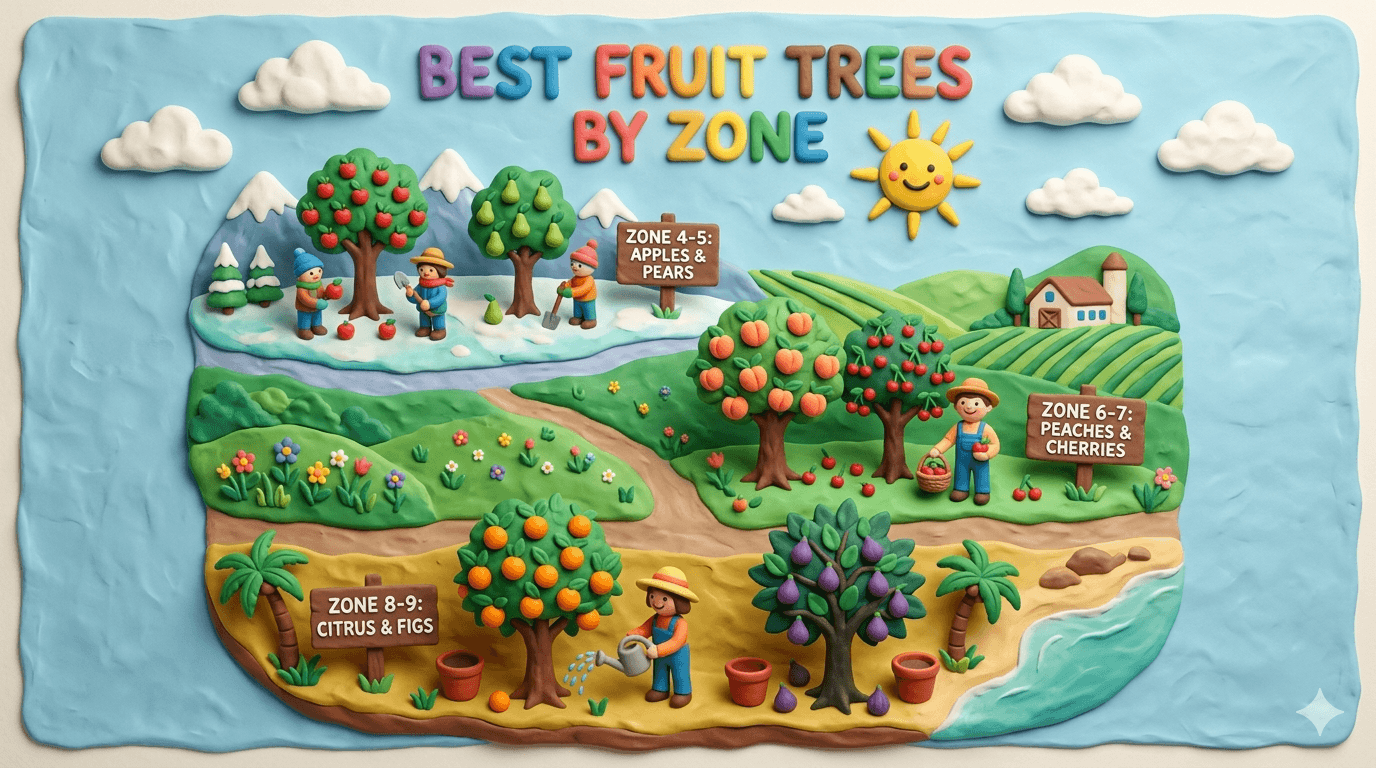
Quick Reference: Best Fruit Trees by Zone
Use this table as your at a glance guide when shopping for trees.
| USDA Zone | Best Fruit Trees |
|---|---|
| Zone 3 | Cold hardy apples (Honeycrisp, Haralson, State Fair), hardy plums (Toka, Pembina), sour cherries (North Star, Evans), hardy pears (Ure, Golden Spice) |
| Zone 4 | Cold hardy apples, hardy plums, sour cherries, hardy pears, hardy apricots (Manchurian, Westcot) |
| Zone 5 | Most apples (Liberty, Honeycrisp, Empire), European and Asian pears, hardy peaches (Reliance, Contender), plums, sweet and sour cherries |
| Zone 6 | All apples, all pears, peaches (Redhaven, Belle of Georgia), plums, sweet cherries, apricots |
| Zone 7 | Low to mid chill apples, pears (fire blight resistant), peaches, plums, figs (Brown Turkey, Celeste), American persimmons |
| Zone 8 | Low chill apples (Anna, Dorsett), pears, peaches, plums, figs, Asian persimmons, pomegranates |
| Zone 9 | Citrus, low chill apples, low chill peaches, figs, pomegranates, avocados (Mexican varieties), Asian persimmons |
| Zone 10 | Citrus, avocados (all varieties), mangoes, papayas, bananas, guavas, lychees, low chill apples and peaches |
Choosing the Right Variety Within Your Zone
Knowing your zone narrows the list. Picking the best variety within that list is the next step.
Chill hours are the total hours between 32 and 45 degrees Fahrenheit a tree gets each winter. Most fruit trees list a chill hour requirement. Honeycrisp needs about 800 to 1,000 hours. Anna apple needs only 200. Match the variety to the chill hours your area actually delivers. Your local university extension office publishes average chill hour data for your county.
Ripening dates matter more in short season climates. An early ripening peach like Redhaven matures by late July. A late variety like Cresthaven needs until September. In zone 5 with a short summer, the early variety is the safer bet. In zone 7 with a long warm fall, you can plant both and stretch your harvest window.
Pollination partners are required for most apples, pears, sweet cherries, plums, and some apricots. Self fertile trees set fruit alone. Cross pollinated trees need a second compatible variety blooming at the same time within about 50 feet. Always check pollination requirements before buying. Planting a single tree of a cross pollinated variety means watching the tree bloom and never set fruit.
Disease resistance saves you years of spraying. In humid climates, look for apple varieties resistant to scab and cedar apple rust. In the Southeast, look for fire blight resistant pears. In any climate, picking resistant varieties means fewer interventions and more fruit.
Rootstock controls the size of the tree. Standard rootstock produces a 25 foot tree that takes 6 to 10 years to bear. Semi dwarf produces a 12 to 18 foot tree that bears in 3 to 5 years. Dwarf produces an 8 to 10 foot tree that bears in 2 to 3 years and fits in a small yard. Most backyard growers want semi dwarf or dwarf trees.
Once you have your tree picked, our fruit tree guild guide shows you how to surround it with companion plants for healthier soil, more pollinators, and natural pest control. For long term orchard planning, our perennial food garden guide covers the rest of the edible perennials that pair well with fruit trees.
Planting Calendar Tool
Enter your zip code to get a personalized planting schedule based on your USDA zone.
Try it free →Common Fruit Tree Mistakes by Zone
A great variety planted at the wrong time or in the wrong spot still fails. Watch for these common mistakes that catch new orchardists across every zone.
Planting trees rated for the wrong zone. This is the number one mistake. A tree rated to zone 6 may survive a mild zone 5 winter, then die when a normal year arrives. Always plant trees rated for your zone or one zone colder.
Ignoring chill hours in warm climates. A Honeycrisp apple looks beautiful at the nursery in zone 9. It will leaf out, bloom poorly, and barely produce fruit because it never gets enough cold. Match chill hours to your actual climate, not the climate you wish you had.
Planting only one tree of a cross pollinated variety. Most apples, pears, and sweet cherries need a partner. A lone Bartlett pear will bloom every spring and set almost no fruit. Plant at least two compatible varieties.
Choosing a frost pocket for early bloomers. Peaches and apricots bloom early. Plant them on a slope or in a high spot where cold air drains away. A low corner of the yard will lose the entire crop to a late spring frost in many years.
Skipping soil prep. Fruit trees live for decades. Build the soil right before planting. Our soil building guide walks you through the basics. A tree planted in compacted, lifeless soil will limp along for years.
Buying from a generic big box store. The trees at chain stores are often varieties shipped from a single national distributor with no attention to local climate. Buy from a regional nursery or a mail order specialist that lists chill hours, hardiness zones, and pollination partners on every variety.
Planting too deep. The graft union should sit two to three inches above the soil line. Planting deep buries the graft and the tree may revert to rootstock growth, producing tiny, sour fruit you never wanted.
What to Do This Weekend
You do not need a master plan. Just take the first step.
Find your USDA hardiness zone on the USDA Plant Hardiness Zone Map. Write it down.
Pick one fruit type from the list for your zone. Apples and pears are the most forgiving choices for beginners in most climates. Citrus is the easiest in zones 9 and 10.
Look up two or three varieties of that fruit type rated for your zone. Check chill hours, ripening date, pollination partner, and disease resistance.
Order two trees from a reputable nursery. Two trees of the same fruit type means built in pollination for cross pollinated species and more fruit for your kitchen.
Pick a sunny, well drained spot with at least six hours of direct sun per day. Avoid low frost pockets for peaches, apricots, and other early bloomers.
Plan your planting day. Bare root trees go in during late winter or early spring. Container trees can go in spring through early fall in most zones.
Mulch the area with cardboard and wood chips so the soil is ready when your trees arrive. Our soil building guide covers the prep work in detail.
That is your starter orchard. Two trees, the right varieties, the right zone. In three to five years, you will harvest more fruit than you can eat fresh. The trees will outlive you. The next generation will thank you for planting them.
Your orchard is waiting. Pick the right trees and go plant them.
Frequently Asked Questions
Cold hardy apples are the best choice for zones 3 and 4. Varieties like Honeycrisp, Haralson, Sweet Sixteen, and State Fair tolerate winter lows down to negative 40 degrees Fahrenheit and ripen in short growing seasons. Hardy American plums, sour cherries, and small pears like Ure and Golden Spice also thrive. Skip peaches, sweet cherries, and most stone fruits in these zones because they will not survive the winters.
Citrus is the headline crop for zones 9 and 10. Meyer lemons, Valencia and Navel oranges, limes, grapefruit, and kumquats all grow well outdoors. Avocados, figs, pomegranates, and low chill peaches also thrive. In zone 10 you can add tropical fruits like mango, papaya, banana, guava, and lychee. Standard high chill apples and peaches will not produce well because they cannot get enough winter cold.
Go to the official USDA Plant Hardiness Zone Map online and enter your zip code. The site returns your zone and half zone, such as 6a or 7b. The USDA updated its map in 2023 and many regions shifted half a zone warmer, so check your zone again if you have not in a few years. Also walk your land to identify microclimates that may be a half zone warmer or colder than the published value.
Chill hours are the total hours between 32 and 45 degrees Fahrenheit a fruit tree experiences each winter. Most temperate fruit trees need a specific minimum of chill hours to set fruit properly in spring. Honeycrisp apple needs 800 to 1,000 hours. Anna apple needs only 200. If your climate does not provide enough chill, the tree will leaf out poorly and set very little fruit. Always match the variety to the chill hours your region actually delivers.
Most apples, pears, sweet cherries, plums, and some apricots need a second compatible variety blooming at the same time within about 50 feet for cross pollination. Peaches, sour cherries, figs, and most citrus are self fertile and produce fruit alone. Always check pollination requirements before buying. Planting a single cross pollinated tree means watching it bloom every year and never set a real crop.
In zones 5 through 7, Liberty apple is the easiest beginner tree because it resists apple scab, fire blight, cedar apple rust, and powdery mildew without spraying. Pair it with another apple like Honeycrisp or Empire for pollination. In zones 9 and 10, Meyer lemon is the easiest beginner fruit tree. It is self fertile, tolerates light frost, and bears multiple crops of sweet lemons each year.
Bare root fruit trees should be planted in late winter or very early spring while still dormant, just as the ground becomes workable. Container grown trees can be planted spring through early fall in most zones, though spring is still the best time for root establishment. In warm zones 8 through 10, fall planting works well because the cooler weather reduces transplant stress. Our [planting calendar](/tools/planting-calendar) shows the exact dates for your zip code.
It depends on the rootstock and the type of tree. Dwarf trees on dwarf rootstock often bear within 2 to 3 years. Semi dwarf trees take 3 to 5 years. Standard rootstock trees can take 6 to 10 years to bear a meaningful crop. Peaches and plums tend to fruit faster than apples and pears. Citrus on grafted rootstock usually begins bearing within 2 to 3 years of planting.
Yes, by growing dwarf citrus in containers. Plant Meyer lemons, Key limes, kumquats, or calamondin in large pots. Keep them outside during the warm months and move them into a sunny garage, sunroom, or south facing window during winter. Container citrus produces real fruit in any climate as long as it gets at least six hours of bright light when indoors and warm temperatures when out.
The biggest mistakes are planting trees rated for the wrong zone, ignoring chill hour requirements in warm climates, buying only one tree of a cross pollinated variety, planting early blooming peaches and apricots in frost pockets, skipping soil prep, and burying the graft union below the soil line. Choose varieties matched to your actual climate, plant on a high well drained spot, and keep the graft two to three inches above the soil to give your tree the best start.

Cole
Founder & Lead Researcher
Cole is the founder of Plan Your Homestead. He works in clinical research and brings a research-first lens to every guide on the site, drawing on a long family line of farmers for grounded, practical perspective.
More in Gardening
More articles coming soon. Check back for new gardening content.