
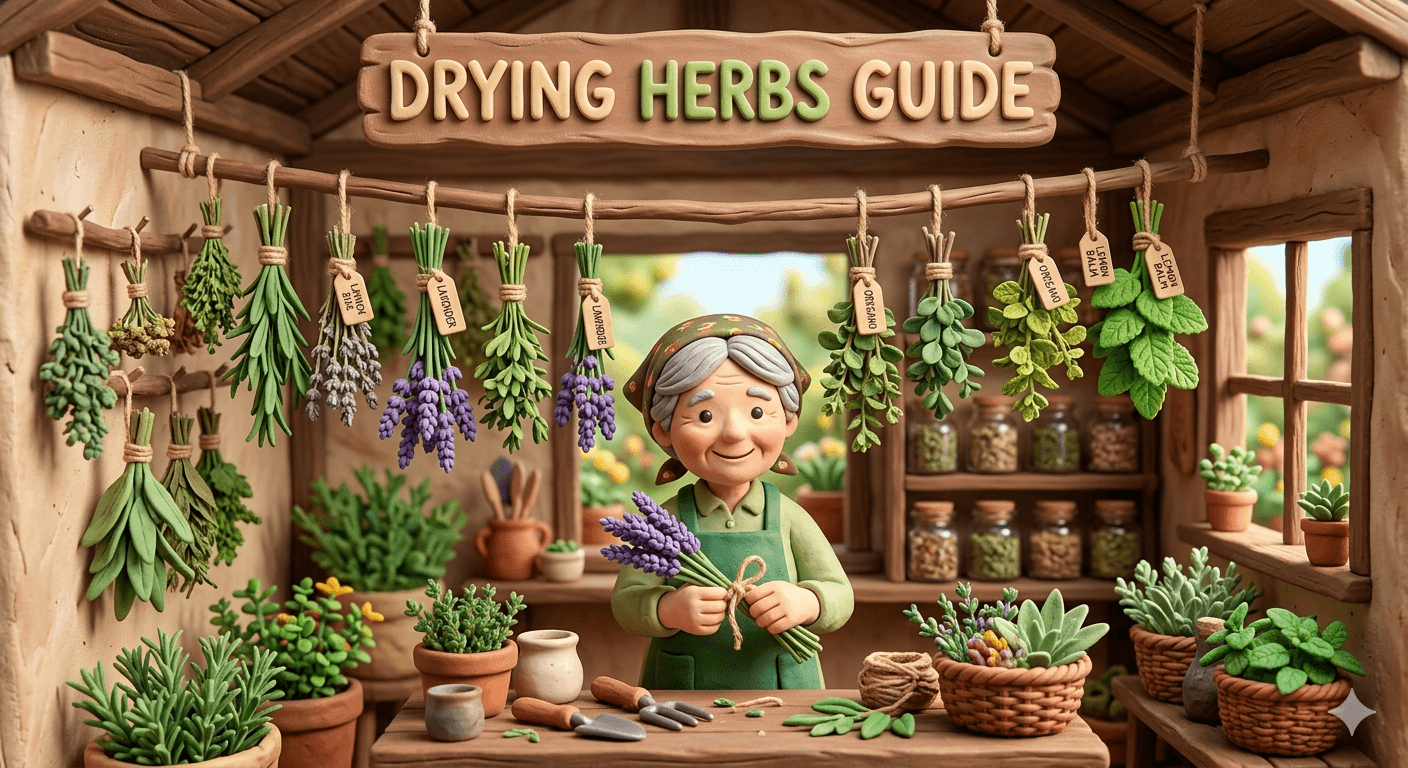
Drying herbs is one of the easiest preservation skills you will ever learn on the homestead. You cut the herb, you hang it or lay it flat, you wait, and you fill a jar. That jar can sit on your pantry shelf for a year and still pour out flavor and fragrance the day you open it.
The trick is not the drying. The trick is harvesting at the right moment and getting the moisture out before mold or mildew gets a head start. Once you know the rhythm, drying herbs takes about ten minutes of active work per batch.
This guide walks you through every step. You will learn when to cut, how to prep, four reliable drying methods, how to test for done, and how to store your harvest so it stays vibrant for a full year. By the end you will have a system you can run all summer long.
Why Dry Herbs Instead of Freezing or Using Fresh
Fresh herbs are wonderful for the eight or ten weeks they peak in the garden. After that, you need a way to keep using them. You have three real choices. You can freeze them, you can preserve them in oil or vinegar, or you can dry them.
Drying wins on most fronts. Dried herbs take up almost no space. A bushel of fresh basil shrinks down to a single quart jar of dried leaves. You do not need freezer space, you do not need refrigeration, and you do not lose your harvest if the power goes out for two days.
Dried herbs also concentrate flavor. One teaspoon of dried oregano carries the punch of a full tablespoon of fresh. The cost savings stack up fast too. A small jar of dried herbs at the grocery store runs five to eight dollars. The same jar from your garden costs you nothing but ten minutes of harvest time.
The one place fresh wins is in bright leafy herbs like basil, parsley, and cilantro. Those lose some of their summery quality when dried. Dry them anyway, since dried basil still beats no basil in February. Or freeze a portion in olive oil for the dishes that really want fresh.
If you have not built your herb garden yet, the culinary herb garden guide walks through layout and plant selection. The medicinal herbs guide covers the healing side of the herb patch.
Harvest Timing Matters More Than the Drying Method
You can pick the perfect drying method and still end up with dull herbs if you harvest at the wrong moment. Timing is the single biggest factor in flavor and potency. Get this right and the drying part takes care of itself.
The best window is a dry sunny morning after the dew has burned off, usually between nine and eleven. The essential oils are at peak concentration then. The leaves are fully dry on the outside, which means less risk of mold during the dry down. Avoid harvesting after rain, since wet leaves can take an extra day or two to finish drying.
The rule for leafy herbs is simple. Cut just before the plant flowers. Basil, oregano, mint, thyme, parsley, sage, and tarragon all hit peak flavor when flower buds appear but have not opened. After flowering the leaves turn bitter and tough.
The rule for flower herbs is different. Chamomile, calendula, and lavender want to be cut when the flowers are fully open and the resin on the back of the bloom feels sticky between your fingers. That stickiness is where the medicine and the fragrance live.
The rule for seed herbs is different again. Dill seed, fennel seed, coriander (cilantro seed), and caraway should be cut when the seed heads have turned brown and dry on the plant. If you wait too long they shatter and you lose the harvest to the wind.
A good rule of thumb is to take no more than one third of any plant in a single cutting. That leaves enough leaf to keep the plant photosynthesizing and growing back. Most herbs will give you two or three cuttings a season if you treat them this way.
Tip
How to Prep Herbs for Drying
Less is more here. The fewer steps between the garden and the drying setup, the better the finished herb.
Inspect every cutting in the garden before it goes in your basket. Strip off any yellow, brown, or chewed leaves at the moment of harvest. They will not improve on the drying rack and they invite mold.
Wash only if you must. Garden dust, pollen, and a stray ladybug do not hurt anything. If your herbs are visibly dusty or you suspect spray drift from a neighbor, give them a quick rinse in cool water and pat them dry with a clean towel. Then let them sit out on the towel for thirty minutes so the surface moisture evaporates before you start the dry down.
Leave leaves on the stem whenever possible. Stripping leaves off the stem before drying is extra work that bruises the leaves and shortens shelf life. The exception is large fleshy leaves like basil or sage that dry faster on a screen than on a stem.
Bundle size matters. If you are tying bundles for air drying, keep them small enough that air can move through the middle. A bundle the diameter of a quarter is about right. Bigger bundles trap moisture in the center and mold from the inside out.
The Four Reliable Drying Methods
There is no single best method. There is the best method for the herb you are working with and the conditions of your home. Most homesteaders end up using two or three of these depending on the season.
Air Drying in Bundles
This is the classic farmhouse method, and for good reason. It needs almost no equipment, costs nothing, and works beautifully for woody stem herbs.
It works best for rosemary, thyme, sage, oregano, lavender, marjoram, and savory. These herbs have low moisture content and tough stems that hold up to hanging. They dry slowly and evenly with no babysitting.
Step by step. Gather five to ten stems into a small bundle. Wrap the cut ends with a rubber band, not twine. Rubber bands shrink as the stems dry and keep the bundle tight. Twine loosens and bundles drop. Hang each bundle upside down from a hook, a nail, or a length of clothesline. The spot needs to be dry, dark, well ventilated, and out of direct sun. An attic, a closet, a spare bedroom, or a covered porch all work. Direct sun bleaches color and burns off the volatile oils that carry flavor.
Drying time runs one to three weeks depending on humidity and the herb. Touch a leaf every few days. When the leaves crumble easily between your fingers and the stem snaps cleanly instead of bending, the bundle is done.
Warning
Screen Drying Flat
Flat drying on a mesh screen is the best method for soft leafy herbs, single flowers, and anything that would clump up in a bundle.
It works best for chamomile flowers, calendula flowers, mint leaves, lemon balm, basil leaves, parsley, and cilantro. It also shines for small batches where bundling makes no sense.
Step by step. Build or buy a drying screen. A simple frame of one by two lumber with window screen stapled to it works perfectly. Old framed window screens from a thrift store cost three dollars and work great. Stack the screens with a few inches of air between them and you can dry six or eight pounds at once in a closet. Spread the herbs in a single layer with no overlap. Set the screen in a dark, dry, well ventilated room. Turn or stir the leaves every couple of days for even drying.
Drying time runs three days to a week and a half. Leaves should crumble when squeezed and flower petals should feel papery, not leathery.
Oven Drying
The oven is the fastest of the no equipment methods. Use it when you are racing humid weather or need a batch done by tomorrow.
It works for any herb but is rough on delicate leaves. Use oven drying for batches you want to use soon and not store for a year.
Step by step. Set your oven to its lowest temperature, ideally between 95 and 110 degrees Fahrenheit. Many ovens do not go below 170, in which case prop the door open with a wooden spoon to let heat escape and keep the actual temperature low. Spread herbs in a single layer on parchment paper on a baking sheet. Place the sheet on the middle rack. Check every ten to fifteen minutes for the first hour. Most herbs finish in one to three hours. Pull them the moment they crumble.
Warning
Dehydrator Drying
A food dehydrator is the most reliable method and the easiest one to repeat batch after batch. If you dry a lot of herbs each summer, a dehydrator pays for itself the first season.
It works for everything. Leafy herbs, flower herbs, seeds, and roots all dry cleanly in a dehydrator with no risk of overheating.
Step by step. Set the dehydrator to 95 to 110 degrees Fahrenheit. Hotter settings drive off the volatile oils you are trying to preserve. Arrange herbs in a single layer on each tray without overlap. Label trays if you are running multiple herbs at once. Run the dehydrator for one to four hours. Check at the one hour mark and every thirty minutes after that. Pull each tray as it finishes, since smaller leaves dry faster than thick ones.
Planting Calendar Tool
Enter your zip code to get a personalized planting schedule based on your USDA zone.
Try it free →Drying Time and Temperature Reference
Use this table as a quick reference once you have run a few batches. Times vary with humidity and bundle size, so always test for doneness rather than counting on the clock.
| Herb | Best Method | Temperature | Expected Time | Done When |
|---|---|---|---|---|
| Basil | Screen or dehydrator | 95 to 105 F | 1 to 4 hours (dehydrator) or 5 to 7 days (screen) | Leaves crumble, color stays green |
| Rosemary | Air drying bundles | Room temp | 1 to 2 weeks | Needles snap cleanly off stem |
| Thyme | Air drying bundles | Room temp | 1 to 2 weeks | Leaves fall off stem when shaken |
| Oregano | Air drying bundles | Room temp | 1 to 2 weeks | Leaves crumble between fingers |
| Sage | Air drying or screen | Room temp | 1 to 3 weeks | Leaves brittle, stems snap |
| Mint | Screen or dehydrator | 95 to 100 F | 2 to 4 hours or 4 to 7 days | Leaves rustle and crumble |
| Parsley | Screen or dehydrator | 95 to 100 F | 2 to 4 hours or 5 to 7 days | Leaves crumble, dark green |
| Cilantro | Screen or dehydrator | 95 to 100 F | 2 to 4 hours or 5 to 7 days | Leaves crumble, light green |
| Chamomile flowers | Screen | Room temp | 1 to 2 weeks | Petals papery, stems brittle |
| Calendula flowers | Screen or dehydrator | 95 to 105 F | 4 to 6 hours or 1 to 2 weeks | Resin gone tacky to dry, petals crisp |
| Lavender buds | Air drying bundles | Room temp | 1 to 2 weeks | Buds fall off stem when shaken |
| Lemon balm | Screen or dehydrator | 95 to 100 F | 2 to 4 hours or 4 to 7 days | Leaves crumble, hold green color |
How to Tell When Herbs Are Fully Dry
Underdried herbs mold in the jar within a week and ruin the whole batch. Overdried herbs lose flavor. The sweet spot is when every leaf is brittle but the color still looks vibrant.
The crumble test is your main tool. Take a leaf between your thumb and finger and press. It should crumble into small pieces with light pressure, not bend or fold. If the leaf bends, give it another day.
The stem snap test works for woody herbs. Bend a stem at a small twig. It should snap cleanly with a faint crack, not bend like a wet branch. A bending stem means moisture is still trapped inside.
The jar moisture test is your safety net. After you think the batch is dry, put a small handful into a clean glass jar with a tight lid. Set the jar on the counter for twenty four hours. If you see any condensation on the inside of the glass, the herbs need more drying time. Pull them out, spread them back on a screen for another day, and test again.
Storing Dried Herbs for Maximum Potency
Drying is half the job. Storage is the other half. Three things destroy dried herbs over time, and you control all three: light, heat, and moisture.
Glass jars with tight lids are the gold standard. Mason jars in any size work great, and you can pick up a dozen used ones at any thrift store for a couple of dollars. Avoid plastic, since it absorbs volatile oils and lets in air over time. Avoid paper bags for long term storage, since they let in moisture and odors.
Whole leaf storage beats crumbled. Leave leaves on the stem or in whole pieces when you put them in the jar. Crumble or grind only the portion you are about to use. Whole leaves hold their oils for a full year. Crushed leaves start losing potency in two to three months.
Label every jar with the name of the herb and the harvest date. You think you will remember which jar is oregano and which is marjoram. You will not. Use a piece of masking tape and a permanent marker.
Store jars in a cool dark cabinet, not on an open shelf above the stove. Heat and light cut shelf life in half. The pantry, a dark cabinet, or a basement shelf are all ideal. Keep the temperature under 70 degrees Fahrenheit if you can.
The shelf life rule of thumb is one year for most leafy herbs and flowers, two years for whole spices and seeds, and three years for roots. After that the herbs are not unsafe, just dull. Sniff the jar. If it smells like nothing, it is time to compost the batch and refill from the new harvest.
If you want to take the next step and save seed from your herb plants instead of buying fresh seed every year, the seed saving guide walks through the full process for dill, cilantro, and the other annual herbs.
Common Mistakes That Ruin a Batch
Almost every batch failure comes down to one of these five mistakes. Read them once and you will save yourself a lot of wasted herbs.
Drying in direct sunlight. Sun bleaches color, drives off volatile oils, and turns good herbs into hay in two days. Always dry in the dark, even if it takes longer.
Using too much heat. Oven and dehydrator settings above 110 degrees Fahrenheit boil off the very compounds you are trying to keep. Slow and cool always beats fast and hot for herbs.
Bundling too tight or too thick. A bundle the diameter of a quarter dries evenly. A bundle the diameter of a soda can molds from the inside out before the outside is dry.
Storing before fully dry. The jar moisture test exists for a reason. One trapped wet leaf can mold a whole jar in a week.
No labels. You will mix up oregano and marjoram. You will think the parsley is the cilantro. Six months later you will not remember when you put up the chamomile. Label everything the day you jar it.
A Simple First Year Drying Plan
Here is a month by month rhythm that gives you a full pantry of dried herbs by the end of the season. Adjust the timing to your climate.
Early to mid spring. Plant your culinary and medicinal herb beds. Mark a calendar reminder for the first big harvest in eight to ten weeks. Start tracking which herbs are bolting so you can catch them just before flower.
Late spring. First cuttings of chives, parsley, cilantro, and dill. Hang or screen dry small batches as practice runs. Get your screens, jars, and labels in order before the big summer push.
Early summer. Oregano, thyme, sage, mint, and lemon balm hit their stride. Plan one big harvest day per herb and dry the whole cutting in a single batch. Label and jar within ten days.
Mid summer. Basil, calendula, and chamomile bloom heavily. Pick basil before it flowers and screen dry in small batches. Pick chamomile and calendula flowers every two or three days through the whole bloom.
Late summer. Lavender hits peak. Cut bundles when the buds are just opening and air dry for two weeks. Save flower heads for sachets and use buds for tea.
Early fall. Cilantro and dill go to seed. Cut whole seed heads when they turn brown on the plant. Dry on a screen and shake out the seeds into a jar.
Late fall. Last cutting of rosemary, sage, and thyme before a hard freeze. Hang bundles in the kitchen or pantry. By winter you have a full year of herbs ready to go.
For more on which herbs to grow first, the essential culinary herbs guide covers the ten plants every kitchen needs.
Wrapping Up
Drying herbs is a small skill with an outsized payoff. Ten minutes of harvest, a week or two of patience, and a labeled jar on the pantry shelf can replace a whole row of grocery store spices for the price of a seed packet.
Start small. Pick one or two herbs this season, run two or three batches, and watch your confidence grow. By next summer you will be running six or eight drying batches at a time without even thinking about it.
The jar of homegrown oregano you pull out in January will taste like the garden you grew it in. That is what makes this skill worth learning.
Frequently Asked Questions
Most dried leafy herbs and flowers last about one year before flavor and color start to fade. Whole spices and seeds last two years. Roots last up to three. After that the herb is not unsafe, just dull. Sniff the jar before using and replace anything that smells like nothing.
You can, but you usually should not. Microwaves heat unevenly and blow past the gentle 95 to 110 degree window that preserves flavor. The result is herbs that look dry but have lost most of their essential oils. Use an oven on its lowest setting or a dehydrator instead.
Browning means the herbs got too much heat, too much light, or too much time before they finished drying. Pick a darker spot, lower the temperature, or move to a faster method like a dehydrator. Brown herbs are still safe to use, but the flavor will be flat.
Only if they are visibly dusty or you suspect spray drift. A clean garden herb does not need washing. If you do rinse, pat the leaves dry with a clean towel and let them sit on the towel for thirty minutes before drying. Wet leaves take longer to dry and are more likely to mold.
The sweet spot is 95 to 110 degrees Fahrenheit. That is warm enough to drive off moisture but cool enough to keep the volatile oils that carry flavor and fragrance. Higher heat boils off those same oils and leaves you with a hay flavored herb.
Leave leaves on the stem for air drying and bundle methods. Strip the stems off after the herb is fully dry, since dry leaves fall off cleanly with no bruising. For screen drying you can strip the leaves first if you want, but it is more work and slightly shorter shelf life.
Use clean glass jars with tight lids. Store whole leaves on the stem rather than crumbled. Label every jar with the herb name and harvest date. Keep jars in a cool dark cabinet under 70 degrees Fahrenheit. Crush or grind only what you need at the moment of cooking.
Yes, and it works well for seed heads like dill or coriander. Hang the bag in a dry dark spot and the seeds shatter into the bag as they finish drying. For leafy herbs a paper bag traps too much moisture, so a screen or a hanging bundle is the better choice.

Cole
Founder & Lead Researcher
Cole is the founder of Plan Your Homestead. He works in clinical research and brings a research-first lens to every guide on the site, drawing on a long family line of farmers for grounded, practical perspective.
More in Gardening
More articles coming soon. Check back for new gardening content.