
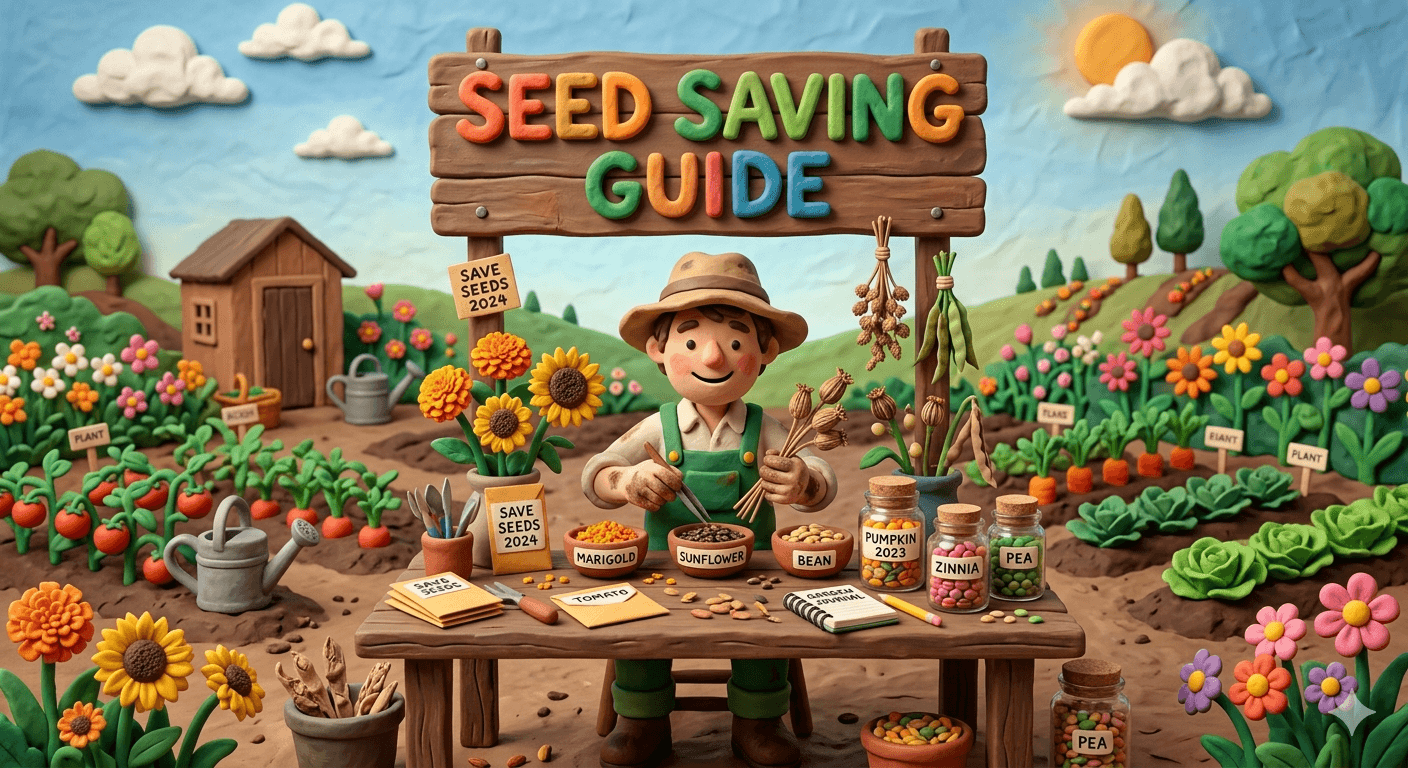
Every spring, gardeners spend money on the same seeds they grew the year before. The plants ripened, the seeds fell to the ground or got tossed on the compost pile, and the cycle started over with a new packet from the store. Saving seeds breaks that cycle. It is the oldest, cheapest, and most satisfying skill in gardening, and it is far easier than most beginners think.
A single ripe tomato holds dozens of viable seeds. One bean pod gives you a row for next year. A patch of lettuce that bolts in the heat throws off enough seed to plant a whole bed. Once you start saving, you stop buying. Better than that, the seeds you save get a little tougher and a little better suited to your garden every year, because the plants that thrived in your soil and your weather are the ones whose seeds you are keeping.
This guide walks you through everything you need to know. You will learn which crops are the easiest place to start, the two simple processing methods that cover almost every vegetable, how to dry and store seeds so they stay viable for years, and how to run a fast germination test on any old seeds before you plant them. By the end you will have everything you need to fill a jar with next season's garden.
Why Save Seeds From Your Own Garden
The first reason most people start is money. A packet of seeds costs three to five dollars and gives you maybe twenty plants. A single saved tomato gives you that many seeds for free, and one good bean harvest can pay for an entire garden for the next ten years. If you grow even a modest vegetable garden, saving seeds from just three or four crops covers the cost of every other packet you ever buy.
The second reason is resilience. Seed prices have climbed every year, supply chains have hiccupped during shortages, and the most interesting heirloom varieties tend to sell out by February. When the seeds you need are sitting in a jar in your pantry, none of that matters.
The third reason is the one that quietly becomes the most important. Seeds saved from plants that did well in your soil, your climate, and your level of care are slightly better adapted to your garden than any seed you can buy. Do this for five seasons and your "house variety" of tomato or bean will outperform the catalog version in your specific conditions. You are doing slow, gentle plant breeding without even trying.
Finally, saving seeds preserves heirloom varieties that would otherwise disappear. The big seed companies sell what sells the most. The strange purple pepper, the white cucumber, the bean your grandmother grew, those stay alive only because gardeners keep saving them. Every saved seed is a small vote for genetic diversity.
For more on building the kind of soil that produces healthy seed parent plants in the first place, our composting 101 guide covers the foundation. Strong plants make strong seed.
Open Pollinated, Heirloom, and Hybrid: What You Can Actually Save
Before you save a single seed, you need to know what kind of plant you are saving from. There are three terms on every seed packet, and they decide whether saving is worth the effort.
Open pollinated plants produce seeds that grow into plants nearly identical to the parent. Pollination happens naturally through wind, insects, or self pollination, and the genetics stay stable from one generation to the next. Open pollinated seeds are the workhorses of seed saving. If a packet says open pollinated or OP, you can save the seeds with confidence.
Heirloom is a subset of open pollinated. Heirlooms are old varieties, usually fifty years or older, that have been passed down by gardeners and small seed companies. Every heirloom is open pollinated, but not every open pollinated variety is an heirloom. From a saving standpoint they behave the same. The difference is mostly cultural and historical.
Hybrid seeds, often labeled F1, are the cross of two carefully selected parent varieties. The first generation grows uniform, vigorous plants. The seeds those plants produce, however, scramble back into a mix of grandparent traits. Save seed from a hybrid tomato and you will get a wild mix of small, large, splotchy, bland, and occasionally interesting fruit next year. None of it will look like the parent. You can experiment with hybrid seed if you want a fun garden gamble, but for reliable saving you want open pollinated or heirloom every time.
Warning
If the seed packet says F1, hybrid, or has a registered trademark symbol after the variety name, skip seed saving and buy fresh. The genetics will not come back true and you will waste a full growing season finding out.
When you start choosing seeds with future saving in mind, look for the words open pollinated or heirloom on the packet. Most small seed companies and almost every regional seed library focus on these varieties for exactly this reason.
The 6 Easiest Crops to Start Saving Seeds From
Some crops are so simple to save from that you can start this year with no special equipment. These six are the place every beginner should start. Master these and you will cover most of the staple vegetables in a typical garden.
Beans
Beans are the easiest seed in the garden. Let a few of your best plants stop being harvested and the pods will dry right on the plant. When the pods rattle when you shake them and the shells crack open easily between your fingers, pick them. Open the pods, pour the beans into a bowl, and let them sit on a tray for another week to finish drying. That is the whole process. Bush beans, pole beans, lima beans, and dry beans all save the same way.
Peas
Peas work just like beans. Pick a few of your best vines, stop harvesting them, and let the pods yellow and dry on the plant. Once the pods are brown and brittle, pull the peas out and dry them for another week. The peas you save from your strongest, earliest plants are the ones that will give you an earlier, stronger crop next year.
Tomatoes
Tomatoes need one extra step but they are still beginner friendly. Pick a fully ripe, beautiful tomato from a healthy plant. Cut it in half, scoop the seeds and pulp into a jar, and add a splash of water. Let the jar sit on the counter for three to five days. A layer of mold will form on top, which is exactly what you want. The fermentation breaks down the gel coating around the seeds and kills several seed borne diseases. Pour the whole mess into a strainer, rinse the seeds clean, and spread them on a paper plate to dry. A single tomato gives you fifty to one hundred seeds.
Peppers
Peppers may be the single easiest wet seed crop. Let a pepper fully ripen on the plant until it has changed color, usually red, orange, or yellow. Cut it open, scrape the seeds onto a paper plate, and let them dry for two weeks. No fermentation, no rinsing. Sweet peppers and hot peppers both save the same way. Just keep in mind that peppers cross pollinate, so a sweet bell grown next to a habanero may give you a spicy surprise next year.
Lettuce
Most gardeners pull lettuce when it bolts. Leave one or two of your best plants alone instead. The plant will send up a tall stalk, flower, and form tiny puffballs that look like miniature dandelions. When the puffs appear, cut the whole stalk and hang it upside down in a paper bag for a week. Shake the bag, sift out the chaff, and you have hundreds of lettuce seeds from one plant.
Squash Family
Winter squash, summer squash, pumpkins, and zucchini all save the same way. Let the fruit fully mature on the vine. For zucchini and summer squash, this means leaving them until they are giant, hard skinned, and inedible. Scoop the seeds out, rinse off the pulp, and dry them on a tray for two weeks. The squash family is famous for crossing, however, so if you have more than one squash variety in the same garden you may get strange hybrids. We will cover how to handle this in the cross pollination section below.
For more help choosing beginner friendly crops in general, our easiest vegetables for beginners guide pairs nicely with this list.
Dry Seeds vs Wet Seeds: The Two Processing Methods
Almost every vegetable seed falls into one of two categories. Knowing which method to use takes the guesswork out of saving any crop you grow.
The dry seed method
Dry seeds form inside pods, husks, or seed heads that dry out on the plant. Beans, peas, lettuce, herbs, brassicas like kale and broccoli, and most flowers fall into this group. The method is simple. You wait. Stop harvesting from the plants you want to save from and let them go to seed naturally. Once the pods or seed heads are brown and brittle, harvest them on a dry afternoon. Bring them inside, break open the pods or shake out the heads, and separate the seeds from the chaff.
For very small seeds like lettuce or carrots, a kitchen sieve helps separate seeds from the dried flower bits. For larger seeds like beans, just pick out the seeds by hand. Spread the cleaned seeds on a paper plate for another week of indoor drying before storage. The plant did most of the work for you.
The wet seed fermentation method
Wet seeds are surrounded by fruit pulp. Tomatoes, cucumbers, melons, and squash all need a quick wash before you can store them. For most wet seeds, simple rinsing is enough. Scoop the seeds out of the ripe fruit, rinse off the pulp in a strainer, and spread them to dry.
Tomatoes are the one wet seed crop where fermentation pays off. The gel coating around tomato seeds contains germination inhibitors, and that gel also clings to disease spores. A three to five day ferment in a small jar of water breaks down the gel and kills the most common seed borne tomato diseases. Skip the ferment and your seeds still work, but you lose this small extra layer of protection.
Whichever method you use, never use heat to speed up wet seed drying. Just spread the rinsed seeds in a single layer on a paper plate, a coffee filter, or a piece of window screen and let air do the work. Stir them once a day so they dry evenly and do not stick to the surface.
How to Dry Seeds Properly
Drying is the step that decides whether your seeds last three months or five years. Get this part right and the storage part is easy.
Three things matter for good drying. Airflow, temperature, and time. Airflow lets moisture leave the seed. Temperature should stay between sixty and eighty degrees Fahrenheit. Time depends on the crop, but plan on one to three weeks of indoor drying after harvest.
The simplest setup is a paper plate or a piece of cardboard on a kitchen counter, out of direct sunlight. Spread the seeds in a single layer. Stir them once a day. Keep them out of the bathroom, the kitchen sink area, and anywhere with high humidity.
The best way to tell if a seed is dry enough to store is the snap test. Try to bend or fold the seed in half. A properly dried bean, pea, or sunflower seed will snap cleanly. A seed that still bends or feels rubbery has too much moisture and will mold in storage. For tomato and pepper seeds, which are too small to snap, look at the color and feel. They should be papery dry and slide loosely across the plate, not stick together.
Warning
Never dry seeds in the oven, in a dehydrator, in direct sun, or on top of a heater. Heat above one hundred degrees Fahrenheit kills the embryo inside the seed. Air drying at room temperature is always the right choice.
The most common drying mistake is rushing the storage step. A seed that feels dry on the outside can still hold enough internal moisture to mold in a sealed container. When in doubt, dry for another week.
Storing Seeds So They Last for Years
Once your seeds are fully dry, storage is mostly about keeping them away from three enemies. Heat, moisture, and light. The rule every seed librarian repeats is cool, dry, and dark.
Store seeds in airtight containers. Small glass jars with screw lids work beautifully. Paper coin envelopes inside a larger jar work just as well and let you keep multiple varieties organized in one container. Plastic baggies are the worst option because they hold any leftover moisture against the seed.
The single best storage location in most homes is the back of a refrigerator. Cool temperatures slow down the slow chemical breakdown that ages seeds. Some serious seed savers use a freezer, which can keep most seeds viable for a decade or longer, but the refrigerator is plenty for most gardens.
Tip
Label every container with the variety name and the date you saved the seed. You will forget. Every gardener forgets. A jar of unmarked pepper seeds in March is worth nothing because you cannot remember if it is the sweet or the ghost variety.
Expected shelf life varies by crop. Here is a quick reference for properly dried seeds kept in a cool, dry, dark place.
| Crop | Typical shelf life |
|---|---|
| Onion, parsnip, parsley | 1 to 2 years |
| Corn, pepper, leek | 2 to 3 years |
| Carrot, bean, pea, spinach | 3 to 4 years |
| Tomato, squash, melon, radish | 4 to 5 years |
| Lettuce, cucumber, brassica | 4 to 6 years |
| Beet, chard, sunflower | 5 to 8 years |
These numbers are for room temperature storage. Refrigerated seeds last roughly twice as long. Frozen seeds can stay viable for decades. Even past the expected shelf life, many seeds still germinate. The numbers above are when you start seeing a noticeable drop, not when the seeds suddenly die.
If you are planning your garden around what you have stored, the planting calendar will help you map indoor starting dates and transplant times to your zone.
How to Test Old Seeds: The Paper Towel Germination Test
Before you waste a whole row on a packet of two year old beans, run a fast germination test. It takes five minutes to set up and tells you exactly how many of your seeds are still alive.
Grab a paper towel, a plastic bag or container with a lid, and ten seeds from the batch you want to test. Wet the paper towel, wring it out so it is damp but not dripping, and spread the ten seeds in a line down the middle. Fold the towel over the seeds, slide the whole thing into the plastic bag, and place it somewhere warm. The top of a refrigerator works well.
Check the bag every day. Most seeds will sprout within seven to ten days. After the test period, count the sprouted seeds. If eight of ten sprouted, you have eighty percent germination, which is excellent. Six of ten is acceptable. Three or four of ten means you should sow extra seed to compensate. Zero or one means the batch is done and you should restock that variety.
This same test works for any seeds, whether you saved them yourself, found an old packet in a drawer, or were given seeds by a neighbor with unknown history.
Avoiding Cross Pollination in a Small Garden
Cross pollination is the biggest worry for serious seed savers and the most overhyped worry for casual ones. Here is what actually matters in a backyard garden.
Most vegetables fall into two camps. Self pollinators and cross pollinators. Self pollinators include tomatoes, peppers, peas, beans, and lettuce. These plants pollinate themselves before the flower even opens, so cross pollination is rare even when different varieties grow side by side. You can save from these crops without much worry.
Cross pollinators include squash, cucumbers, melons, corn, brassicas like cabbage and kale, and most root crops grown for seed. These plants need help from insects or wind, and any two varieties of the same species in the same garden can cross. The classic example is squash. A zucchini and a butternut grown together will not cross because they are different species, but two different summer squash varieties will cross constantly.
You have three options for handling cross pollination. The first is isolation distance. Plant only one variety of the cross pollinating crops you want to save from. This is the easiest method for a small garden. The second is hand pollination, where you tape squash blossoms shut the evening before they open, then pollinate by hand the next morning and tape the flower shut again. This works but is fussy. The third option is to just accept the cross. Save the seeds anyway, plant them next year, and treat whatever shows up as a fun mystery. Some of the best heirloom varieties were born this way.
Tip
For the easiest first year of saving, focus on the self pollinators. Tomatoes, peppers, peas, beans, and lettuce will give you reliable, true to type seeds with almost no extra effort. Save the cross pollinators for after you have a season of experience.
If you want to plan a garden layout with seed saving in mind, the companion planting guide shows how to group plants by family and isolate cross pollinators naturally.
Common Seed Saving Mistakes to Avoid
Most failed seed saving comes down to a small handful of mistakes. Avoid these and your success rate will jump.
Saving from F1 hybrids. Check the packet before you save. Hybrids do not come back true and the time spent saving them is wasted.
Harvesting too early. Seeds need to be fully mature on the plant to be viable. Green pods, unripe tomatoes, and young squash all contain immature seeds that will not germinate. Wait longer than feels comfortable.
Sealing damp seeds. This is the most common cause of total batch failure. Seeds that feel dry can still hold internal moisture. Always dry for at least one to two weeks after the seed feels dry to the touch, and use the snap test where possible.
No labels and no dates. Future you will not remember what is in the jar. Write the variety name and the year on every single container before you put it away.
Saving from a sick plant. Many diseases pass from parent to seed. Save only from your healthiest, most vigorous, best producing plants. Skip the runts.
Picking only one fruit. Save seeds from at least three or four different plants of the same variety to keep genetic diversity. A single parent leads to weaker, less resilient seed over time.
Storing in the kitchen. Kitchens are warm and humid, the two worst conditions for seed life. The back of a closet, a basement shelf, or a refrigerator drawer will all beat any kitchen storage spot.
Frequently Asked Questions
Frequently Asked Questions
Most properly dried seeds stored in a cool, dry, dark place stay viable for three to five years. Some, like lettuce and brassicas, can last six years or more. Onion and parsnip seeds are the shortest lived at one to two years. Refrigerated storage roughly doubles those numbers, and frozen seeds can stay viable for decades. Even past the expected shelf life, run a germination test before assuming the seeds are dead.
Sometimes. Tomatoes, peppers, and winter squash from the grocery store will often produce viable seeds, but you have no way of knowing if the parent was a hybrid. You may grow plants that look nothing like the fruit you started with. It is a fun experiment for a single garden bed but not the path to reliable seed. For consistent results, start with open pollinated or heirloom seeds from a seed company or another gardener.
No, but it helps. Fermentation breaks down the gel coating around the seeds and kills several common seed borne tomato diseases. Skip the step and your seeds will still germinate, but you lose that extra protection. The whole process takes five minutes of active work over three to five days, so most gardeners do it. If you are saving a tiny number of seeds for personal use only, plain rinsing is fine.
Cross pollination. Squash varieties in the same species cross constantly through bee activity, so a saved seed from a zucchini grown near a yellow crookneck or pattypan will give you a hybrid. The fix is to grow only one variety of each squash species per garden, isolate by distance, or hand pollinate. Different species, like a butternut and a zucchini, will not cross.
Yes, with the same caveat as tomatoes. The pepper must be fully ripe, which usually means red, orange, or yellow rather than green. Cut it open, scrape out the seeds, and dry them for two weeks. The plants you grow may differ from the parent if the pepper came from a hybrid, but pepper seed saving is otherwise straightforward and works well for kitchen experimenters.
Start with self pollinating crops that need no special handling. Beans, peas, tomatoes, peppers, and lettuce are the perfect beginner five. They all save reliably true to type, the processing is simple, and a single plant gives you enough seed for the next garden. Add squash, cucumbers, and brassicas once you have a season of practice under your belt.
No. Paper plates, a kitchen strainer, glass jars with lids, and a permanent marker cover almost every situation. For wet seeds you only need a small jar for fermentation. For dry seeds a sieve and a paper bag help. Some serious savers buy silica gel packets for long term storage, but a refrigerator does the same job for free.
Pack your extra saved seeds into small coin envelopes, label each one with the variety, harvest year, and your zone, and offer them through a local library, community garden, or neighborhood group. Many public libraries now host seed lending programs where gardeners borrow seeds in spring and return saved seeds in fall. Even an informal trade with neighbors counts. The more your seeds spread, the more locally adapted varieties survive.
Saving seeds is one of those rare gardening skills where every year of practice makes you and your garden stronger. Start with the easy five this season, label everything, store the seeds well, and by next spring you will be planting a garden you grew yourself from the ground up. Once you experience that, you will never look at a seed packet the same way again.
For more on building the rest of a self sufficient garden around your saved seeds, our ultimate guide to starting a homestead garden from scratch walks through everything from bed layout to first year crop choices.

Cole
Founder & Lead Researcher
Cole is the founder of Plan Your Homestead. He works in clinical research and brings a research-first lens to every guide on the site, drawing on a long family line of farmers for grounded, practical perspective.
More in Gardening
More articles coming soon. Check back for new gardening content.