
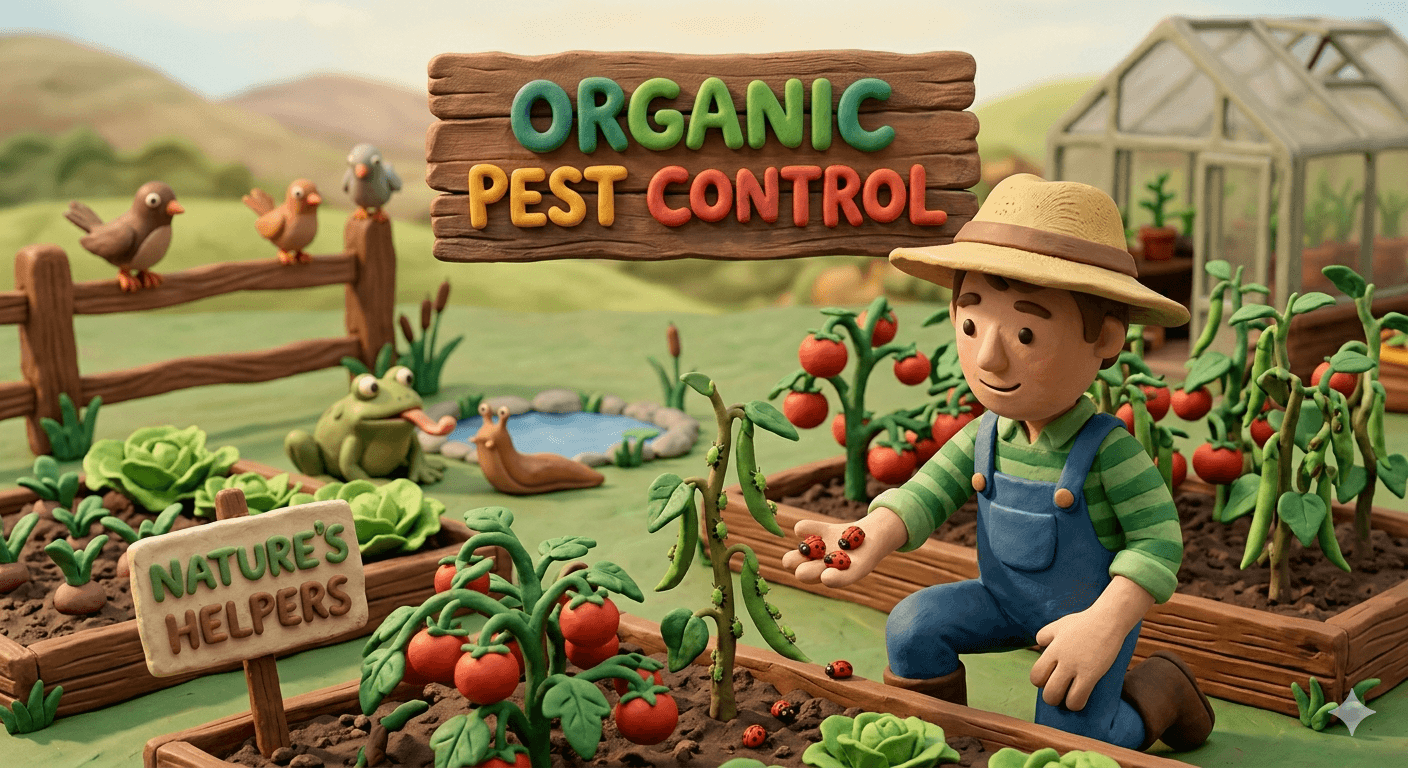
Walk into most homestead gardens in July and you will find at least one plant under attack. Aphids curling the kale. Cabbage worms turning broccoli into lace. A tomato hornworm the size of your finger stripping a plant overnight. It happens to everyone. The question is what you do about it.
The easy answer is to spray. Modern synthetic pesticides do work fast and they do kill bugs. They also kill the ladybugs eating your aphids, the bees pollinating your squash, and the earthworms building your soil. Then the pests come roaring back without their natural enemies and you reach for the sprayer again. It is a treadmill that never ends.
This guide shows you the other path. You will learn how to identify the most common homestead garden pests, build a garden that fights for itself, attract beneficial insects, use companion planting and physical barriers, and reach for organic sprays only when nothing else has worked. By the end you will have a real plan for growing abundant food without selling out the rest of your garden ecosystem.
What Organic Pest Control Really Means
Organic pest control is not the same as spraying organic approved pesticides on every problem. The whole approach is built around the idea that a healthy, balanced garden has far fewer pest problems to begin with. Pests are a symptom. The real work is creating the conditions where they cannot take over.
Gardeners call this approach integrated pest management, or IPM. The idea is simple. You build a layered defense that starts with healthy soil and crop diversity, leans on beneficial insects and animals to handle most outbreaks, uses physical barriers and hand picking for the rest, and only sprays as a last resort with the gentlest product that will do the job. Every layer cuts pest pressure before you ever need to react.
The first thing to accept is that you will never see zero bugs. A garden with zero insects is a garden with zero pollinators and zero predators, and that garden is doomed. The goal is a balance where pests stay below the level that does real damage. A few chewed leaves are fine. Whole rows lost to caterpillars are not.
Know Your Enemies: Common Homestead Garden Pests
The first step in any pest problem is knowing what you are dealing with. Spraying the wrong thing at the wrong stage wastes time and money. Here are the pests that show up in nearly every homestead garden and what to look for.
Aphids
Tiny soft bodied insects in green, black, gray, or pink, clustered on the tender growing tips of plants. They suck sap and leave a sticky residue called honeydew. Heavy infestations curl leaves and stunt growth. Ladybugs and lacewings eat them by the hundreds. A strong spray of water knocks most off the plant.
Cabbage worms and cabbage loopers
Velvety green caterpillars on broccoli, cabbage, kale, and other brassicas. The adults are the white butterflies you see fluttering through the garden in summer. The worms chew big ragged holes in leaves and bury themselves in broccoli heads. Row covers stop the butterflies from laying eggs. BT (Bacillus thuringiensis) handles any that get through.
Tomato hornworms
The giant green caterpillars that strip tomato plants. Hard to see because they blend in perfectly with stems. Look for big dark droppings on lower leaves and follow the trail up. Hand pick them off and feed them to the chickens. If you see one covered in white rice like growths, leave it alone. Those are parasitic wasp cocoons and you want more of those wasps.
Squash bugs
Flat gray brown shield shaped bugs on summer and winter squash. They suck sap and inject toxin that wilts whole vines. Eggs are bronze and laid in tidy clusters on the undersides of leaves. Crush eggs by hand. Lay a board next to plants at night, flip it in the morning, and squash the adults that gathered under it.
Cucumber beetles
Yellow with either black stripes or black spots, found on cucumbers, melons, and squash. The real damage is not just chewing. They spread bacterial wilt that kills plants outright. Row covers until flowering keep them off. Yellow sticky traps and a heavy mulch layer also help.
Flea beetles
Tiny black or bronze beetles that leave hundreds of pinprick holes in leaves of eggplant, potato, and brassica seedlings. They jump like fleas when disturbed. A thin floating row cover over seedlings until plants are well established is the simplest fix.
Japanese beetles
Iridescent green and copper beetles that swarm in midsummer and skeletonize roses, beans, basil, grapes, and many other plants. The easiest control is morning hand picking into a jar of soapy water. Skip the pheromone traps, which actually pull more beetles to your garden than they catch.
Slugs and snails
Slimy mollusks that come out at night and shred lettuce, hostas, strawberries, and seedlings. Look for slime trails and ragged holes with no insects in sight. Beer traps, copper barriers, hand picking after dark, and ducks all knock them back hard.
Tip
Spend ten minutes a day walking your garden with a coffee in hand. You will spot pest outbreaks at the first egg cluster or aphid colony, when they are easy to deal with by hand. Most pest disasters happen because nobody looked for a week.
Build a Garden That Defends Itself
The single biggest leverage in organic pest control happens before any bug shows up. A strong, healthy, diverse garden simply does not get hit as hard as a weak monoculture. Four habits do most of the work.
Healthy soil
Stressed plants put out chemical signals that pests can smell from far away. Healthy plants growing in living soil are tougher, recover faster from damage, and attract fewer pests in the first place. Build organic matter year after year. Our soil building guide walks through the full approach. Skip synthetic fertilizers, which push fast soft growth that aphids and other sucking pests love.
Diversity
A long row of one crop is a buffet for any pest that likes it. Once they find it, nothing stops them from working all the way down. Mix things up. Plant short blocks of many crops instead of long rows of one. Tuck herbs and flowers between vegetables. The more confused a pest is, the harder time it has finding the next plant.
Crop rotation
Many pests overwinter in the soil where their favorite crop grew last year. If you plant the same crop in the same spot every season, the pest population builds up over time. Move heavy hitters like brassicas, nightshades, cucurbits, and beans to a different bed every year. A simple four bed rotation breaks most pest cycles cold.
Sanitation
Old plant debris is winter housing for pests and disease. At the end of the season, clear out spent crops, especially anything that had a pest problem. Hot compost healthy debris, but bag and trash anything heavily infested. Clean up dropped fruit under the trees. A tidy fall garden is a low pest spring garden.
The Power of Beneficial Insects
For every pest in your garden there is at least one insect that wants to eat it. Your job as an organic grower is to keep those predators around. When you do, they handle most outbreaks for you while you sleep.
The heavy hitters of the beneficial world are these.
Ladybugs. A single adult eats up to fifty aphids a day, and the larvae eat even more. The larvae look like tiny black and orange alligators. Do not squish them by mistake.
Green lacewings. The adults are delicate and pretty. The larvae, sometimes called aphid lions, eat aphids, thrips, mites, and small caterpillars by the dozen.
Parasitic wasps. Tiny stingless wasps that lay eggs inside pest caterpillars and aphids. When you see hornworms covered in white cocoons or aphids puffed up and brown, parasitic wasps have already done the work.
Ground beetles. Large dark shiny beetles that prowl the soil surface at night eating slugs, cutworms, and soil dwelling pests. Mulched garden beds and a few flat stones for shelter keep them happy.
Hoverflies. Look like small bees but hover in place. The adults pollinate and the larvae devour aphids.
Spiders. Almost every garden spider is on your side. Leave the webs alone.
To attract and keep beneficials, plant flowers they love. The best are small clustered flowers with easy nectar access. Dill, fennel, cilantro, parsley, sweet alyssum, yarrow, calendula, cosmos, and zinnias keep adult beneficials in your garden all season. Aim for at least one beneficial friendly flower blooming somewhere in the garden from spring through hard frost.
Avoid broad spectrum sprays even if labeled organic. Most kill beneficials right alongside pests, which wipes out your free pest control crew.
Companion Planting for Pest Control
Certain plants confuse, repel, or distract pests when grown next to vulnerable crops. This is the heart of companion planting. None of these are magic by themselves, but stacked together they cut pest pressure noticeably.
Marigolds. Their scent confuses many pests and their roots release compounds that suppress nematodes in the soil. Plant them throughout the garden, not just at the edges.
Basil. Repels thrips and tomato hornworms. Pairs beautifully with tomatoes in both the garden and the kitchen.
Nasturtiums. A trap crop for aphids. The aphids swarm the nasturtium and leave your other plants alone. Pull and compost infested nasturtiums when the colony gets too big.
Dill and fennel. Magnets for parasitic wasps, lacewings, and hoverflies. Let some of your dill flower instead of harvesting every plant.
Alliums. Garlic, chives, and onions repel aphids, carrot flies, and many soft bodied pests. Tuck them around the base of fruit trees and along bed edges.
Radishes as a trap crop. Plant a few radishes near squash and cucumbers. Cucumber beetles often hit the radish leaves first, giving you a head start on dealing with them.
For the full lookup table of which plants help and which fight, the companion planting guide covers every common vegetable and herb.
Tip
A garden bed planted with marigolds, basil, nasturtiums, and dill scattered through your tomatoes and peppers is doing four jobs at once. Repelling pests, trapping aphids, feeding beneficials, and looking gorgeous. That is the kind of stacking that makes organic pest control work.
Physical Barriers and Traps
Sometimes the cheapest, most reliable control is just keeping the pest off the plant in the first place. Physical barriers and traps do exactly that with no spraying involved.
Floating row cover. Lightweight fabric draped over hoops or right on the plants. It lets in light and water but keeps out cabbage moths, flea beetles, cucumber beetles, and most flying pests. Use it from transplant through whatever stage matters most. Pull it off when crops need pollinators.
Copper tape. Copper gives slugs and snails a mild shock. A ring of copper tape around raised beds or pots keeps them out. Pricey but effective for years.
Sticky traps. Yellow sticky cards trap whiteflies, aphids, fungus gnats, and cucumber beetles. Useful for monitoring populations as much as for control. Hang them at plant height.
Hand picking. Walk the garden in the morning with a jar of soapy water. Drop in any tomato hornworm, squash bug, Japanese beetle, or slug you find. Twenty minutes of patrol beats most sprays.
Beer traps for slugs. A shallow dish of beer sunk into the soil at ground level. Slugs crawl in, drown, and you empty it every few days. Cheap and surprisingly effective.
Tree bands. Sticky bands around fruit tree trunks stop crawling pests like ants from climbing up to herd aphids on the leaves.
Warning
Pull row covers off squash, cucumber, and melon plants the moment flowers open. These plants need bee pollination to fruit. Leaving covers on too long leaves you with vigorous green vines and zero harvest.
Organic Sprays and Powders That Actually Work
Sometimes the layered defense slips and an outbreak gets ahead of you. When that happens, a few organic products do real work without trashing the rest of your garden. The rule is to reach for the gentlest option first and the heavy hitters only when you must.
Neem oil. A broad spectrum botanical that disrupts insect feeding and reproduction. Works on aphids, mites, whiteflies, and many soft bodied pests. Spray in early morning or evening when bees are not active. Reapply after rain.
Insecticidal soap. A potassium fatty acid soap that kills aphids, mites, and other soft bodied pests on contact by breaking down their outer coating. Harmless once dry. Spray directly on the pest, not just the plant.
BT (Bacillus thuringiensis). A naturally occurring bacterium that only affects caterpillars. Mix and spray on brassica leaves and any caterpillar that eats it dies within a day or two. Does not harm beneficials, bees, pets, or people. The single best tool for cabbage worms and hornworms.
Diatomaceous earth. A fine powder made of fossilized algae. Cuts the bodies of crawling insects like slugs, ants, and earwigs. Only works when dry, so reapply after rain or watering. Wear a mask while dusting.
Kaolin clay. A fine white clay you spray on as a slurry. Coats leaves and fruit, irritating insects and making it hard for them to feed or lay eggs. Excellent on fruit trees and Japanese beetle prone crops.
Garlic and pepper sprays. Homemade brews made from blended hot peppers, garlic, and a drop of soap. Repel many soft bodied pests and chewing insects. Cheap, easy, and useful when you do not want to buy a commercial product.
Warning
Even organic sprays can kill bees and beneficials if applied at the wrong time. Spray at dawn or dusk when pollinators are not active. Never spray open blooms. And only spray the affected plants, not the whole garden.
Invite the Real Predators
Bigger predators do an enormous amount of pest control work and you barely have to think about it. Building habitat for them is one of the highest leverage moves on a homestead.
Chickens and ducks. Run them through the garden in the off season to clean up overwintering pests, weed seeds, and larvae in the soil. Ducks in particular love slugs and snails. Just keep them out of growing beds when seedlings are tender.
Songbirds. Chickadees, wrens, bluebirds, and swallows eat thousands of caterpillars, beetles, and flies a season. Birdhouses, brush piles, and a clean water source bring them in to nest and raise families nearby.
Toads and frogs. A single toad eats up to ten thousand insects a year, including slugs and cutworms. A small shallow water source and a few shaded hiding spots are all they need.
Snakes. Most garden snakes eat slugs, voles, and insects. Worth tolerating even if you would rather not.
Bats. A single bat eats hundreds of moths and mosquitoes per night. A simple bat house mounted high on a barn or pole brings them in.
The pattern is the same across all of these. Provide water, shelter, and nesting sites, then stop using anything that would poison them. The predators show up on their own.
Building a Year Round Pest Management Plan
Organic pest control is not a summer activity. The best results come from doing the right thing in every season. Here is what a full year of pest management looks like.
Spring
Set out floating row covers as soon as you plant brassicas, cucumbers, squash, and other targeted crops. Watch for early aphid colonies on tender growth and knock them off with water. Plant beneficial attracting flowers throughout the garden as soon as the soil can be worked. Run chickens through any beds you are not yet planting to clean up overwintering pests.
Summer
Walk the garden daily. Hand pick any large pests you find. Pull and replace nasturtium trap plants when they get heavily infested. Spray BT at the first sign of caterpillar damage on brassicas. Watch for squash bug egg clusters under leaves and crush them. Keep beneficial flower beds blooming with regular dead heading.
Fall
Pull spent crops immediately, especially any that had pest problems. Compost healthy debris hot. Bag and trash infested debris. Plant cover crops on empty beds to keep the soil alive and break pest cycles. Run birds through cleared beds. Order seeds for next year's diverse, predator friendly plantings. The planting calendar can help you map cover crop and spring planting windows for your zone.
Winter
Plan crop rotation for next season. Build or repair row covers and tree bands. Hang and clean out birdhouses. Reorganize seed orders to include more beneficial flowers. Read up on any pest you struggled with this past year so you are ready.
Common Organic Pest Control Mistakes to Avoid
A handful of recurring mistakes derail more organic gardens than the bugs themselves. Skip these and your results jump.
Spraying first, asking questions later. A spray cannot fix an underlying problem. Identify the pest, assess the damage, and try the gentlest approach first.
Waiting too long to act. A small aphid colony you handle in five minutes can become a smothering infestation in a week. Catch problems early on daily walks.
Killing beneficials by accident. Always identify what you are squishing or spraying. Ladybug larvae, lacewing larvae, and parasitized hornworms look strange to beginners but are doing your job for free.
Spraying flowers and bees. Even organic sprays kill pollinators on contact. Never spray open blooms and stick to early morning or evening.
Planting in long monocultures. A single long row of broccoli is an all you can eat invitation. Mix crops, herbs, and flowers throughout the garden.
Skipping crop rotation. Same crop, same bed, year after year, builds up pest populations until nothing works. Move heavy hitters every season.
Ignoring soil health. Weak plants get hit hardest. Healthy living soil grows tough plants that shrug off damage.
Pheromone Japanese beetle traps near the garden. They pull in far more beetles than they catch and drop pressure on a neighbor instead of you.
Frequently Asked Questions
Frequently Asked Questions
Yes, when you use it as a full system instead of just swapping one spray for another. Organic pest control built on healthy soil, diversity, beneficial habitat, physical barriers, and targeted intervention keeps pest damage as low or lower than chemical programs over time. The difference is that synthetic pesticides give instant knockdown but kill your free predator workforce, so the next outbreak hits harder. Organic methods build a system that gets better every year instead of worse.
A strong blast of water from the hose knocks most aphids off the plant, and many cannot climb back up. Repeat every other day for a week. If the colony is too large to spray off, follow up with a single application of insecticidal soap, sprayed directly on the aphids in the early morning or evening. Almost always within a week or two ladybugs and lacewings find the remaining aphids and finish the job. Stay out of their way.
Usually not. Most store bought ladybugs are wild caught, stressed from refrigeration, and fly away within a day or two of release. A better long term plan is to grow the flowers ladybugs love, like dill, fennel, yarrow, alyssum, and cosmos, and stop using anything that kills them. The native ladybugs in your area will find your garden and stay. Build the habitat and the workers show up for free.
Neem oil is among the safer pesticides, but it is still a pesticide and can harm bees if sprayed on open flowers or while bees are active. Spray at dawn or dusk when pollinators are not visiting and avoid blooms. Once dry, it is generally safe around kids and pets. Always read the label and rinse harvested produce. Use it as a targeted last resort, not a routine spray.
There is no single magic fix. The most effective approach combines several methods. Check the undersides of leaves twice a week for the bronze egg clusters and crush them with your thumb. Lay a board flat next to your squash at night, flip it in the morning, and squash any adults gathered underneath. Use row covers from transplant until flowering. Plant a fall crop of squash in a different bed next year. Persistence beats squash bugs more than any spray ever does.
Deer and rabbits are pest control problems too but they need different solutions. A solid fence is the only truly reliable answer for deer, ideally eight feet high or doubled up at four feet with a small offset. Rabbits are stopped by a two foot fence with the bottom buried four inches or laid flat outward. Repellent sprays and noise deterrents help short term but rarely work all season. If you have heavy pressure, plan the fence as part of the garden from the start.
Chickens are a powerful piece of the pest control puzzle, but not a full replacement. They work best in cleared beds and orchard understory where they can scratch up overwintering larvae, slugs, and weed seeds. They cannot be in growing beds because they will eat your crops along with the bugs. The best system uses chickens before and after the growing season in vegetable beds, and lets them range under fruit trees year round to clean up pests and dropped fruit. Combine them with beneficial insects, row covers, and the other tools in this guide for full coverage.
Triage first. Pull and trash the worst infested plants if they are beyond saving so the pests cannot spread further. Hand pick any large pests you can reach. Use a targeted spray like BT for caterpillars or insecticidal soap for aphids to knock the worst outbreaks down. Then immediately start building the long term system. Plant beneficial flowers, add a row of marigolds and basil, set out row covers on the next round of plantings, and feed the soil. By the next season your pest pressure drops a lot, and by the third season the garden runs itself most days.
Organic pest control is one of those skills that pays you back forever. You learn to read the garden, you build habitat, you put a few simple defenses in place, and the system starts to work on its own. The bugs do not disappear. They just stop running the show. Your job becomes watching, light intervention, and harvesting baskets of clean food that was grown without chemicals.
For the full picture on how pest control fits into your first homestead garden, our ultimate guide to starting a homestead garden from scratch ties everything together with bed layout, soil, crop choice, and season long care.

Cole
Founder & Lead Researcher
Cole is the founder of Plan Your Homestead. He works in clinical research and brings a research-first lens to every guide on the site, drawing on a long family line of farmers for grounded, practical perspective.
More in Gardening
More articles coming soon. Check back for new gardening content.