So your propane bill is climbing again. Maybe the wood stove eats half a cord a week and the upstairs is still cold by morning. Maybe you are roughing out a cabin and want a heat source that does not lean on a fuel truck. Or maybe you read about a stove that burns scrap branches and keeps a bench warm for a full day on a single armload of wood, and you wanted to know if any of that was real.
A rocket mass heater is the answer most homesteaders never hear about. It is a wood fired heater that captures almost all of its heat in a thermal mass bench, burns hot and clean, and uses a fraction of the wood a regular stove needs. The whole system can be built for a few hundred dollars in materials, lights with a single match, and stays warm for 18 to 24 hours after the fire has gone out.
The catch is that rocket mass heaters are still misunderstood. Code officials are nervous. Insurance companies have not caught up. Half the videos online show ugly cob blobs that scared off your spouse. The good news is that the science is solid, the design is well documented, and a modern build can look as clean as a built in bench under a south facing window. By the end of this guide you will know how a rocket mass heater works, why it is so efficient, what one costs, how to size it for your cabin, and how to dodge the mistakes that turn a great heater into a smoky disappointment. Pour a cup of coffee. Let us walk through it together.
What a Rocket Mass Heater Actually Is
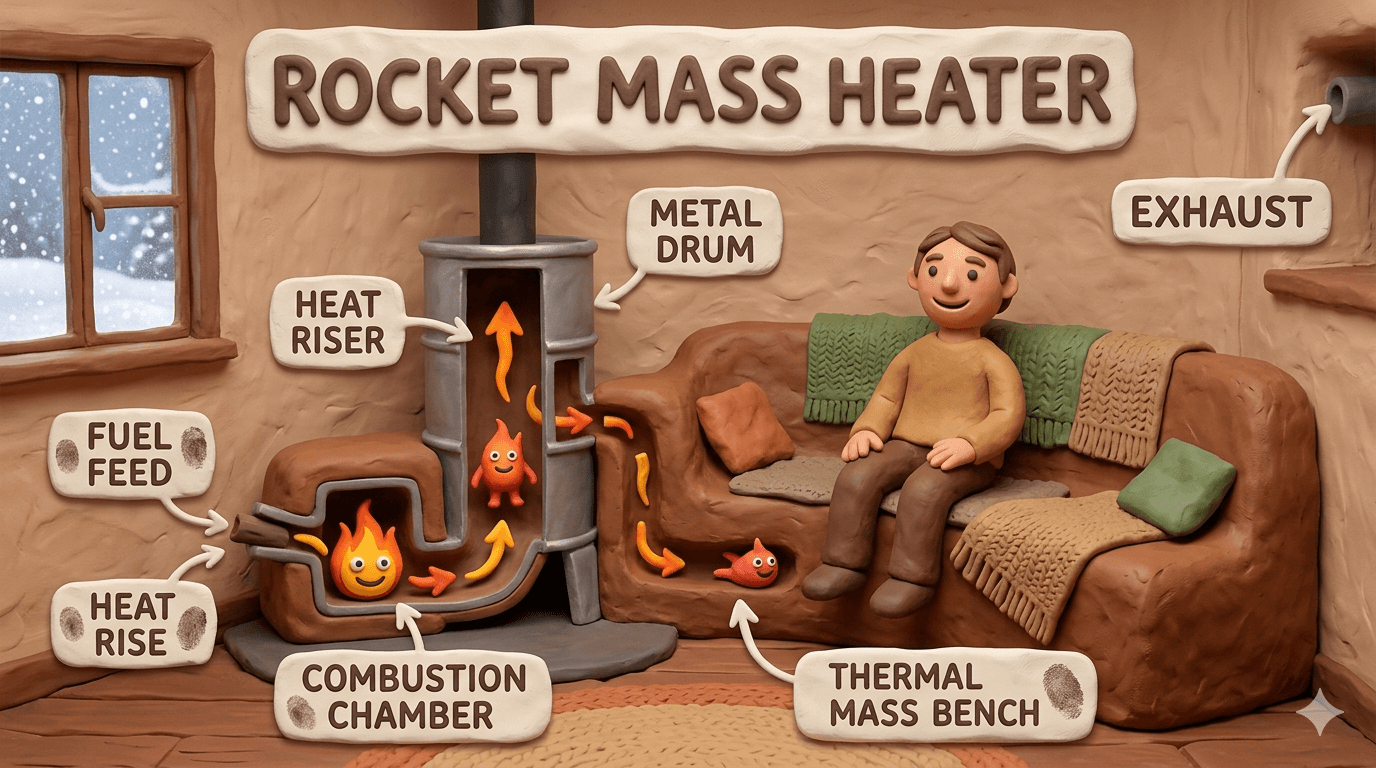
A rocket mass heater is a wood burning heat appliance with three parts. A small insulated combustion core where the fire actually burns. A steel barrel radiator on top that dumps a quick burst of radiant heat into the room. And a long earthen bench filled with brick, stone, and cob that captures the rest of the heat from the exhaust and slowly releases it for the next 18 to 24 hours.
The combustion core is the heart of the system. It is built as either a J tube or a batch box. A J tube has a vertical feed port where you drop short pieces of wood, a horizontal burn tunnel where the fire roars sideways, and an insulated vertical riser where the hot gases finish burning. A batch box is a small firebox that holds a larger load and uses the same insulated riser. Both designs hit combustion temperatures above 1,800 degrees Fahrenheit, which is hot enough to burn almost every gas in the smoke before it can leave the chamber.
A wood stove tries to do two jobs in one box. It has to burn the wood and also radiate heat into the room. The cold steel walls of a wood stove cool the fire and leave half the fuel as smoke and creosote. A rocket mass heater splits those jobs apart. The insulated core keeps the fire hot enough to burn completely. The barrel and the mass bench handle the heat transfer downstream, after the fuel has done its work.
A masonry heater is the close cousin to a rocket mass heater. Both designs hold heat in mass and release it slowly. A masonry heater is heavier, more permanent, and usually costs 8,000 to 20,000 dollars to build. A rocket mass heater hits most of the same comfort numbers at a tenth the cost and a quarter the footprint. The trade off is appearance. A traditional masonry heater can look like a piece of furniture. A rocket mass heater looks like a bench with a barrel on top, which is part of the charm for some homesteaders and a tough sell for others.
Why Rocket Mass Heaters Are So Efficient
Efficiency in a wood heater means how much of the energy in the wood actually heats your house versus how much goes up the chimney as smoke and unburned gas. A modern EPA certified wood stove runs at 60 to 75 percent efficiency on its best day. A well built rocket mass heater hits 80 to 90 percent. That gap is the whole story.
The first reason is secondary combustion. When wood burns it releases gases that are themselves flammable. In a normal wood stove those gases cool before they ignite and leave as smoke. In a rocket mass heater the insulated burn tunnel and riser stay hot enough that those gases ignite a second time and release their full energy. The exhaust coming out of a properly running rocket mass heater is mostly water vapor and carbon dioxide. You can hold a white paper over the chimney and it will not turn gray.
The second reason is heat capture. A normal wood stove sends 350 to 500 degree exhaust straight up the flue. A rocket mass heater routes the exhaust horizontally through a long bench packed with brick, cob, and earth. The mass pulls heat out of the gases over 20 to 30 feet of horizontal travel. By the time the smoke reaches the chimney it is only 100 to 200 degrees, which means almost all of the heat stayed in the house.
The third reason is fuel use. A typical cabin in a moderate climate burns three to five cords of wood a year in a normal wood stove. The same cabin with a rocket mass heater burns half a cord to one full cord. The difference comes from cleaner combustion and from the mass holding heat for a full day on a one to three hour burn. You light one fire in the evening, let it burn hot for a couple of hours, and the bench keeps you warm until tomorrow night.
A homesteader who is also planning a wood heat backup or comparing fuel choices should read our heating with wood guide alongside this one. The two pair well, because most cabins end up with a small backup wood stove for shoulder season alongside the main rocket mass heater.
How a Rocket Mass Heater Heats Your Home
A normal wood stove pushes hot air toward the ceiling and your feet stay cold. Forced air pulls dry, dusty heat through ducts and rattles the windows. A rocket mass heater works differently. The mass bench radiates a gentle, even warmth at body height. The barrel on top puts out a fast burst of radiant heat that takes the chill off as soon as the fire lights. Together they create the most comfortable wood heat most people will ever sit next to.
The radiant heat from a warm mass bench is the closest thing in home heating to sitting in the sun. The bench surface stays at 90 to 130 degrees Fahrenheit. It warms your body directly, not the air around you, which is why a 64 degree room with a warm bench feels warmer than a 72 degree room with forced air. You can lay on the bench. You can sit on it with a book. Pets and kids will fight for the warm spot.
A single firing lasts one to three hours. You feed short pieces of wood down the feed port one at a time as the previous load burns down. The barrel gets hot fast, usually within 10 minutes of lighting, and stays hot for the duration of the burn. After the fire is out the barrel cools within an hour and the heat continues to radiate from the bench for the rest of the day.
The daily rhythm is the most underrated benefit. No midnight wood loading. No drafts when you open a stove door at 3 a.m. No alarm clock at dawn to revive the coals. You light one fire when you make dinner and you do not think about heat again until the next evening. Off grid families with kids find this rhythm transformative.
Rocket Mass Heater vs Wood Stove vs Masonry Heater
The three main solid fuel heat options for a homestead each have a place. Here is how they compare on the numbers that matter.
| Feature | Rocket Mass Heater | Modern Wood Stove | Masonry Heater |
|---|---|---|---|
| Cost installed | $500 to $5,000 | $1,500 to $4,500 | $8,000 to $20,000 |
| Efficiency | 80 to 90 percent | 60 to 75 percent | 80 to 90 percent |
| Wood use per season | 0.5 to 1.5 cords | 3 to 5 cords | 1 to 2 cords |
| Daily burn time | 1 to 3 hours | 8 to 16 hours | 1 to 2 hours |
| Heat duration | 18 to 24 hours | 4 to 8 hours | 12 to 24 hours |
| Floor footprint | Bench plus barrel | Stove pad only | Full masonry block |
| Floor load | 1,500 to 3,500 lbs | 300 to 600 lbs | 5,000 to 15,000 lbs |
| Code acceptance | Limited | Standard | Standard |
| DIY friendly | Yes | No (factory built) | No (specialist build) |
| Best for | Off grid cabin, new build | Anywhere, retrofit | Permanent home, code area |
A wood stove is the right choice for retrofits, rentals, and any home where insurance and code approval matter more than fuel use. A masonry heater is the right choice for a forever home where the budget supports a proper specialist build. A rocket mass heater is the right choice for off grid cabins, owner built homes, greenhouses, workshops, and anywhere the homesteader is willing to handle the code and insurance conversation in exchange for the lowest fuel use and the best comfort.
Sizing a Rocket Mass Heater for Your Home
Sizing a rocket mass heater is mostly about matching the bench length to the heat loss of the room it serves. A bigger bench stores more heat. A smaller bench cycles faster and runs out sooner. The right size depends on square footage, ceiling height, insulation, and climate zone.
A rough starting point is one foot of bench length for every 30 to 50 square feet of well insulated open floor plan. A 600 square foot cabin needs 12 to 20 feet of bench. A 1,200 square foot home needs 24 to 40 feet of bench. That bench length includes the horizontal exhaust run, which is usually arranged as an L shape or a U shape to fit the room.
Ceiling height changes the math. A standard 8 foot ceiling is the baseline. A 10 foot ceiling needs about 20 percent more bench because there is more air volume to heat. A cathedral ceiling can swallow a rocket mass heater unless you add a small ceiling fan to push warm air back down.
Insulation matters more than any other input. A modern build with R 30 walls and R 60 ceilings holds heat for days. A drafty cabin loses heat as fast as the bench can release it. If the wall is not insulated, fix the wall before you build the heater. A bigger bench will not save you from a leaky envelope. Air seal first, insulate second, heat third.
Climate zone sets the burn schedule. Zone 3 and warmer often run a rocket mass heater every other day in the coldest weeks. Zone 5 and 6 fire once daily through the winter. Zone 7 and Alaska may need two burns a day during the worst stretches, which is still a small fraction of a normal wood stove. Plan a longer bench in colder zones so a single burn carries you further.
Open floor plans are the rocket mass heater's friend. A heater that serves one room behind a closed door is fighting itself. A central bench in a great room radiates to the kitchen, the living area, and into a sleeping loft through convection. If you are still in the design phase, put the heater in the middle and let the floor plan flow around it.
Fuel, Burn Time, and Daily Use
A rocket mass heater eats wood that a normal wood stove rejects. Short pieces of 12 to 16 inches. Diameter of 1 to 3 inches. Branches, twisted scraps, fence row clean up, lumber offcuts. The high combustion temperature handles fuel that would smolder in a normal stove. Many homesteaders fuel their rocket mass heater entirely from cleanup wood and never split a round of firewood for it.
Dry wood matters more than species. Aim for less than 20 percent moisture content. A 20 dollar pin moisture meter tells you what you actually have. Wet wood lowers combustion temperature, drops efficiency, and produces smoke. Dry wood lights with a single match, roars within 30 seconds, and produces almost no smoke.
The feed port takes wood standing on end. You stack three or four sticks vertically and they fall into the burn tunnel as the bottoms char. Once you have a load going you only check it every 20 to 30 minutes. A typical evening fire is two to four loads spread over 90 minutes, then you let the last load burn down and walk away.
Long burns are not the goal. A normal wood stove tries to slow combustion to stretch a load overnight. That is exactly when wood stoves smoke the most and creosote the chimney. A rocket mass heater does the opposite. It burns fast and hot, captures the heat in mass, and lets the mass do the slow work. Short, intense fires are the entire point.
You can also let the heater go cold for days. The mass cools slowly, but a few hours of burning will bring a fully cold bench back to comfort. This is why rocket mass heaters work so well in weekend cabins. Show up Friday night, fire it for two hours, and the bench is warm by bedtime and still warm through Saturday night.
Safety, Code, and Insurance Realities
Warning
Rocket mass heaters are not UL listed and most building codes still treat them as experimental. That gap matters for permits and insurance. Before you build, talk to your local code official and your insurance agent in writing. The wrong order on this conversation can void coverage or force a costly rebuild. Always install carbon monoxide detectors in every sleeping area and within 10 feet of the heater.
Rocket mass heaters work by burning wood. That means real fire, real heat, and a real chimney. The same fundamentals that make any wood appliance safe apply here. Maintain clearance to combustibles. Use a code compliant chimney that meets the temperature ratings for the appliance. Install carbon monoxide detectors. Keep a fire extinguisher within 6 feet.
The code situation is the hardest part. Most jurisdictions in the United States have no specific category for rocket mass heaters. Some inspectors approve them as masonry heaters. Some treat them as site built solid fuel appliances and ask for engineering. A few have rejected them outright. Portland, Oregon was the first city to issue a specific permit pathway for them. A handful of other progressive jurisdictions have followed.
The right move is to talk to your local code official before you build, not after. Bring the published plans from a trusted source like the Wisner book or the Walker batch box documentation. Offer to install a temperature sensor on the chimney. Offer to have a third party inspect the build. Most code officials respond well to a homesteader who shows up prepared and patient.
Insurance is the second hurdle. Standard homeowner policies often require a UL listed appliance. A rocket mass heater is not UL listed because the certification process is built around factory built stoves, not site built systems. Some companies will write coverage with a third party inspection. Some will not. Talk to your agent in writing, get the position on letterhead, and shop around if the first answer is no.
Clearance to combustibles is non negotiable. A barrel radiator runs at 400 to 700 degrees Fahrenheit at its hottest spot. Studs, drywall, and wood floors need to stay at least 36 inches away unless you use a tested heat shield with a 1 inch air gap. Build the bench on a noncombustible base that extends at least 18 inches in every direction from the barrel.
Carbon monoxide is the silent risk. A rocket mass heater is a closed combustion system, which is generally safer than an open hearth, but any wood appliance can backdraft if the chimney is undersized or the house is depressurized. Install hardwired carbon monoxide detectors with battery backup in every sleeping area. Test them monthly. Replace the units every 5 to 7 years.
What a Rocket Mass Heater Costs to Build or Buy
The price range is wider than any other home heater because the same design can be built three different ways. A pure DIY core from salvage parts. A purchased combustion core kit with DIY mass. A fully prebuilt and tested unit. Each path has a different price, a different skill requirement, and a different code conversation.
| Build Type | Typical Cost | What You Get |
|---|---|---|
| Pure DIY core | $300 to $800 | Firebrick, perlite, salvage barrel, site mixed cob, hand built |
| Kit core plus DIY mass | $1,500 to $3,500 | Engineered core (Walker, Dragon Heater), DIY mass bench |
| Prebuilt sealed unit | $4,000 to $8,500 | Liberator, ÖKO, or similar factory built sealed system |
| Permitted professional build | $6,000 to $15,000 | Engineered design, third party inspection, full installation |
A DIY core is the most common path. Firebrick splits, ceramic fiber insulation, a 55 gallon steel barrel from a salvage yard, and a few yards of clay rich subsoil from your own land. The total cost is the trip to the building supply store and a weekend or two of work. Skills required are basic masonry and willingness to mix cob with your feet.
A kit core trades cash for time and engineering. Walker Stoves sells a steel batch box core that drops into a site built mass bench for around 1,800 to 2,800 dollars. Dragon Heater sells a similar setup. The kit gives you a proven, tested core with predictable combustion. You still build the bench yourself, which is half the project.
A prebuilt unit is the easiest install but the highest cost. Liberator and ÖKO sell sealed factory built rocket mass heaters that look like a normal stove and bench combo. They run 4,000 to 8,500 dollars before installation. The advantage is that some of them are UL listed or have third party combustion test data, which makes the code and insurance conversation easier.
A permitted professional build is the path for a primary residence in a code strict area. You hire a designer, get a stamped engineering set, pull permits, and pay a contractor or experienced builder. Total cost runs 6,000 to 15,000 dollars depending on complexity and finish. This is still less than a comparable masonry heater and still uses 60 to 80 percent less wood than a stove.
A note on payback. A rocket mass heater that saves 2 cords of wood a year at 250 dollars a cord pays back a 1,500 dollar build in three winters. Compared to propane at 3 dollars a gallon for a 1,200 square foot cabin in zone 5, the payback against a 1,800 dollar annual fuel bill is usually one to two winters. Run the numbers for your own setup before you commit.
The other line item is the chimney. A safe rocket mass heater chimney uses double wall insulated stainless from the heater out through the roof. Expect 600 to 1,500 dollars in chimney materials regardless of which build path you choose. Skip the single wall pipe. The cost difference is small and the safety margin is huge.
DIY Build vs Kit vs Prebuilt
The three build paths suit very different homesteaders. Pick the one that matches your skill, your time, and your code situation.
DIY core is right for the patient homesteader with masonry skills and a code friendly setting. You will spend two to four weekends building, save thousands of dollars, and end up with a heater you understand inside and out. You will also be the warranty department. If a brick cracks at year three, you fix it. Most DIY builders find that part rewarding rather than annoying.
Kit core is right for the homesteader who wants engineered combustion but is willing to build the mass bench. The kit gives you a proven core that lights reliably and burns clean. You still get the satisfaction of building most of the project. The price gap from pure DIY is real, but the predictability is worth it for many builders.
Prebuilt is right for the homesteader who wants the heat performance of a rocket mass heater without the project. You unbox, set on the noncombustible base, connect the chimney, and light a fire. The price is high but the time and risk savings can be worth it for a primary residence or a homestead with limited weekend hours.
Professional permitted build is right for the primary residence in a code strict area, an insurance dependent property, or a homestead where the owner wants the heater to be part of a financed mortgage. The cost is highest but the paperwork is bulletproof.
Whichever path you choose, build the bench with future repair in mind. Use removable barrel gaskets. Leave inspection ports at every elbow in the bench. Plan for a cleanout at the lowest point. A heater you can service is a heater you can keep for 20 years.
Where a Rocket Mass Heater Fits Best on a Homestead
The rocket mass heater shines in some buildings and struggles in others. Knowing the difference saves a lot of regret.
New off grid cabins are the sweet spot. You design the floor for the load. You center the heater in an open plan. You route the chimney straight up through the roof, not out the side wall. A heater designed into the cabin from day one outperforms any retrofit.
Single story homes with a strong floor are an easy retrofit. The bench needs a structural floor that can carry 1,500 to 3,500 pounds depending on size. A slab on grade is ideal. A pier and beam floor needs reinforcing under the bench. Always check the floor plan with a structural specialist before you start.
Greenhouses love a rocket mass heater. Plants thrive on the gentle radiant heat from a warm mass bench, and the bench can double as a propagation table or a winter seedling platform. A small rocket mass heater in an attached greenhouse can extend the growing season by months and warm the connected house at the same time.
Workshops are a natural fit. A rocket mass heater warms the worker without warming the air, which means the shop comes up to comfort fast and stays there. Cold metal tools warm slowly, but the workbench surface stays warm, which is a real production benefit.
Root cellars and animal barns can use a small rocket mass heater for shoulder season. The mass bench moderates temperature swings and protects stored crops or animals from a hard frost without running constantly.
Second floors and lofts are a poor fit. The floor load is heavy and the chimney run is harder. If you want heat upstairs from a downstairs rocket mass heater, use a stairway or an open ceiling design to convect warm air up.
Mobile homes and trailers are not suitable. The floors do not carry the load and the close clearances make safety hard. A small wood stove is the right choice for a mobile home.
Common Beginner Mistakes With Rocket Mass Heaters
Most rocket mass heater failures come from a small set of repeated mistakes. Skip these and your build will go better than most.
- Undersized thermal mass. A short bench cools fast and feels like a normal wood stove. Build the bench longer than you think you need. Twenty feet of exhaust run is a good minimum for most cabins.
- Exterior chimney run. A chimney that runs up the outside wall cools fast and drafts poorly. Always route the chimney straight up through the conditioned space, then through the roof.
- Wet wood. Wet wood drops combustion temperature, smokes, and coats the inside of the burn tunnel with creosote. A 20 dollar pin meter is the cheapest insurance on your homestead.
- No bypass damper. A cold mass bench is hard to draft on the first burn of the season. A simple bypass damper that vents straight up the chimney lets you warm the system before the gases have to push through the bench.
- Skipping the stratification check. Light a candle near the feed port before the first burn of the day. If the smoke pulls in, the draft is good. If it drifts out, the chimney is cold and needs a bypass burn first.
- No carbon monoxide detector. Every wood appliance can backdraft. CO detectors are not optional. Install hardwired with battery backup in every sleeping area.
- Building over a weak floor. Three thousand pounds on a residential pier and beam floor cracks joists. Either pour a footing, reinforce the joists, or build on a slab.
- Skipping the inspection ports. A heater you cannot clean is a heater that will eventually fail. Plan a cleanout at every elbow.
- Using soft brick or river rock. Only use refractory firebrick in the combustion core. Soft brick fails. River rock can explode from trapped moisture.
Tip
The three mistakes that ruin the most builds are wet wood, undersized mass, and an exterior chimney. Burn dry wood, build the bench long, and route the chimney straight up through the roof. Get those three right and almost every other detail forgives a small mistake.
Maintenance and Long Term Care
A rocket mass heater is one of the lowest maintenance heat sources you can build. The combustion core has no moving parts. The mass bench is solid earth and brick. The chimney runs cooler than a wood stove chimney, which means less creosote. With basic annual care, a well built heater lasts 20 years or more.
The yearly checklist is short. Pull the cleanout cap at the lowest point in the bench and brush out any fine ash. Inspect the chimney with a brush or a chimney cam. Look for creosote, which should be minimal if the heater is running clean. Check the barrel paint for chips and touch up with high temperature stove paint. Inspect cob surfaces for cracks and patch with fresh cob mixed to match.
Mid season, watch the barrel temperature. A barrel that gets too hot to touch and stays there for the whole burn is normal. A barrel that runs cool or smoky suggests wet wood, a clogged exhaust path, or a chimney issue. Address the cause early, not after a full burn season of poor performance.
Long term, the firebrick in the combustion core will eventually wear. Plan to inspect the core every five years and replace any cracked or spalled brick. The work is half a day and 50 dollars in materials. The mass bench should last the life of the building.
If you ever decide to move the heater, the mass bench is the hard part. The combustion core can be salvaged and rebuilt. The cob and brick mass is heavy and not portable. Plan the location well at the start because moving it later is a small construction project.
A Realistic First Season Schedule
The first season with a new rocket mass heater is a learning curve. Plan to spend a little time tuning your burns rather than expecting perfection from day one.
| Phase | Focus |
|---|---|
| Cure period (first 2 weeks) | Run small, short fires. Let the cob and mortar fully dry. Do not push for full heat. |
| First month | Burn dry wood only. Watch the barrel temperature. Note how long the bench stays warm after each burn. |
| Month 2 | Settle into a burn schedule. One fire per day in moderate cold. Two per day in deep cold. |
| Mid season | Adjust bench cycle. If the bench cools before bedtime, burn earlier. If it stays warm too long, burn shorter. |
| End of season | Full cleanout. Brush the chimney. Inspect cob and brick. Order replacement bricks if any failed. |
| Off season | Leave the cleanout open to let any residual moisture escape. Cover the chimney top to keep rain out. |
The whole rhythm becomes second nature within one winter. By the second season most homesteaders are running their rocket mass heater on autopilot.
For the wider companion calendar that covers solar, water, waste, and heat together, pair this guide with our off grid living for beginners pillar.
Build Skills Alongside the Heater
Hardware fails. Skills compound. The best rocket mass heater belongs to a homesteader who can fix what they have.
Basic masonry. Learn to mix cob, lay firebrick, and cut brick with a wet saw. A weekend of practice teaches more than any book.
Wood seasoning. Stack wood off the ground, top covered, sides open to the wind. Split next year's wood this year. Learn to read a moisture meter.
Chimney sweeping. Buy a 6 inch rotary brush and a set of flexible rods. Sweep the chimney yourself every spring. The cost is a third of a professional sweep and the inspection is more thorough because you do it slowly.
Fire reading. Learn to look at the barrel surface and the flame shape and know whether the burn is clean. A roaring fire with a clean barrel is the goal. A dim fire with smoke at the feed port is a problem to solve, not to ignore.
Cob repair. Cracks in cob are normal. Mix a small batch with the same clay and sand you used at build time, wet the crack, and push the patch in with your thumb. Five minutes a year keeps the bench looking sharp.
Bench tuning. Move thermometers to different spots on the bench surface and learn how heat travels through your specific build. Each rocket mass heater has personality. Get to know yours.
A working rocket mass heater is a stack of small skills. Each one you add makes the next one easier.
You Can Start This Week
The biggest trap new homesteaders fall into is trying to design the perfect heater before they begin. Perfection is the enemy of progress on a homestead. The best rocket mass heater is the one you actually build.
Pick one thing this week. Order a copy of the Rocket Mass Heater Builder's Guide by Erica and Ernie Wisner. Or visit a working rocket mass heater on a permaculture site near you. Or pull out a tape measure and find the spot in your cabin where a 20 foot bench would actually fit. The first concrete step turns the project from a daydream into a plan.
When you are ready for more, our off grid hub gathers every water, power, and heating guide we have. Pair this article with our heating with wood guide for a side by side look at backup wood heat. Pair it with our off grid living for beginners pillar for the bigger picture across power, water, and waste. If your power plan is still in the design phase, lean on our beginner solar power guide and our battery bank sizing guide to make sure the rest of the off grid stack carries the heater through the winter.
For the broader homesteading roadmap, lean on our homesteading for beginners pillar. For the legal details in your state, our state by state homesteading hub covers wood heat permits, chimney rules, and zoning across all 50 states.
You can do this. We are glad you are here.
Frequently Asked Questions
A well built rocket mass heater runs at 80 to 90 percent efficiency. A modern EPA certified wood stove runs at 60 to 75 percent. The difference comes from secondary combustion in the insulated burn tunnel and from heat capture in the thermal mass bench, which pulls heat out of the exhaust before it leaves the building. Most homesteads see wood use drop by half to three quarters when they switch from a normal stove to a rocket mass heater.
A typical cabin in zone 5 uses 0.5 to 1.5 cords of wood per winter with a rocket mass heater. The same cabin with a normal wood stove uses 3 to 5 cords. The lower number is because the heater burns hot and short, captures the heat in mass, and lets the mass do the slow release work. A single armload of small wood will heat the bench for 18 to 24 hours.
It depends on your jurisdiction and your insurance company. Most building codes do not have a specific category for rocket mass heaters, so approval depends on the local inspector. Some treat them as masonry heaters. Some require engineering. A few have rejected them outright. Talk to your code official and your insurance agent in writing before you build. A prebuilt unit with combustion test data is usually easier to permit than a site built core.
The barrel radiator puts out fast radiant heat within 10 minutes of lighting. The mass bench warms gradually over the first hour and continues to radiate heat for 18 to 24 hours after the fire is out. If the bench is fully cold from a long absence, the first burn warms it partially and a second burn the next day brings it to full comfort.
Second floors are difficult because of the floor load and the chimney run. A 3,000 pound bench needs structural reinforcement that most upper floors do not have. Mobile homes and trailers are not suitable for rocket mass heaters because the floors do not carry the load and clearances are too tight. For both cases a small EPA certified wood stove is the safer choice.
A pure DIY build with salvage parts and homemade cob runs 300 to 800 dollars. A kit core like Walker or Dragon Heater with a DIY mass bench runs 1,500 to 3,500 dollars. A prebuilt sealed unit runs 4,000 to 8,500 dollars. A permitted professional build runs 6,000 to 15,000 dollars. Add 600 to 1,500 dollars for the chimney in every case.
A rocket mass heater that saves 2 cords of wood a year at 250 dollars a cord pays back a 1,500 dollar build in three winters. Compared to propane at 3 dollars a gallon for a 1,200 square foot cabin, the payback against a 1,800 dollar annual fuel bill is usually one to two winters. Run the numbers for your specific setup with the homestead budget calculator before you commit.

Cole
Founder & Lead Researcher
Cole is the founder of Plan Your Homestead. He works in clinical research and brings a research-first lens to every guide on the site, drawing on a long family line of farmers for grounded, practical perspective.
More in Off-Grid
More articles coming soon. Check back for new off-grid content.