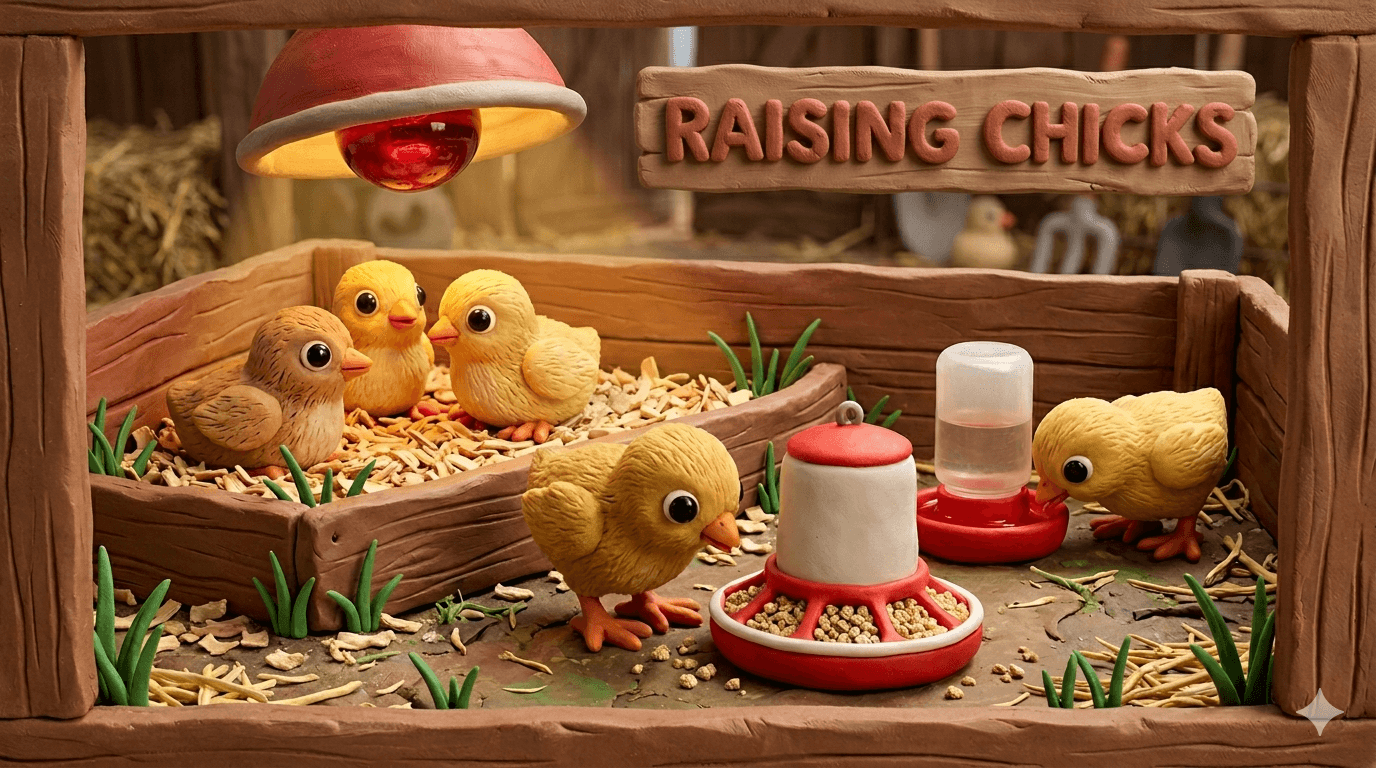
There is something special about a box of peeping day old chicks. They fit in your palm, they fall asleep mid sip, and they grow into the laying flock that feeds your family for years. The first eight weeks set everything in motion. Get the brooder right and your birds practically raise themselves from there.
This guide walks you through raising chicks on a homestead from the moment they arrive to the day they move into the coop. You will learn how to set up a safe brooder, pick between a heat lamp and a heat plate, handle the most common problems, and follow a simple week by week routine that keeps every chick alive and thriving. If you are still planning the rest of your flock, the complete guide to raising chickens covers breeds, coops, and daily care.
Before the Chicks Arrive: What to Have Ready
Chicks need their setup ready before they show up. Once the hatchery box arrives, you have minutes, not hours, to get them warm, watered, and fed. Rushing the setup at the last minute is the single biggest cause of week one losses on a homestead.
Here is a short list of what to have built and on the shelf the day before pickup or shipping.
- A brooder with at least half a square foot of floor space per chick
- A heat source warming one corner to about 95 F
- A chick waterer filled with room temperature water
- A chick feeder loaded with 20 to 22 percent protein starter crumble
- A two to three inch layer of pine shavings for bedding
- A thermometer placed at chick level near the heat source
- A draft free location like a garage corner, mudroom, or spare bedroom
It feels like a lot for tiny animals, but every item earns its keep. Set everything up at least a day before the chicks arrive so you can run the heat, take a reading, and adjust the lamp height in peace.
Building a Safe Brooder Box
A brooder is just a warm, draft free enclosure. It does not need to be fancy. Plenty of homestead flocks have started life in a plastic tote, a stock tank, a converted dog crate, or a kiddie pool ringed with cardboard.
Plan for about half a square foot per chick during the first two weeks. By week four, bump that to a full square foot. By week six, aim for a square foot and a half. Chicks grow fast and a crowded brooder turns into a pecking, dust filled mess in days.
Pick a container with smooth sides at least 18 inches tall. Chicks start flapping and hopping around week two, and you will be surprised how high a three week old chick can launch. A wire mesh lid keeps cats, curious kids, and wandering dogs out without trapping heat or moisture.
Place the brooder somewhere that holds a steady room temperature, like a garage corner, a basement, or a spare bedroom. Avoid drafty barns and chilly mudrooms during the first month. A small window for natural light helps the chicks settle into a normal sleep cycle.
Tip
Do a dry run the day before the chicks arrive. Plug in the heat source, give it 30 minutes to settle, then place a thermometer at chick level. Adjust the lamp height or plate setting until the warmest spot reads 95 F. A calm test beats a panicked scramble while a peeping box of chicks sits on the kitchen counter.
Heat Lamp vs Heat Plate: Which to Choose
Chicks cannot regulate their body temperature for the first few weeks. They rely entirely on you for warmth. Two options dominate the homestead world, and the right pick depends on your space, your budget, and your tolerance for fire risk.
A traditional red heat lamp is the cheapest path. A 250 watt bulb in a clamp on reflector keeps a small brooder at 95 F under the lamp. Drop the temperature 5 degrees per week by raising the lamp until the chicks are fully feathered around week six. Red bulbs are gentler than white bulbs because they discourage pecking and let the chicks sleep through the night.
The downside is fire risk. Heat lamps cause a depressing number of barn and house fires every year. If you choose a lamp, secure it with two methods. Use the clamp plus a chain or a strong wire so it cannot fall into the bedding. Keep the bulb at least 18 inches from any flammable surface.
A radiant heat plate is the modern, fire safer alternative. It mimics a mother hen by warming the chick from above when she crouches under it. Plates run cooler on the surface, use less electricity, and let the chicks come and go as their bodies tell them. Most homesteaders who switch never go back.
A quality heat plate runs 50 to 80 dollars and sizes go up by chick count. If you brood chicks every year, the plate pays for itself in peace of mind alone.
Whichever you pick, watch the chicks more than the thermometer. If they pile in a tight ball under the heat, they are too cold. If they crowd the far corner of the brooder, they are too hot. If they spread out, eat, drink, and chirp softly, the temperature is right.
Bedding, Water, and Feed Basics
The three daily essentials are easy once you know what works.
Use pine shavings for bedding. Lay down two to three inches across the entire brooder floor. Avoid cedar, which gives off oils that irritate chick lungs. Avoid plain newspaper, which is too slick and causes splay leg. Many homesteaders cover the shavings with paper towels for the first 48 hours so chicks learn to find the feed instead of pecking shavings.
Refresh bedding every two to three days during weeks one and two. By week three, you may be cleaning daily. A clean brooder smells like fresh shavings, not ammonia. If your eyes water when you lean over the box, the air is hurting the chicks too.
Use a proper chick waterer with a narrow lip. Drop four or five clean marbles or pebbles into the trough for the first week. The marbles take up space so chicks cannot fall in and chill, but still leave plenty of room for tiny beaks to drink. Refresh water at least twice a day. Chicks knock shavings, food, and droppings into the waterer constantly.
Feed a 20 to 22 percent protein chick starter crumble from day one. Medicated starter contains amprolium, which prevents coccidiosis, a gut parasite that can wipe out a brooder in days. Use medicated unless your chicks were vaccinated for coccidiosis at the hatchery. Keep the feeder full at all times. Chicks eat little and often and burn through feed faster than you expect.
For the full deep dive on chick, pullet, and layer nutrition, see the feeding guide.
Week by Week Growth and Care Timeline
Each week brings new milestones. Knowing what to expect lets you spot trouble fast and enjoy the changes more.
Week 1: Settling In
Target temperature under the heat is 95 F. Chicks sleep in piles, eat constantly, and look impossibly fragile. Check on them every few hours during the first 48 hours. Dip each chick's beak in the waterer when you first place them in the brooder so they learn where to drink.
Watch closely for pasty butt, a sticky buildup of droppings on the vent. It is the most common week one problem. Wipe the vent gently with a warm damp cloth. Untreated pasty butt blocks the vent and kills chicks fast.
Hands off otherwise. This is the rest and recover week. Refilling food and water is enough handling for now.
Week 2: First Flight Attempts
Lower the temperature under the heat to 90 F by raising the lamp or moving the plate. Chicks start flapping, hopping, and exploring the brooder. Add a low roost bar, just a half inch dowel or stick laid an inch off the bedding, so they can practice perching.
Pinfeathers begin to show on wings and tail. Chicks look scruffy and uneven, and that is completely normal. Pick each chick up once or twice a day for a few seconds. Calm handling now creates friendly hens later.
Week 3: Feathering Begins
Target 85 F under the heat. Real feathers replace fluff fast and chicks look like awkward teenagers. They will be twice the size they were on arrival.
Expect the brooder to feel small. Bump up cleaning to daily. Top off feed and water more often. If you have older kids in the house, this is a fun week to involve them. Chicks at three weeks tolerate gentle handling well.
Week 4: Brooder Gets Crowded
Target 80 F. Chicks now need a full square foot of floor space each. If the brooder is bursting, this is the week to expand into a second tote or move the flock to a grow out pen in the garage or a sheltered corner of the yard.
Offer a tiny pinch of grit on top of the feed if you start adding treats like chopped grass or watermelon. Chicks need grit to grind anything beyond starter crumble. Skip layer feed and oyster shell. The calcium is too high for growing kidneys.
Weeks 5 to 6: Outdoor Visits
Target 75 F. On warm afternoons above 65 F outside, take the chicks out for supervised yard time. A small pop up dog playpen on the grass works well. Watch the sky for hawks and the ground for the family dog. Twenty minutes of pecking grass and chasing bugs is plenty.
By week six, most chicks are fully feathered and ready to ditch the heat entirely during warm weather. Turn the heat off during the day, leave it on at night, and watch the chicks. If they sleep in a relaxed sprawl instead of a tight pile, they are warm enough.
Weeks 7 to 8: Moving to the Coop
The chicks are almost full sized teenagers. Their feathers are in, their personalities are showing, and the brooder smells no matter how often you clean it. Time to move into the coop.
Pick a stretch of mild weather. Move the flock in the evening so they wake up in their new home. Lock them in the coop, not the run, for the first three days so they learn where to sleep. Then let them into a secure run during the day and lock the coop at dusk.
If you have an existing flock, do not toss the youngsters in cold. Set up a wire divider in the run for a week so the birds can see each other but not fight. Introduce them in the run, not the coop, with plenty of space, multiple feeders, and an escape route. Some pecking is normal. Bloody injuries are not.
For predator details and coop hardware specs, see the predator proof coop guide.
Common Problems in the Brooder
Most chick problems are obvious once you know what to watch for. Catch them early and almost all of them are fixable at home.
Pasty butt is a sticky plug of droppings over the vent. It is the most common week one issue. Wet a soft cloth with warm water and gently work the plug loose. Pat dry. Dab a tiny bit of olive oil or coconut oil around the vent to discourage repeat sticking. Check the chick again in 12 hours.
Splay leg is a chick whose legs slide out sideways. It usually comes from a slick surface like newspaper. Hobble the chick gently with a small loop of vet wrap or a bandaid between the legs for two or three days. Most chicks recover fully.
Chilling shows up as huddled, sleepy chicks who do not eat or drink. Move them under the heat, dip beaks in water, and warm the brooder. A chilled chick rebounds quickly if caught early.
Overheating shows up as panting, wings held out, and chicks crowding the far corner. Raise the heat lamp, swap to a smaller bulb, or move the brooder to a cooler room.
Warning
Coccidiosis is the deadliest brooder threat. Watch for bloody droppings, lethargy, ruffled feathers, and a refusal to eat or drink. Coccidiosis spreads in damp bedding and can kill a full brooder in 48 hours. Treat immediately with Corid in the water and call a poultry vet if more than one chick is affected. Medicated chick starter prevents most outbreaks before they begin.
When a chick looks off, isolate her in a small box with food, water, and a heat source. Most sick chicks improve in a few hours of quiet warmth. If she gets worse, call a local poultry vet or your county extension office.
For broader flock health beyond the brooder stage, the common chicken health issues guide covers mites, respiratory illness, and the rest.
Handling and Bonding Without Stressing Them Out
Hand raised chicks turn into hens that follow you around the yard. Chicks that get little human contact turn into flighty adults that bolt the moment you reach for them. Bonding matters and it costs you nothing but a few minutes a day.
Start gentle handling at the end of week one. Sit on the floor next to the brooder, lower a flat palm in slowly, and let one chick at a time hop up. Lift her just an inch or two for the first day. Build up to brief lap visits by week two.
Talk to them in a calm voice while you refill food and water. Chicks learn to associate your voice with safety and food. By week three, most chicks will run toward you instead of away when you open the brooder lid.
Avoid chasing chicks around the brooder. A grab from above looks like a hawk attack and undoes weeks of bonding. Always approach low and slow.
Kids handle chicks well with supervision. Set ground rules. One chick at a time, two hands underneath, sit on the floor only, and put the chick back gently. A dropped chick can break a leg or worse.
Costs and Timeline at a Glance
Raising a small flock of chicks is one of the cheapest ways onto a homestead. Here is a rough budget for six chicks from day one to coop ready at week eight.
- Six day old chicks at four to seven dollars each: 24 to 42 dollars
- Brooder container or tote: 0 to 30 dollars depending on what is on hand
- Heat lamp setup with bulb: 25 to 35 dollars
- Heat plate alternative: 50 to 80 dollars
- Thermometer: 5 to 10 dollars
- Chick waterer and feeder: 20 to 30 dollars
- Pine shaving bedding for 8 weeks: 15 to 20 dollars
- Chick starter feed for 8 weeks: 30 to 45 dollars
Total ballpark for the brooder phase: 120 to 250 dollars for six chicks. Coop and run come on top, but those are one time builds that serve many years of flocks.
For a real number tied to your flock size and feed brand, plug numbers into the feed cost calculator and the homestead budget calculator.
Putting It All Together
Raising chicks on a homestead is one of those projects that looks intimidating from the outside and turns into a comfortable rhythm within two weeks. Set up the brooder before the chicks arrive. Hit the right temperature. Keep feed and water clean. Watch for pasty butt and coccidiosis. Handle them gently and often. Move them to the coop around week eight.
Eight weeks of focused care turn a peeping cardboard box into a flock that will feed your family for years. Few projects on a homestead pay back faster.
If you are still picking your breeds, run the chicken breed picker to find birds that match your climate, temperament, and egg goals. If you are ready to build, the predator proof coop guide covers what those new hens will need on move in day. And once they start laying, the feeding guide walks through every life stage from layer pellets to oyster shell.
You have got this. Tomorrow morning you will hear soft peeping from across the room and remember why you started.
Frequently Asked Questions
Chicks need supplemental heat until they are fully feathered, usually around six weeks of age. Start at 95 F under the heat source in week one and drop the temperature five degrees each week. By week six, most chicks can handle daytime room temperatures without help.
Chicks can take supervised outdoor visits on warm afternoons starting around week four if the outside temperature is above 65 F. They can move to a coop permanently around weeks seven to eight once they are fully feathered and outdoor nights stay above 50 F.
Week one chicks need 95 F under the heat source. Drop the temperature by five degrees each week. Week two is 90 F, week three is 85 F, week four is 80 F, week five is 75 F, and by week six chicks no longer need supplemental heat in normal room temperatures.
Plan for half a square foot per chick during weeks one and two. By week four, bump that to one full square foot. By week six, aim for one and a half square feet per chick. A six chick brooder needs at least nine square feet of floor space by the end of the brooder period.
Use medicated chick starter unless your chicks were vaccinated for coccidiosis at the hatchery. Medicated starter contains amprolium, which prevents coccidiosis. If your chicks were vaccinated, use unmedicated starter so the medication does not interfere with the vaccine.
Pasty butt is a sticky plug of droppings stuck over a chick's vent. It is the most common week one problem. Treat it by wetting a soft cloth with warm water and gently working the plug loose, then patting dry. A dab of olive oil around the vent helps prevent repeat sticking.
Most chicks move to the coop between seven and eight weeks of age, once they are fully feathered. Wait for a stretch of mild weather above 50 F at night. Lock them in the coop for the first three days so they learn where to sleep, then let them into the run during the day.
Chicks cannot live with adult chickens until they are around the same size, usually around 16 weeks. Earlier introductions invite pecking and serious injury. Use a wire divider in the run for a week so the birds can see each other safely before introducing them in a large space.

Cole
Founder & Lead Researcher
Cole is the founder of Plan Your Homestead. He works in clinical research and brings a research-first lens to every guide on the site, drawing on a long family line of farmers for grounded, practical perspective.
More in Animals
More articles coming soon. Check back for new animals content.