
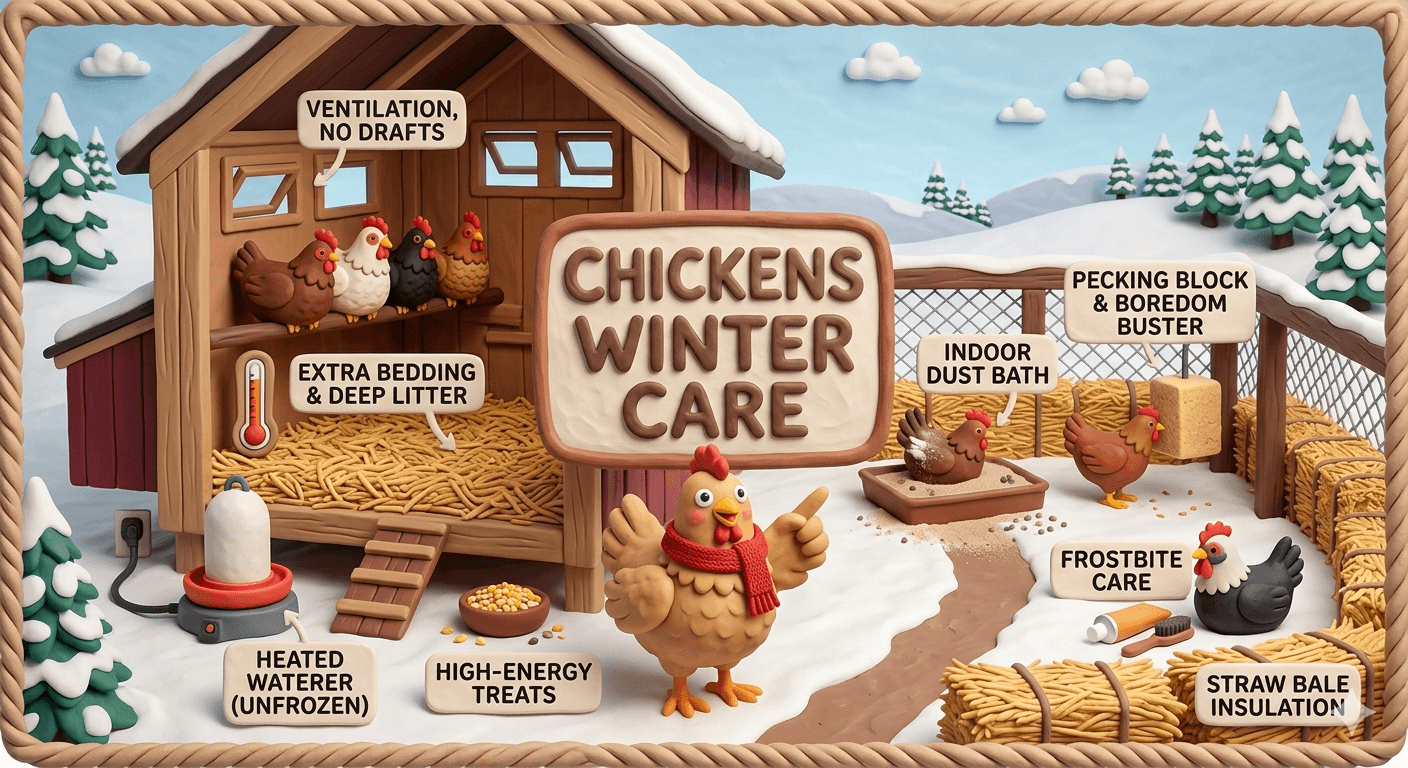
The first hard freeze of the year always feels dramatic. You walk out to the coop with a flashlight, your breath fogging in the dark, and you wonder if your hens are okay in there. Spoiler. They are fine. Chickens handle cold weather better than almost any homestead animal you can name.
This guide walks you through everything a homesteader needs to know about chickens in winter. You will learn how cold is too cold, why ventilation matters more than heat, how to keep water from freezing, how to prevent frostbite, what to feed, and how to set up the run so your hens still want to come outside. By the end you will have a calm winter routine that takes ten minutes a day. If you are still picking your first flock, the complete guide to raising chickens covers breeds, coops, and daily care from the ground up.
How Cold Is Too Cold for Chickens?
Most adult chickens are comfortable down to about 20 degrees Fahrenheit without any help. Cold hardy breeds like Wyandottes, Orpingtons, Brahmas, Australorps, and Chanteclers handle nights into the single digits and below zero just fine. Their feathers fluff out and trap a layer of warm air against the skin, which works a lot like a down jacket.
The temperature on your thermometer is only half the story. Wind chill, wet feathers, and damp bedding turn a manageable cold night into a dangerous one. A dry, draft free coop at 5 degrees is safer than a leaky, humid coop at 25 degrees.
The birds at real risk are different. Chicks under six weeks still need supplemental heat. Older hens past four years lose some of their cold tolerance. Mediterranean breeds with huge floppy combs, like Leghorns and Anconas, get frostbite faster than tight combed breeds. Watch those birds more carefully when the temperature drops.
You can tell when a chicken is actually cold. She fluffs up like a ball, stands on one foot tucking the other into her feathers, and hunches near a wall out of the wind. That is normal winter behavior, not a crisis. A chicken in real trouble is shivering, sluggish, or off the roost in the middle of the night. That bird needs to be brought inside and warmed up.
The Most Important Rule: Ventilation Beats Heat
This is the rule that surprises most new chicken keepers, so write it down. In winter, ventilation matters more than warmth.
A flock of hens breathes out an astonishing amount of water vapor every night. Their droppings add more. If that moisture has nowhere to go, it settles back onto combs, wattles, and roost bars as condensation. Damp combs in freezing air equals frostbite. Damp bedding equals respiratory illness. More flocks die from sealed up coops than from cold.
Good winter ventilation is not the same as drafts. You want air moving high above the roosts, not blowing across the birds while they sleep. Aim for vents along the upper few inches of the coop walls, ideally on the side facing away from your prevailing wind. A rough rule of thumb is one square foot of vent per ten square feet of coop floor.
Test your setup with your nose. Step into the closed coop in the morning before opening the pop door. If the air smells fresh and feels dry, you are vented well. If it smells like ammonia or your eyes water, you need more vents and less bedding moisture.
Tip
On the coldest nights, resist the urge to close every vent. Tape a sheet of cardboard or plywood across one wall to block the wind side, but leave the leeward vents fully open. A dry, calm, ten degree coop beats a humid, sealed, twenty five degree coop every time.
Should You Heat the Coop?
The short answer is no. The longer answer is almost never, and only under specific conditions.
Heat lamps cause a depressing number of coop fires every winter. A dropped clamp, a chicken with a flapping wing, a curl of dust on a hot bulb, and the whole structure goes up in minutes. Insurance companies see this every December. Most homestead flocks do not need supplemental heat at all if the coop is dry and draft free.
Heat also creates a dependency problem. Hens that overwinter with a 50 degree coop never acclimate to real winter. The day the power goes out at 10 below zero, those birds are in serious trouble. Hens that ride out the season at ambient temperature build heavier feathers and tougher tolerance.
There are two narrow exceptions. If you live somewhere with sustained nights below 20 below zero and your coop has zero thermal mass, a flat panel radiant heater rated for chicken coops can take the edge off. Mount it on the wall, well away from bedding, and run it on a thermostat that only kicks on under a set temperature. Skip the heat lamp.
The other exception is brooding chicks in winter, but that is a different setup with a brooder, not a heated main coop. The raising chicks guide walks through that whole world.
Keeping Water From Freezing
This is the biggest day to day pain of winter chicken keeping. A hen drinks about two cups of water a day, more if she is laying. A frozen waterer at sunrise means stressed birds and a dip in egg production by lunchtime.
A heated waterer base with a metal galvanized fount on top is the gold standard. The base is a small electric pad that holds the water just above freezing. They cost 40 to 60 dollars, last for years, and pay for themselves in saved trips to the coop with a kettle. Plug it into a heavy duty extension cord rated for outdoor use and run the cord up off the ground.
No electricity to the coop? You have options. Black rubber pans hold heat from sunlight better than plastic, and they flex when ice forms, so you can stomp the ice out instead of chipping. Carry warm water out twice a day, swap the frozen pan for a fresh one, and bring the frozen one inside to thaw. A small five gallon insulated cooler from a hardware store, with the lid cut to leave a chicken sized drinking hole, can keep water liquid for most of a 25 degree day.
In real subzero weather, do not be too proud to refill at midday. Even a heated base struggles when the wind chill is 30 below. Two warm refills a day beats one frozen waterer every time.
Warning
Heated buckets and heat tape pull serious amps. Never daisy chain extension cords or run them through doorways where a chicken or a dog can chew them. Run one heavy duty outdoor rated cord on a GFCI outlet directly to the coop, and check the cord for damage at every refill.
Preventing Frostbite on Combs and Wattles
Frostbite shows up as black or gray tips on combs and wattles, sometimes after a single bad night. Mild cases blister and heal. Severe cases turn dead tissue that sloughs off in a week. Roosters with tall combs are at the highest risk.
You will read all over the internet that you should slather vaseline on combs to prevent frostbite. Skip it. The research and most experienced keepers agree that vaseline does very little, and the act of grabbing your hens to smear it on stresses them out more than the cold does. Some keepers swear it traps moisture and makes things worse.
The real prevention is dry air and a wide roost. Hens cover their feet with their belly feathers when they sleep on a flat board roost. A flat two by four laid wide side up keeps toes warm. A skinny round perch leaves toes exposed and frostbites them fast.
If you do see frostbite starting, do not rub or wash the tissue. Move the bird to a warmer, drier spot, give her unlimited water and protein, and let the body do its work. Black tips will eventually drop off without intervention. If you see swelling, discharge, or the hen stops eating, that is infection territory and worth a call to a poultry vet.
For a deeper dive into frostbite, mites, respiratory illness, and the other winter health issues, the common chicken health issues guide covers each one in detail.
Winter Feed Adjustments
Chickens burn extra calories staying warm. Expect feed consumption to climb 10 to 20 percent from December through February. That is normal and you should let them eat as much layer feed as they want.
Bump up the calorie density of the evening meal. A handful of cracked corn or scratch grain tossed in the run an hour before roost time gives the birds something to digest overnight. The digestion itself produces body heat. Skip scratch as a main feed though. It is mostly carbs and not enough protein for healthy birds.
Protein matters more than you would guess. Hens building extra feathers and laying through short days need 16 to 18 percent protein in their main feed. Switch to an all flock or feather fixer ration if you see ragged molt feathers hanging on into December. A handful of black oil sunflower seeds a few times a week is a great winter supplement. So is a chunk of cooked squash, a few mealworms, or warm oatmeal on the coldest mornings.
Fermented feed is worth trying in winter. A bucket of layer pellets soaked in water for two or three days produces a tangy mash that boosts gut health and lowers feed waste. Hens love it and it is gentle on their crops in cold weather.
Water access drives appetite more than feed quality does. A hen with a frozen waterer eats less because she cannot wash it down. Keep water flowing and the feed sorts itself out.
For breakdowns by life stage, feed brands, and per bird costs, see the chickens feeding guide and run real numbers through the feed cost calculator.
The Deep Litter Method for Winter Bedding
Deep litter is a homestead classic for a reason. It turns your coop floor into a slow compost pile that generates a few degrees of warmth all winter and saves you from cleaning bedding in cold weather. Most homesteaders who try it never go back.
Here is how it works. Instead of cleaning out bedding every week, you start with six inches of pine shavings in the fall. As droppings accumulate, you sprinkle a fresh inch or two of shavings on top once a week and stir the whole bed with a rake. The shavings and droppings break down together. By late winter you have a foot of warm, dry, slowly composting bedding that smells like the forest floor, not a barn.
Start in October or early November. Lay down six to eight inches of pine shavings. Add a half cup of diatomaceous earth to the base layer if mites have been a problem. Rake the bedding every few days through the season, more often after wet weather. Add shavings whenever the surface looks soiled.
The microbes in the bed produce gentle heat as they break down nitrogen. You will not roast a chicken with it, but on a 5 degree night the floor of a deep litter coop runs noticeably warmer than the air. The bed also outcompetes harmful bacteria. Most flocks that switch to deep litter see fewer respiratory problems and healthier feet.
Two cautions. Deep litter only works in a dry coop with good ventilation. A leaky roof or a wet pop door turns the bed into a moldy mess in days. And do not deep litter under the roost. Use a separate dropping board or remove that section of bedding every few days. Direct droppings overload the bed and create ammonia faster than the bed can process it.
Strip the bed out in late March or April. You will have a wheelbarrow of dense black gold ready to go straight onto the garden.
Winter Run Setup: Snow, Wind, and Bored Hens
Hens hate snow. The first time they see it, they will refuse to leave the coop and stand on the threshold staring at the white death. After a day or two of cabin fever, you will be glad you made the run inviting.
Block the wind. Wrap two or three sides of the run with clear plastic sheeting, tarps, or stacked straw bales. Leave the south side open for sunlight. The birds will pile into the sunny corners on cold afternoons and dust bathe like it is July.
Clear a small patch of bare ground. Shovel a six by six foot section down to dirt and toss a flake of straw on top. The hens will scratch around happily where they would not set foot on snow. A pallet flipped upside down works as a quick floor over snow too.
Hang a head of cabbage on a string at chicken height. Watch a flock peck a frozen cabbage for an afternoon and you will understand why this is a homesteading classic. Toss a forkful of leaves, a flake of alfalfa hay, or a pile of pumpkins for them to peck through. Bored hens turn on each other. Busy hens stay sweet.
Cover at least part of the run with a tarp or a polycarbonate roof panel. Snow piling up on a wire roof is heavy enough to collapse a run, and a covered section gives the birds somewhere dry to perch all day.
Lighting and Egg Production in Winter
Hens lay eggs based on daylight hours, not temperature. Most breeds slow down or stop laying entirely once daylight drops below about 12 hours, which happens in October for most of the country. Production picks back up again in late January as the days lengthen.
You can override this with supplemental light. A simple LED bulb on a timer set to come on at 4 a.m. and shut off at sunrise keeps total light at 14 to 15 hours and most hens keep laying. The light needs to add to morning hours, not evening, so birds can find their roost naturally before dark.
Whether you should is a real question. Hens laying through winter wear out their reproductive systems faster and tend to molt harder the following fall. Many homesteaders give their flocks a natural rest through the dark months and accept fewer eggs from November through January. A few good layers will still drop one or two a week on their own, which is usually enough for a small family.
If you do supplement, use a soft warm white bulb, not a bright cold white. Use the lowest wattage that gets the job done. And start in early fall before laying drops off. Throwing a light on a flock that has already shut down for winter rarely restarts them.
The full picture of laying rhythms, peak production, and what to expect across a hen's life is in the chickens egg production guide.
Cold Hardy Breeds Worth a Look
If you live somewhere with real winter and are still picking your flock, breed choice matters more than any other decision. Some birds are built for snow. Others suffer in it.
The classics are Wyandottes, Buff Orpingtons, Black Australorps, Plymouth Rocks, Brahmas, and Chanteclers. Each has a thick body, a tight rose or pea comb that resists frostbite, and a calm temperament that holds up well to coop time. Easter Eggers and Salmon Faverolles also handle cold weather well and add some variety to your egg basket.
The birds to skip in a cold climate are the high production Mediterranean layers with big single combs. Leghorns, Anconas, and Minorcas lay incredible numbers of eggs and look beautiful, but their combs frostbite at the first hard freeze. Save those breeds for the southern half of the country.
Run the chicken breed picker and filter for cold hardy to see a side by side of every breed worth considering for your climate.
Predators in Winter
Predators get hungrier and bolder once snow covers their normal food sources. Raccoons, foxes, coyotes, weasels, and even fishers will work harder at your coop in January than they did in July. A coop that held up all summer can lose a hen in February if you are not paying attention.
Lock the coop every night without exception. Most predator losses happen between dusk and dawn. An automatic coop door tied to a light sensor is one of the best 150 dollar purchases on a homestead.
Walk the perimeter of the run every few weeks. Look for fresh digging, snow tracks leading up to the fence, or chewed hardware cloth at ground level. Tracks in snow tell you exactly who is visiting and when. Most predators are creatures of habit and will come back the same way for three or four nights before giving up.
Aerial predators get desperate in winter too. Hawks and owls take more chickens in cold months than in warm ones because their normal prey is hiding under snow. A covered run or a few strands of fishing line strung across an open run discourages dive attacks.
For hardware specs, locking routines, and the seven coop features that stop predators cold, see the predator proof coop guide.
A Simple Winter Chore Routine
The whole rhythm boils down to a handful of small tasks that take ten minutes a day. Once you get it dialed, winter chicken keeping is one of the most peaceful parts of homestead life.
Morning, around sunrise. Open the pop door and let the flock out into the run. Swap or refill the waterer with fresh warm water. Top off the feeder. Glance at each bird as they come down off the roost. A hen who does not come down is the first sign of trouble.
Midday, if you can. Walk out for a few minutes to do a second water check, especially below 20 degrees. Toss a treat or hang a cabbage. Scratch a few inches into the bedding to keep the deep litter active.
Evening, just before dark. Refill water one more time if it is freezing fast. Close and lock the pop door once all birds are on the roost. Quick sweep with the flashlight to count heads. Done.
Weekly. Rake and turn the deep litter. Add an inch of fresh pine shavings if it needs it. Check vent openings for cobwebs or snow blocking airflow. Test the heated waterer to make sure the base is still working.
That is the whole job. Compared to caring for any other animal in winter, chickens are stunningly low effort.
Putting It All Together
Caring for chickens in winter sounds harder than it is. The big picture is simple. Build a dry coop with good ventilation, give them a wide flat roost, swap water often, feed them well, set up the run so they want to come out, lock them in at night, and let them do what their bodies were built to do.
You do not need heat lamps. You do not need vaseline. You do not need a 4 a.m. wake up to thaw waterers. You just need a coop that breathes, a routine that does not skip, and a flock that fits your climate.
If you are still picking your birds, run the chicken breed picker to find cold hardy hens that match your egg goals. If you are still building, the predator proof coop guide walks through hardware and ventilation specs from the ground up. And once your hens settle into the season, the feeding guide and egg production guide round out the picture.
The first hard freeze always feels dramatic. By February you will barely notice it. Your hens will hop down off the roost, peck through snow for treats, and lay you a few eggs a week, just like they were built to do.
Frequently Asked Questions
Most adult chickens are comfortable down to about 20 degrees Fahrenheit. Cold hardy breeds like Wyandottes, Orpingtons, Brahmas, and Australorps handle nights well below zero as long as the coop is dry and draft free. The danger is not the air temperature itself but wind chill, wet feathers, and damp bedding. A dry 5 degree coop is safer than a humid 25 degree one.
No. Healthy adult chickens of cold hardy breeds do not need heat in winter and adding a heat lamp creates a serious fire risk. Heat lamps cause many coop fires every year. The only narrow exception is sustained subzero conditions, and even then a flat panel radiant heater on a thermostat is safer than a hanging bulb. Skip the heat lamp.
Use black rubber pans that hold solar heat and flex when ice forms. Carry warm water out twice a day and swap a fresh pan for the frozen one. An insulated cooler with a chicken sized drinking hole cut in the lid will hold liquid water for most of a 25 degree day. If you have power available, a heated waterer base is the easiest long term fix.
Stick with a 16 to 18 percent protein layer feed as the main ration and let them eat freely. Toss a handful of cracked corn or scratch grain into the run an hour before roost time to give them something warm to digest overnight. Black oil sunflower seeds, warm oatmeal, cooked squash, and fermented feed are great winter supplements. Skip scratch as the main feed.
Most hens slow down or stop laying when daylight drops below about 12 hours, which happens by October for most of the country. Production picks back up in late January as the days lengthen. You can keep hens laying through winter by adding a soft LED bulb on a morning timer set for 14 hours of light, but many homesteaders prefer to give the flock a natural rest.
Keep the coop dry with good ventilation and use a flat two by four roost so hens can cover their toes with their belly feathers. Vaseline does very little and the stress of applying it is not worth it. Tight combed breeds like Wyandottes and Brahmas resist frostbite naturally. Avoid big single combed Mediterranean breeds in cold climates.
Deep litter is a winter bedding system that turns your coop floor into a slow compost pile. Start with six inches of pine shavings in fall, add an inch of fresh shavings weekly, and rake the bed every few days. The breakdown of droppings and shavings generates gentle warmth, suppresses harmful bacteria, and saves you from cleaning bedding in cold weather. Strip it out in spring for finished compost.
Close the pop door at night and block the windward side of the coop to stop drafts, but never seal it up tight. Hens breathe out a surprising amount of moisture overnight and trapped humidity causes frostbite and respiratory illness. Keep upper vents on the leeward wall fully open all winter. A dry, vented, cold coop is far safer than a sealed, humid, warm one.

Cole
Founder & Lead Researcher
Cole is the founder of Plan Your Homestead. He works in clinical research and brings a research-first lens to every guide on the site, drawing on a long family line of farmers for grounded, practical perspective.
More in Animals
More articles coming soon. Check back for new animals content.