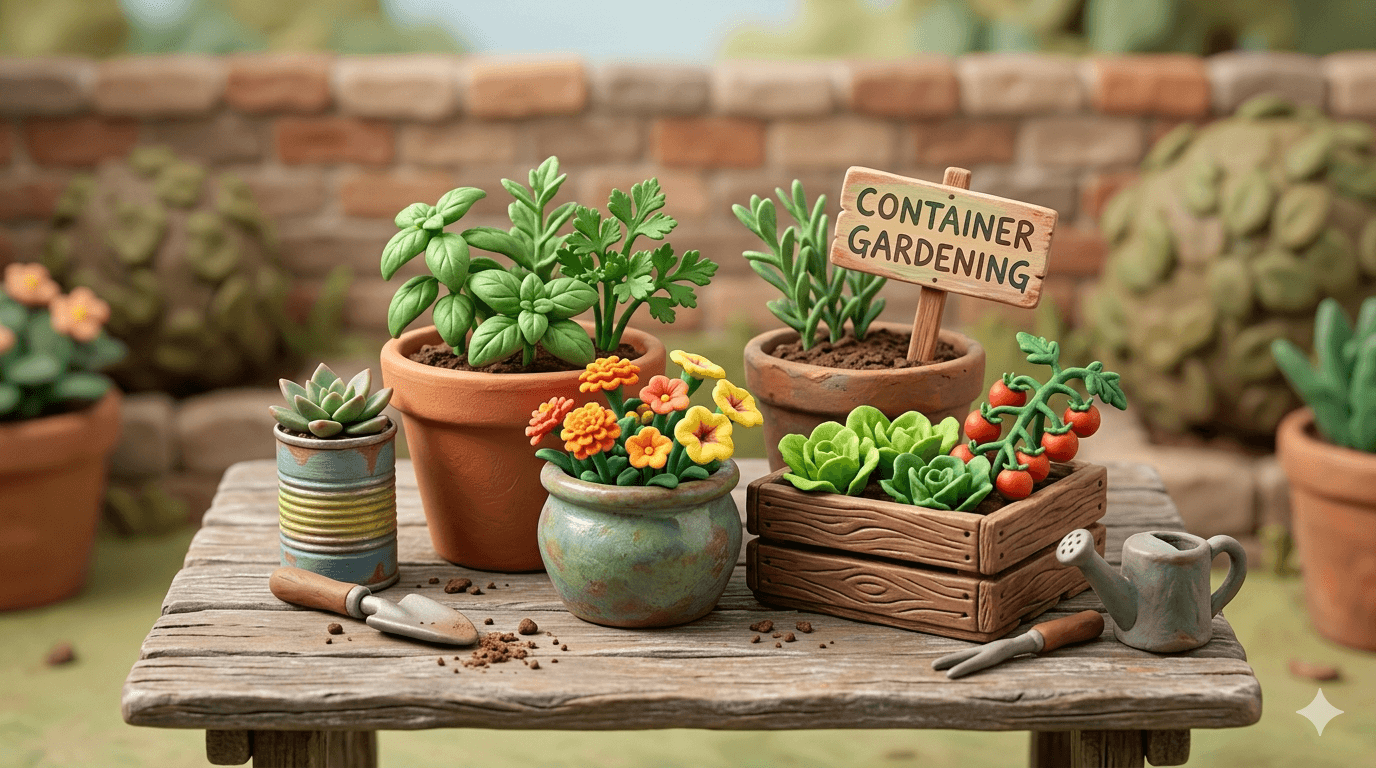
Most beginners think container gardening is a hobby for apartments and back porches. It is so much more than that. A few well chosen pots on a sunny deck can feed a household salad greens, herbs, tomatoes, peppers, and strawberries for the entire summer. The amount of real food you can grow in containers surprises almost everyone who tries it the first time.
Container gardening is also the best on ramp to homesteading when you do not yet own land. You can start growing food before you have a tiller, a fence, or even a yard. Renters can take the garden with them when they move. Beginners can practice on five pots before committing to fifty raised beds. Container gardens are flexible, forgiving, and easier to manage than most people expect.
This guide walks you through everything you need to grow real food in containers. You will learn how to pick the right pots, mix a potting soil that actually works, choose crops that thrive in tight spaces, water and feed without burning out, and stretch the season on both ends. By the end you will have a working plan you can start this weekend with a single trip to the hardware store.
Why Container Gardening Works on a Homestead
The first reason container gardening earns a spot on any homestead is control. You decide exactly what soil goes into the pot. There is no fighting heavy clay, rocky subsoil, or land that has not been worked in twenty years. You start with a clean slate every single time.
The second reason is mobility. Pots can move. A tomato that needs more sun gets carried to the brightest corner of the patio. A pepper that needs heat goes onto warm pavement in spring. When the first frost threatens in fall, a few minutes of moving pots indoors saves the entire harvest. In ground gardens cannot do any of that.
Containers also dodge most of the headaches that drag down regular gardens. Weeds barely show up because the pot is sealed at the bottom. Soil borne diseases stay out because you start with fresh mix every year. Burrowing pests like voles and gophers cannot reach the roots. Rabbits and groundhogs are easy to fence off when the garden is on a deck.
Container gardening also fits people who cannot do heavy in ground work. Pots on a bench or table sit at waist height. There is no double digging, no broadforking, no kneeling on cold spring ground. For older gardeners, people with back issues, and anyone short on time, this matters a lot.
Finally, containers extend the homestead growing zone. A patio with a south facing brick wall acts like a microclimate two zones warmer than the surrounding yard. A pot of basil that would sulk in your garden can thrive against that wall. You can grow figs in zone 5, lemons in zone 6, and tomatoes a month earlier than your in ground beds will ever allow.
Choosing the Right Containers
The right pot makes container gardening easy. The wrong pot turns it into a fight every week. Size, drainage, and material are the three things that matter most.
Size matters more than anything
Most beginners pick pots that are too small. A tomato in a six inch pot will struggle all summer and produce a handful of fruit. The same tomato in a fifteen gallon pot will pour out fruit from July through frost. As a rule, bigger is almost always better. The minimum useful pot for serious food production is five gallons. Most full size crops want ten gallons or more.
Tiny pots dry out in hours, run out of nutrients in weeks, and crowd roots into a tight knot. Big pots hold water longer, buffer temperature swings, and give roots room to spread. If you only buy one size of pot, make it a five gallon bucket or fabric grow bag at minimum.
Fabric grow bags
Fabric grow bags are the best value in container gardening. A ten pack of five gallon bags costs less than a single ceramic pot. They breathe, which keeps roots cool and prevents the circling pattern that strangles plants in plastic. They drain freely, so overwatering is almost impossible. They fold flat for storage at the end of the season. Worth it for almost every crop.
Plastic nursery pots and food grade buckets
Plastic pots are cheap, light, and hold moisture well. A clean food grade five gallon bucket with a few drainage holes drilled in the bottom is one of the best containers on the market for two dollars. Black plastic warms fast in spring, which gives a head start in cold climates. The downside is they dry out fast in summer sun and the cheap ones crack in two or three seasons. Worth it for tomatoes, peppers, and any crop that wants warm roots.
Terracotta and ceramic
Terracotta is gorgeous on a patio and works fine for herbs and ornamentals. The clay walls breathe, which prevents root rot, but they also wick moisture out of the soil and triple your watering load in summer. Large glazed ceramic pots solve the moisture problem but cost a fortune and crack in freezing weather. Worth it for showpiece herb gardens and shaded spots. Skip for thirsty crops in full sun.
Self watering containers
Self watering containers have a reservoir at the bottom that wicks moisture up into the soil. The plant pulls water on demand instead of you guessing how often to pour. They are wonderful for tomatoes, peppers, and any crop that suffers from uneven moisture. The downsides are higher cost and a heavier setup. Worth it for anyone who travels in summer or struggles to keep up with daily watering.
Half barrels and large planters
A whiskey half barrel or a twenty gallon planter is essentially a tiny raised bed. You can grow a small tomato, a pepper, and a few basil plants in the same barrel. Larger containers hold moisture longer and support deeper roots. Worth it as the centerpiece of any patio garden.
Tip
Whatever container you pick, make sure it has drainage holes. A pot without drainage will drown your plants the first time it rains. If you fall in love with a decorative pot that has no holes, drill three or four half inch holes in the bottom before you plant anything in it.
The Perfect Potting Mix (Not Garden Soil)
This is the rule beginners break most often, and it kills more container gardens than any other single mistake. Garden soil does not work in pots. It compacts into a brick, drains poorly, and starves the roots of oxygen. Even rich, beautiful in ground soil that grows great tomatoes will fail you in a five gallon bucket.
Containers need a true potting mix. The job of a potting mix is to hold water and air at the same time. Garden soil holds water but not air. Sand holds air but not water. A real potting mix splits the difference using lightweight organic matter and aeration ingredients.
A simple homemade potting mix
You can mix your own potting soil for half the cost of buying it bagged. The basic recipe is one third peat moss or coco coir, one third compost, and one third perlite or coarse vermiculite. Add a handful of slow release organic fertilizer per five gallon container and a small scoop of worm castings if you have them. That blend will outgrow most bagged mixes on the shelf.
Coco coir is the more sustainable choice over peat moss and rewets easily after drying out. Compost brings life and nutrients to the mix. Perlite is the white volcanic stuff that keeps the soil airy. Skip anything labeled "topsoil" or "garden soil" at the store. Those are heavy in ground mixes that compact in pots.
When to buy bagged mix instead
Bagged potting mix is fine if you only have a few containers. Look for a mix labeled "potting soil" or "container mix," never "garden soil." Avoid anything that lists "sedge peat" or "forest products" high on the label, because those tend to compact fast. A quality mix with compost, peat or coir, and perlite will run about fifteen to twenty dollars for two cubic feet, which fills two or three five gallon containers.
For a deeper look at how soil structure, nutrients, and biology come together, our soil building guide covers the same principles that apply once you eventually move into raised beds or in ground beds.
Reusing potting soil
You can absolutely reuse potting mix from year to year. Pull out the old roots, mix in a couple inches of fresh compost, top with a fresh handful of slow release organic fertilizer, and you are ready to plant again. After two or three seasons the mix will start to compact, and that is the moment to dump it into the in ground garden or compost pile and start a fresh batch.
The Best Crops to Grow in Containers
Almost any vegetable can grow in a container if the pot is big enough, but some crops absolutely thrive in pots and a few really struggle. Start with the proven winners and you will get a real harvest the first year.
| Crop | Minimum Pot Size | Sun | Days to Harvest | Notes |
|---|---|---|---|---|
| Lettuce | 1 gallon | Partial to full | 30 to 50 | Cut and come again, succession plant |
| Cherry tomatoes | 5 gallons | Full | 60 to 70 | Stake or cage, water deeply |
| Slicing tomatoes | 10 to 15 gallons | Full | 70 to 85 | Determinate types fit pots best |
| Peppers | 5 gallons | Full | 70 to 90 | Love heat, hate cold roots |
| Basil | 1 to 2 gallons | Full | 30 to 60 | Pinch tops weekly for bushy plants |
| Strawberries | 2 gallons each | Full | 60 to 90 | Day neutral varieties fruit all season |
| Bush beans | 5 gallons | Full | 50 to 60 | Plant two or three per pot |
| Radishes | 1 gallon | Full | 25 to 35 | Fastest crop in any container |
| Kale and chard | 5 gallons | Full to partial | 50 to 70 | Cool weather champions |
| Dwarf cucumbers | 5 to 7 gallons | Full | 50 to 70 | Pick a bush variety, not a vine |
| Scallions | 1 gallon | Full to partial | 60 to 80 | Cut and let regrow several times |
| Herbs (parsley, cilantro, dill) | 1 to 2 gallons | Partial to full | 40 to 70 | Group with similar water needs |
Tip
Determinate tomato varieties are the right choice for most containers. They grow to a fixed size, set their fruit over a few weeks, and stay manageable in a five to ten gallon pot. Indeterminate types keep growing all season and need a fifteen to twenty gallon container plus a serious cage. Read the seed packet before you plant.
A few crops are better left to the in ground garden. Corn needs a block of plants for pollination and rarely earns its space in a container. Pumpkins and full size winter squash sprawl too far. Asparagus needs years in the same bed and a depth no pot delivers. Save the pot space for crops that genuinely produce well in tight quarters.
For ideas on stretching a small container garden into a constant supply of food, take a look at the succession planting guide. The same staggered sowing tricks that work in raised beds apply in pots.
Watering and Feeding Containers
Containers dry out faster than any other kind of garden. A pot in full summer sun can lose half its moisture in a single day. Watering and feeding are the two skills that separate a thriving container garden from a sad row of crispy plants.
How often to water
In spring and fall, most pots need water every two or three days. In peak summer with full sun, plan on watering every single day, sometimes twice. Stick a finger an inch into the soil. If it feels dry, water. If it feels damp, wait. The pot will tell you faster than any schedule.
Water deeply every time. Pour until water runs out the drainage holes. A shallow sprinkle wets the top of the soil and bakes off in an hour. A deep soak reaches every root in the pot and lasts much longer. Morning is the best time to water because the leaves dry before evening and disease pressure stays low.
Warning
Wilting leaves at midday in hot weather is not always a sign of dry soil. Some plants droop in the afternoon heat even when the soil is wet. Check the soil before you water. Overwatering a stressed pot can rot the roots and finish off the plant for good. Crispy brown leaf edges, on the other hand, are a sign of real drought stress and need water immediately.
Self watering and drip systems
Self watering containers cut your daily work in half. The reservoir holds enough water for two to four days depending on heat and crop size. Top it off every few days and the plant pulls what it needs.
A simple drip irrigation kit on a timer is the best upgrade you can make to a container garden bigger than ten pots. A twenty five dollar kit from a hardware store will water everything in five minutes a day with zero effort. Pair the timer with a moisture meter and you will never lose a crop to a forgotten watering can again.
Mulch the top of the pot
A one inch layer of mulch on top of the soil cuts evaporation in half. Use straw, fine wood chips, shredded leaves, or even shredded newspaper. The mulch also blocks weeds, keeps the soil cool, and gives the pot a finished look. Refresh it once or twice during the season as it breaks down.
Feeding containers
Container plants run out of nutrients faster than in ground plants. The pot only holds so much soil, and every watering flushes some of the dissolved nutrients out the drainage holes. To keep up, mix slow release organic fertilizer into the soil at planting and top dress every six weeks. Then liquid feed every two weeks with fish emulsion, kelp extract, or compost tea.
The signs of a hungry container plant are pale green or yellow leaves, slow growth, and small fruit. A weak liquid feed once a week will fix all three within a few days. Stronger is not better. Half strength applied often outperforms full strength applied rarely.
Season Extension and Year Round Container Growing
The greatest advantage of containers is that they move. A few minutes of work in the evening can carry your entire garden under cover for a frost, into the sun for a cold snap, or against a warm wall for a heat boost. Few in ground gardens can match the season extension you get from pots.
In early spring, start cold tolerant crops like lettuce, spinach, peas, and radishes on a sunny patio while your in ground beds are still frozen. Pots warm up weeks before garden soil does. A five gallon bucket of lettuce sitting on south facing pavement in March is a thing of beauty.
In fall, pull tender crops indoors before the first frost. A potted pepper or tomato can keep producing on a sunny windowsill for weeks after the garden is done for the year. A pot of basil moved to a kitchen counter stretches fresh leaves into November. For evergreen herbs like rosemary, the pot is the only way to keep the plant alive through a hard winter in cold zones.
You can also build a simple cold frame over a cluster of pots. A box of clear plastic on a wooden frame turns a porch into a tiny greenhouse. Hardy greens like kale, chard, mache, and spinach will grow through most of winter under cover even in zone 5. For a deeper look at season extension techniques you can use with containers or raised beds, the year round growing guide walks through cold frames, low tunnels, and other tricks. If you want to graduate to a full backyard greenhouse, the greenhouse growing guide covers the next step.
Common Container Gardening Mistakes to Avoid
Most container gardens fail for the same small handful of reasons. Avoid these and you will be ahead of ninety percent of beginners.
Pots that are too small. A six inch pot is for herbs, not vegetables. Bump up to five gallons or more for any real food crop and your results will leap forward overnight.
Using garden soil instead of potting mix. Heavy native soil compacts in a pot and suffocates the roots. Always use a true potting mix with peat or coir, compost, and perlite.
No drainage holes. A pot without drainage is a drowning trap. Every container needs at least one half inch hole, and three or four is better. Drill them if they are missing.
Forgetting to fertilize. Containers run out of nutrients fast. Mix slow release organic fertilizer at planting, top dress every six weeks, and liquid feed every two weeks during the growing season.
Wrong sun exposure. Fruiting crops like tomatoes, peppers, and cucumbers need at least six hours of direct sun. Leafy greens and herbs do well with four to six. A shady patio will not grow a single tomato no matter how big the pot.
Crowding the pot. One tomato per five gallon pot. Two or three pepper plants per ten gallon container. Crowding cuts yield, increases disease, and dries the soil out twice as fast. Give plants room to breathe.
Ignoring root bound plants. A plant that has been in the same pot for two years with no fresh soil will stall out. Repot every spring with fresh mix, or at minimum top dress with a few inches of new compost.
For protection against the few pests that do reach a container garden, the organic pest control guide covers the same hand picking, soap spray, and beneficial insect tricks that work in any garden setting.
A Month by Month Container Plan
A simple year long calendar makes it easy to know what to plant when. These dates assume a roughly zone 6 climate with a last frost in mid April. Adjust earlier or later based on your own frost dates, which you can look up in our planting calendar.
March. Start cold tolerant crops on a sunny patio. Lettuce, spinach, peas, radishes, and scallions all go in now. Cover at night if temperatures drop below thirty.
April. Sow more lettuce, kale, chard, and bush peas. Start tomato and pepper seedlings indoors or buy starts. Pot up strawberries from bare root crowns.
May. After the last frost, plant out tomatoes, peppers, basil, dwarf cucumbers, and bush beans. Add a fresh layer of compost on top of pots that overwintered.
June. Start a second round of lettuce, beans, and herbs for continuous harvest. Pinch the tops of basil weekly. Stake or cage every tomato now before they get unruly.
July. Watering becomes daily work. Top up self watering reservoirs every two days. Harvest cherry tomatoes, basil, peppers, and bush beans almost daily.
August. Direct sow fall lettuce, kale, spinach, and radishes for autumn harvest. Pull spent spring crops and refresh the soil. Liquid feed every container weekly.
September. Watch the forecast for the first frost. Move tender pots toward shelter as nighttime temperatures drop. Plant garlic in a deep pot for next summer's harvest.
October. Bring tender crops indoors or under cover before frost. Hardy greens keep producing on the patio. Start a cold frame over your most productive pots.
November through February. Hardy herbs like rosemary, sage, and parsley can hold on outdoors in mild zones or move to a sunny window. Plan next year's container layout and order seeds. Most homestead container gardens take a real rest now, which is a good thing.
Frequently Asked Questions
Frequently Asked Questions
Cherry tomatoes and small determinate varieties will produce well in a five gallon pot. Standard slicing tomatoes need at least ten gallons. Full size indeterminate beefsteaks want fifteen to twenty gallons of soil and a heavy duty cage. The bigger the pot, the more even the moisture and the bigger the harvest. A common mistake is putting a six foot tomato plant in a two gallon pot and wondering why it never sets fruit.
Yes, and most homesteaders do. Pull out the old roots, break up any clumps, and mix in two or three inches of fresh compost along with a handful of slow release organic fertilizer per five gallon container. The mix is good for another full season. After two or three years the structure starts to break down. At that point, dump the spent soil into the in ground garden or compost pile and start over with a fresh batch.
In peak summer with full sun, plan on watering every day. Some pots in small containers or terracotta will need water twice a day during a heat wave. Stick a finger an inch into the soil before watering. If it feels dry, water deeply until it runs out the drainage holes. A one inch mulch layer on top of the soil and a self watering reservoir under it will both cut your watering load in half.
The proven winners are lettuce, cherry tomatoes, peppers, basil, strawberries, bush beans, radishes, kale, chard, dwarf cucumbers, scallions, and herbs. These crops produce a real harvest in five to ten gallons of soil and do not sprawl past their pot. Skip corn, full size winter squash, and asparagus, which all need more space than any reasonable container can offer.
Yes. Even the best potting mix only carries a few weeks of nutrients. Once those run out, growth slows and yields drop. Mix slow release organic fertilizer into the soil at planting time, top dress with fresh compost or fertilizer every six weeks, and liquid feed with fish emulsion or compost tea every two weeks during the main growing season. Container plants are heavy feeders because the pot holds so little soil.
You can grow some food, but the choices are limited. Most fruiting crops like tomatoes, peppers, and cucumbers need at least six hours of direct sun and will fail on a north facing space. What you can grow is leafy greens, herbs, scallions, radishes, and a few cool weather crops that do fine in four hours of bright light. Lettuce, kale, chard, parsley, cilantro, mint, and chives all produce on shadier balconies. If you have one or two hours of direct sun, you can probably add bush beans and strawberries to that list.
Containers see fewer pests than in ground beds, especially when the pots are up on a deck or patio. The pests that do reach them are usually aphids, whiteflies, and the occasional caterpillar. Hand picking and a quick spray of insecticidal soap solve almost all of it. Birds and small mammals stay away from most container patios. For a deeper plan, the organic pest control guide covers the few tools you actually need.
Container gardening is real homesteading at any scale. Whether you have a sprawling rural property or a single sunny windowsill, a few good pots can feed your family fresh food for months at a stretch. The whole technique comes down to four habits. Pick big enough pots. Use a real potting mix. Water and feed regularly. Choose crops that genuinely thrive in containers.
Start this season with five pots and three crops. A five gallon bucket of cherry tomatoes, a five gallon bucket of peppers, and a one gallon pot of basil will give you a real homestead harvest by midsummer. Add a few more pots next year as your confidence grows.
For a wider view of how a container garden fits into a complete first year homestead plan, our ultimate guide to starting a homestead garden from scratch ties soil, layout, seeds, and seasons together into one yearly plan you can follow from the first warm day of spring all the way through fall harvest.

Cole
Founder & Lead Researcher
Cole is the founder of Plan Your Homestead. He works in clinical research and brings a research-first lens to every guide on the site, drawing on a long family line of farmers for grounded, practical perspective.
More in Gardening
More articles coming soon. Check back for new gardening content.